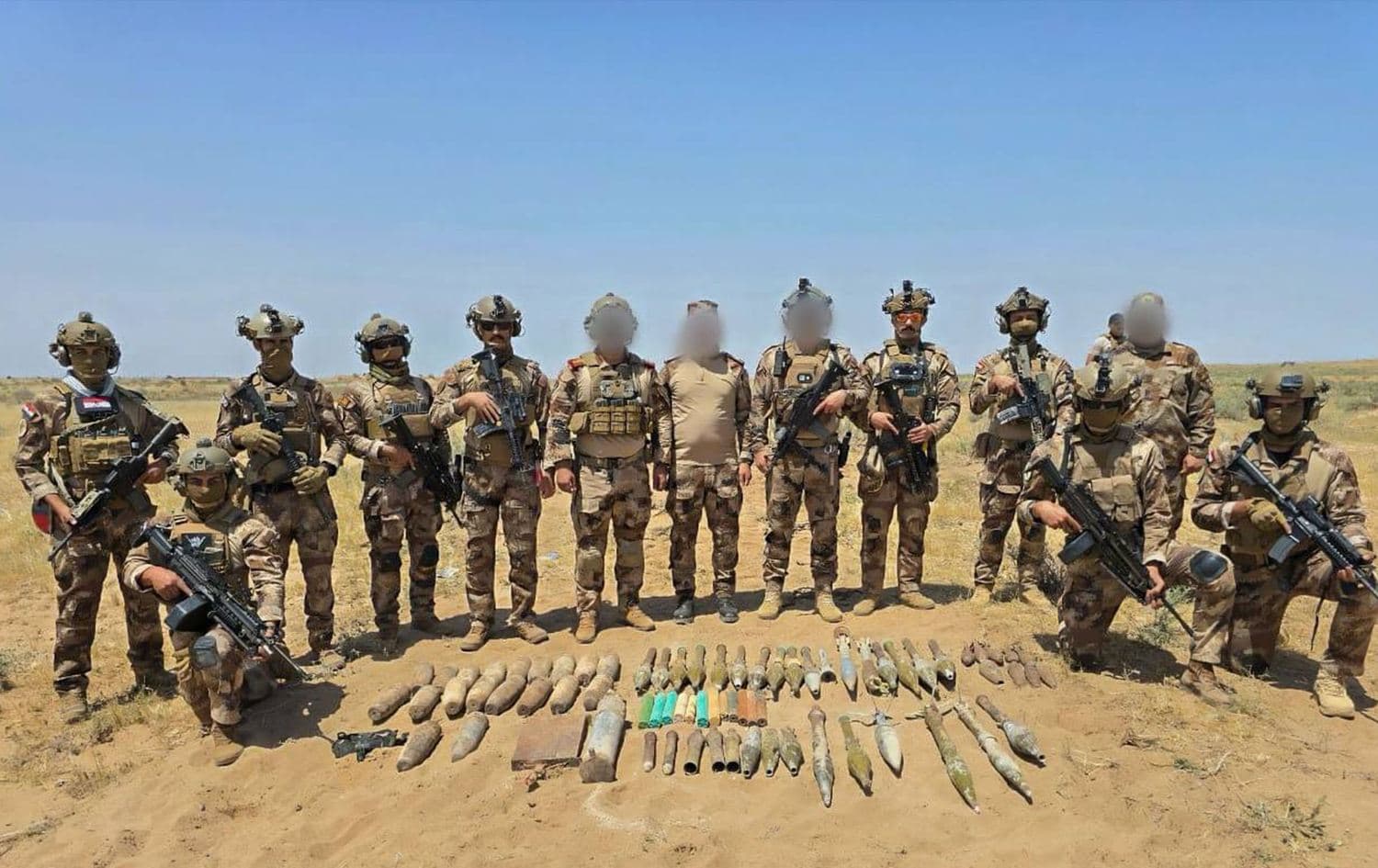
ERBIL, Kurdistan Region - The Iraqi Counter-Terrorism Service (ICTS) has seized two ammunition caches and dismantled a hideout belonging to remnants of the Islamic State (ISIS) in a strip of land separating the Kurdistan Region from federal Iraq, where militants of the extremist group remain active despite ISIS’s territorial defeat in Iraq in 2017.
The ICTS said its security units launched “two separate operations based on precise intelligence information and continuous field tracking,” which enabled them to “seize two ammunition caches in the Hamrin mountain range on the border between Salahaddin and Kirkuk provinces.”
Iraqi security forces also “managed to search a hideout belonging to ISIS remnants that contained a number of explosive materials and ammunition,” while a “second cache was uncovered in [Iraq’s eastern] Diyala province’s Mandali district.”
The ICTS further reaffirmed its commitment to “executing national duties to protect Iraq and its people, and to pursue the remnants of defeated [ISIS] terrorist gangs.”
ISIS seized large swathes of territory in northern and western Iraq in 2014 before being defeated in 2017 after three years of intense fighting.
Despite its defeat, the group continues to pose security threats, particularly in disputed areas between Erbil and Baghdad, spanning Diyala, Kirkuk, Nineveh, and Salahaddin provinces.
Moreover, following the 2017 withdrawal of Kurdish Peshmerga forces from Kirkuk and surrounding disputed territories, a security gap emerged where neither Erbil nor Baghdad maintained a permanent presence.
The unpatrolled areas have since served as a refuge for ISIS sleeper cells, enabling them to establish logistics hubs and carry out hit-and-run attacks with limited risk of pursuit.