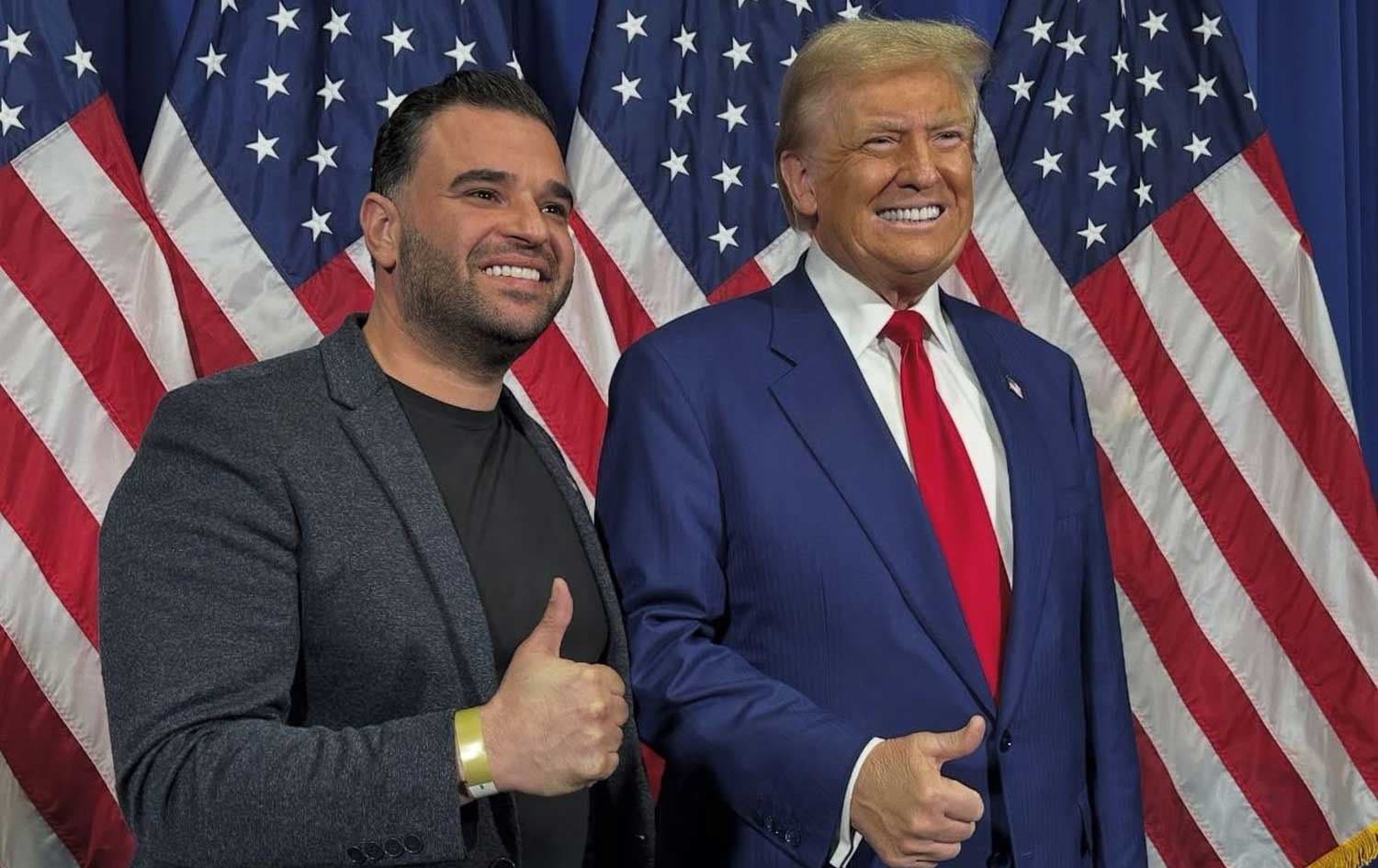

ERBIL, Kurdistan Region - Mark Savaya, US President Donald Trump’s special envoy to Iraq, warned on Thursday that Iraq cannot secure a stable future as long as Iran-backed armed groups continue to challenge state authority. He urged the country’s political and religious leaders to make decisive choices to prevent Iraq from sliding back into instability.
Marking the eighth anniversary of Iraq’s victory over the Islamic State (ISIS), Savaya wrote on X that “no nation can succeed while armed groups compete with the state and undermine its authority.” He noted that Iraq “stands once again at a decisive moment” 23 years after the fall of Saddam Hussein’s regime.
“This division has weakened Iraq’s global standing, suffocated its economy, and limited its ability to protect its national interests,” he said, stressing that responsibility lies squarely with the country’s political and religious leadership.
Savaya’s remarks come a month after Iraq held what he described as “successful” parliamentary elections, with political parties now entrenched in negotiations to form a new government.
Concerns over the participation of Iran-aligned armed groups in Iraq’s next cabinet have recently been raised both locally and internationally. On Sunday, Iraqi Foreign Minister Fuad Hussein warned that including such groups in the government could complicate Baghdad’s relations with Washington.
“You know it’s not talk - they [the US] published a list. When they publish a list, it means they won’t deal with these groups,” Hussein said, adding that this issue directly impacts the formation and future functioning of Iraq’s government. “Should Iraq continue dealing with America? The answer is yes. Can you do without America? Very difficult.”
Savaya said a unified and pragmatic decision by Iraq’s leaders would send a “clear and unmistakable signal” to Washington and the international community that Baghdad is ready to reclaim its place as a stable and respected nation in the Middle East.
He warned that the alternative would be “economic deterioration, political confusion, and international isolation.”
Iran is widely believed to support numerous proxy groups in Iraq, some of which have targeted US interests in the region. Washington has increasingly pressured Baghdad to curb Tehran’s influence.
Last week, reports emerged that Iraq’s Committee for Freezing Terrorist Assets ordered the freezing of movable and immovable property linked to Lebanon’s Hezbollah and Yemen’s Ansarullah (Houthis) - both widely considered Iran-backed groups. Prime Minister Mohammed Shia’ al-Sudani later called the listing an “error” and ordered an investigation, while the presidency denied any involvement.
A US State Department spokesperson told Rudaw it was “disappointed” by Iraq’s reversal of the decision.
The latest draft of the US National Defense Authorization Act (NDAA) stipulates that continued US financial aid to Iraq will depend on Baghdad reducing the capabilities of Iran-aligned militias. It also calls for strengthening the prime minister’s authority as commander-in-chief and for holding accountable any Iran-aligned militia members or security forces acting outside the official chain of command who engage in attacks on US or Iraqi personnel.
In September, the US designated four Iran-backed Iraqi militia groups as foreign terrorist organizations - part of President Trump’s “maximum pressure” campaign on Iran.
Since the 2003 US-led invasion that toppled Saddam Hussein, Washington has played a major role in rebuilding Iraq’s armed forces, including training, equipping, and advising units to combat insurgencies. US forces have also supported Iraq in counterterrorism operations against ISIS, particularly after the extremist group seized large swathes of territory in 2014.
.webp&w=3840&q=75)