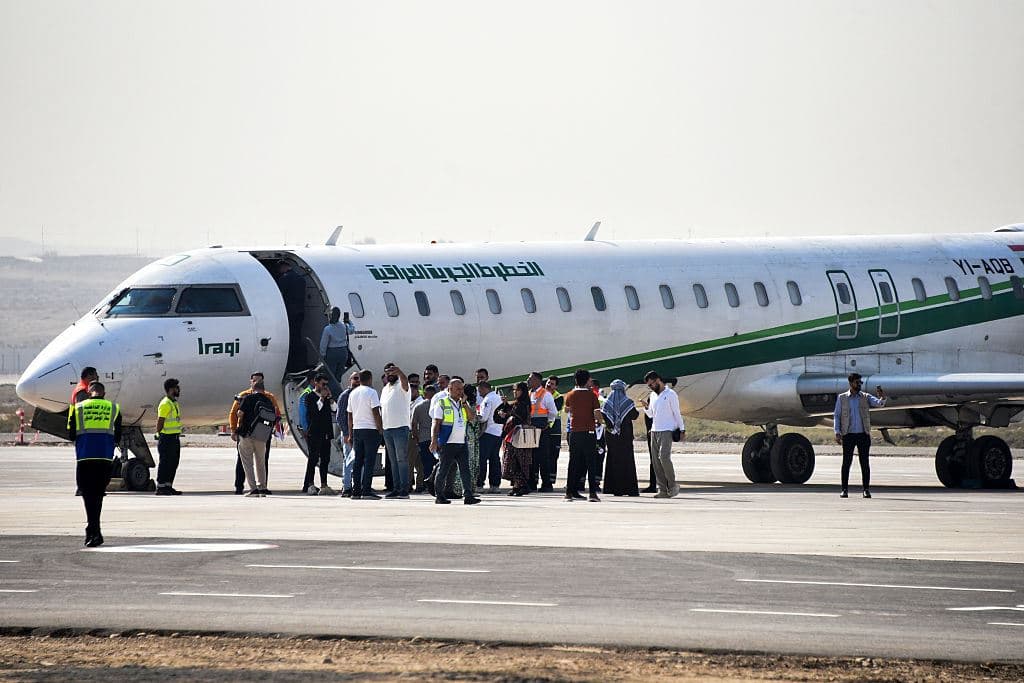
ERBIL, Kurdistan Region - Iraqi Airways will operate "special flights" from Cairo and New Delhi between March 15 and 18 to return Iraqi citizens stranded in Egypt and India amid ongoing regional conflict and airspace closures, the ministry of transportation said.
The flights will transport Iraqi nationals, including residents of the Kurdistan Region, from the two cities to Saudi Arabia, from where they will return to Iraq by land.
“The flights are being arranged at the request of citizens stranded abroad due to the current situation, and residents of the Kurdistan Region can also benefit from them,” Maysam Safi, spokesperson for the Iraqi Ministry of Transportation, told Rudaw on Saturday.
Safi added that "the Crisis Cell has approved an action plan that includes six flights - two from Cairo and four from New Delhi to Saudi Arabia."
He noted that the flights will not be free of charge.
After arriving in Saudi Arabia, passengers will return to Iraq by land through the Arar border crossing, Safi said.
Iraqi airspace has been closed to flights since February 28, when the war between Iran and the United States and Israel began.
The spokesperson added that Iraqi Airways has mobilized its technical and administrative teams to carry out the mission, urging citizens wishing to return to visit the airline’s offices or Iraqi embassies in Cairo and New Delhi to register and complete the necessary procedures.
The announcement comes amid ongoing disruptions affecting travel across parts of the Middle East, leaving a number of Iraqi citizens stranded abroad and seeking ways to return home safely.
The large-scale conflict between the US and Israel on one side and Iran on the other has spread across the region, bringing significant repercussions for several countries, including Iraq.