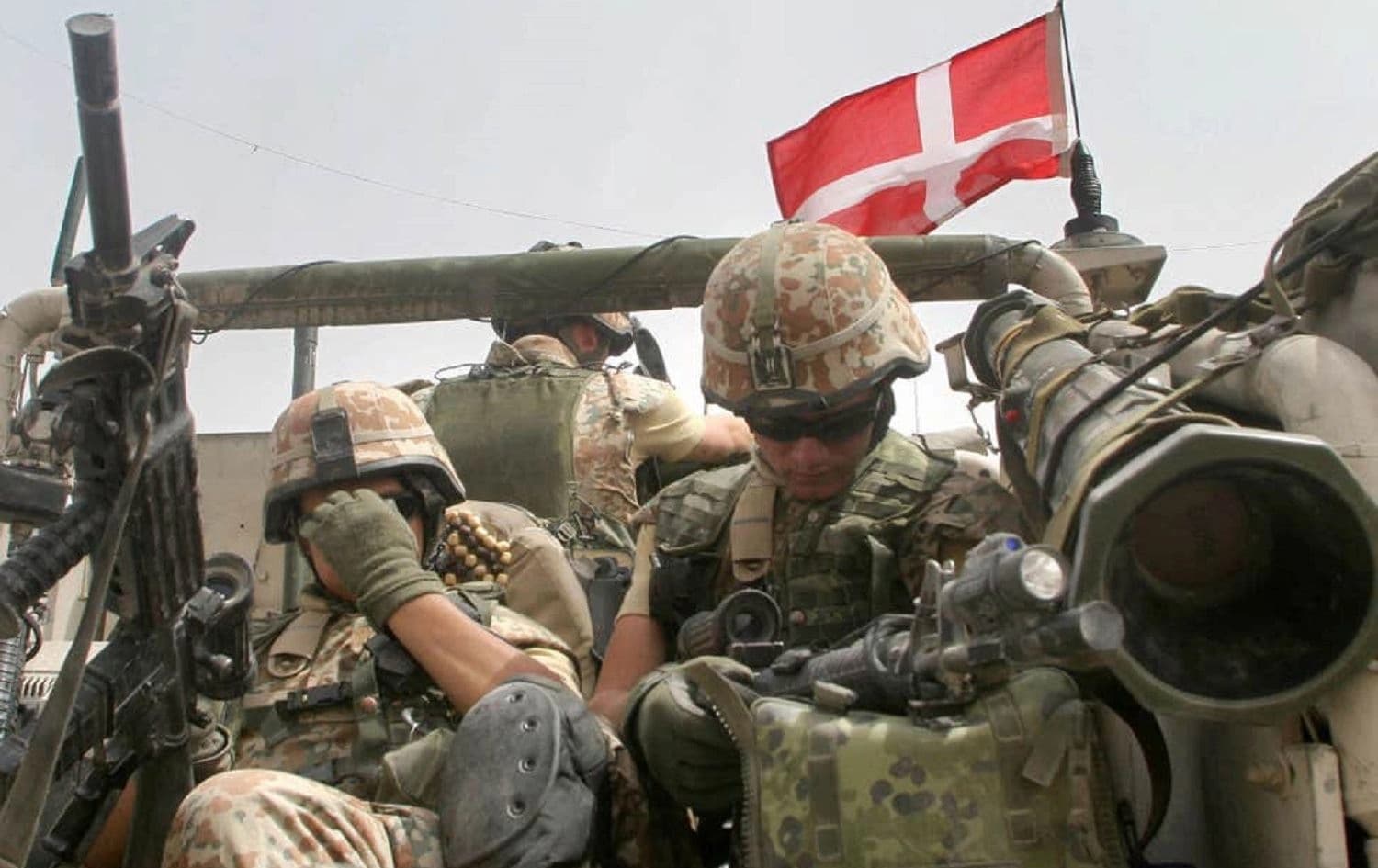
ERBIL, Kurdistan Region – Danish troops who form part of the US-led coalition against the Islamic State (ISIS) will soon resume training of Iraqi forces at an airbase they evacuated in January amid a spate of rocket attacks on Western personnel in the country, the country’s defense and foreign ministers both announced on Monday. Training of troops at Ain al-Asad airbase, Anbar province will bolster “long-run” security, Danish defense minister Trine Brasmen said in a Monday statement. “In the fight against terror, it is important that Iraq does not again become a hotbed for recruitment and training by terrorists. That is why it is important that we resume the training of Iraqi security personnel so that in the long-run they can take care of security themselves in Iraq,” Brasmen said on Monday. Denmark is both part of NATO’s mission of training Iraqi forces and the US-led anti-ISIS Coalition. Besides air support, they train, advise and support Iraqi forces in the fight against ISIS whose remnants are a persistent threat despite their territorial defeat in Iraq in December 2017. “Of course, the safety of our Danish soldiers undertaking the important task [of training Iraqi forces] remains a top priority,” Bramsen added. About 80 Danish soldiers were stationed at Ain al-Asad before a boiling point of escalation in US-Iran hostilities played out on Iraqi territory early last month, provoking suspension of their operations. While rocket attacks on US and Western troop bases by Iran-backed militias are frequent, coalition member state worry over troop safety was stoked further by a deadly strike on K-1 military base in Kirkuk on December 27 which killed a US civilian contractor and injured service members. The US retaliated on December with airstrikes on Iran-backed militia targets, killing 25 militia members in al-Qaim, western Iraq. Hostilities culminated in the assassination of top Iranian general Qasem Soleimani and deputy Popular Mobilization Forces (PMF) head Abu Mahdi al-Mohandis on January 3. Fearing further escalation, the Coalition announced the next day that it would limit its operations in Iraq. European member nations also announced the suspension of their operations in response to the rising hostility. Iran launched a retaliatory attack of two dozen ballistic missiles at Iraqi bases – primarily Ain al-Asad – on January 7. “I am glad that we as Denmark will now resume our training efforts. It is an important contribution to the fight against ISIL, whose atrocities continue to post a major threat to the region and eventually to our own security at home,” Danish Foreign Minister Jeppe Kofod said, adding that Denmark will continue efforts to de-escalate in the Middle East amid US-Iran tensions. “It has been the government's wish that training should be resumed as early as possible, when the security situation permits, to maintain pressure on ISIL [ISIS] in Iraq,” Kofod added. Iraqi parliament’s Shiite parties and militias voted on January 5 to approve a non-binding resolution to expel foreign, particularly American, troops from the country. However, Baghdad greenlit an expansion of NATO’s mission in Iraq on Thursday, in what is being seen as a shift of foreign counter-ISIS mission control in the country from the US-led Coalition to NATO. The ongoing threat posed by ISIS has been internationally recognized. James F. Jeffrey, US Special Envoy for the global anti-ISIS coalition said in January that “we are seeing ISIS come back as an insurgency, as a terrorist operation, with some 14- to 18,000 terrorists between Syria and Iraq.”

.png&w=3840&q=75)
