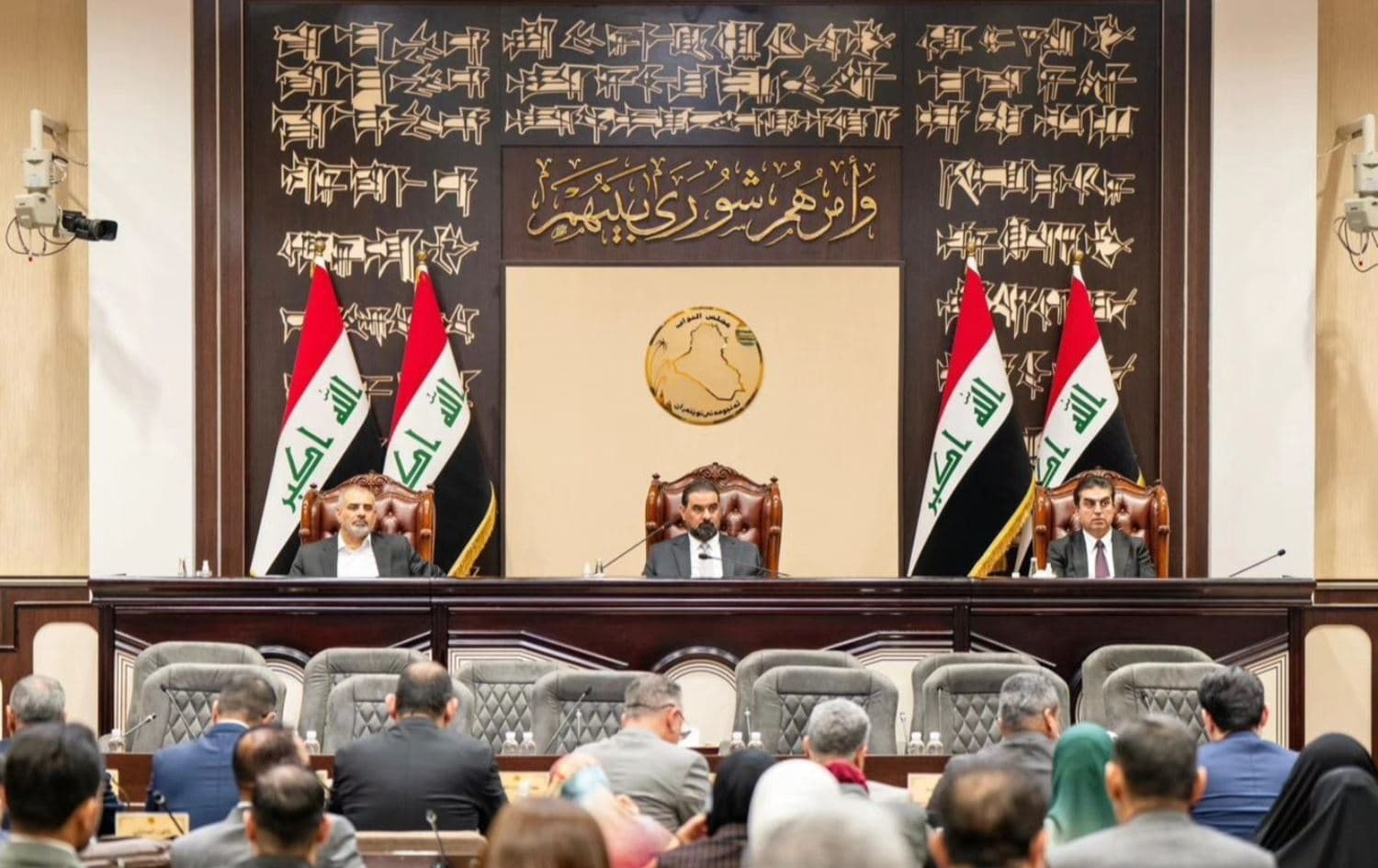
ERBIL, Kurdistan Region – Tensions erupted in the Iraqi parliament on Tuesday after a heated dispute broke out between Speaker Haibat al-Halbousi and Deputy Speaker Farhad Atrushi over a controversial vote on a senior military position, prompting strong objections from some Kurdish lawmakers who warned of bylaw violations and threatened legal action.
The confrontation occurred during a parliamentary session when Halbousi moved to add a clause to the agenda to vote on Abdul-Amir Rashid Yarallah as Iraq’s Chief of Staff.
The parliamentary move sparked immediate protests from Atrushi, a Kurd, and his Kurdistan Democratic Party (KDP), arguing the item had not been included in the original agenda and was introduced without prior political consensus.
Atrushi sharply criticized the decision, describing the vote as a “suspicious step” and a breach of constitutional and parliamentary procedures.
“The parliament speaker has taken a step that further complicates the political situation by rushing in a suspicious manner to hold a vote on certain special positions,” Atrushi said in a statement late Tuesday.
He added that the parliament leadership had held several meetings prior to the session, during which agreements were reached only on amendments to internal bylaws and committee assignments. However, additional clauses were later added without consensus, he said.
Atrushi warned that passing sensitive sovereign positions such as the army chief of staff in this manner raises serious concerns among political partners and undermines trust in the political process. He stressed that the vote holds “no legal or administrative effect” in their view and vowed to pursue legal remedies, including filing a case in court.
KDP condemned the move in a strongly worded statement that the session’s management and the addition of the clause, calling it a “clear violation of the constitution and political consensus.”
The party said the move undermines political agreements that ensure balance and consensus in the distribution of senior state positions. It also criticized Halbousi’s handling of parliamentary sessions and warned against the repetition of such actions.
“State-building cannot be achieved through monopolizing decisions and marginalizing the rights of components,” the KDP said.
According to the speaker, the clause was added at the request of 72 members of parliament.
The position of Iraq’s chief of staff was held by Kurds from 2003 until 2015, when KDP's Babakir Zebari retired. Since then, the post has been held by figures from Iraq’s Shiite community, making the latest vote particularly sensitive for Kurdish political parties, who view such positions as part of broader power-sharing arrangements.
The confrontation occurred during a parliamentary session when Halbousi moved to add a clause to the agenda to vote on Abdul-Amir Rashid Yarallah as Iraq’s Chief of Staff.
The parliamentary move sparked immediate protests from Atrushi, a Kurd, and his Kurdistan Democratic Party (KDP), arguing the item had not been included in the original agenda and was introduced without prior political consensus.
Atrushi sharply criticized the decision, describing the vote as a “suspicious step” and a breach of constitutional and parliamentary procedures.
“The parliament speaker has taken a step that further complicates the political situation by rushing in a suspicious manner to hold a vote on certain special positions,” Atrushi said in a statement late Tuesday.
He added that the parliament leadership had held several meetings prior to the session, during which agreements were reached only on amendments to internal bylaws and committee assignments. However, additional clauses were later added without consensus, he said.
Atrushi warned that passing sensitive sovereign positions such as the army chief of staff in this manner raises serious concerns among political partners and undermines trust in the political process. He stressed that the vote holds “no legal or administrative effect” in their view and vowed to pursue legal remedies, including filing a case in court.
KDP condemned the move in a strongly worded statement that the session’s management and the addition of the clause, calling it a “clear violation of the constitution and political consensus.”
The party said the move undermines political agreements that ensure balance and consensus in the distribution of senior state positions. It also criticized Halbousi’s handling of parliamentary sessions and warned against the repetition of such actions.
“State-building cannot be achieved through monopolizing decisions and marginalizing the rights of components,” the KDP said.
According to the speaker, the clause was added at the request of 72 members of parliament.
The position of Iraq’s chief of staff was held by Kurds from 2003 until 2015, when KDP's Babakir Zebari retired. Since then, the post has been held by figures from Iraq’s Shiite community, making the latest vote particularly sensitive for Kurdish political parties, who view such positions as part of broader power-sharing arrangements.

Comments
Rudaw moderates all comments submitted on our website. We welcome comments which are relevant to the article and encourage further discussion about the issues that matter to you. We also welcome constructive criticism about Rudaw.
To be approved for publication, however, your comments must meet our community guidelines.
We will not tolerate the following: profanity, threats, personal attacks, vulgarity, abuse (such as sexism, racism, homophobia or xenophobia), or commercial or personal promotion.
Comments that do not meet our guidelines will be rejected. Comments are not edited – they are either approved or rejected.
Post a comment