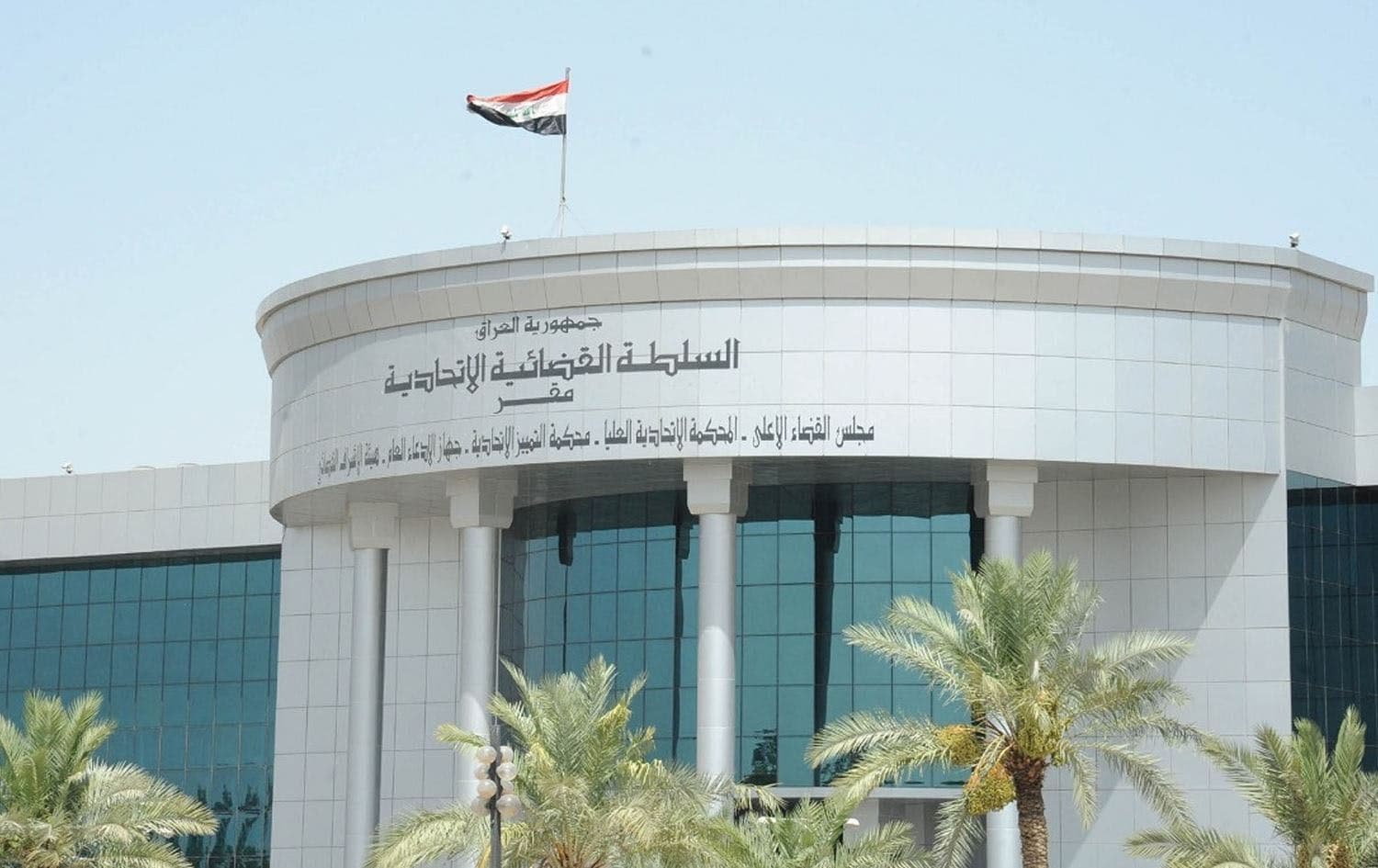

ERBIL, Kurdistan Region - Iraq’s highest judicial authority, the Federal Supreme Court, on Monday clarified that the outgoing parliament and cabinet’s authority ended on election day, November 11, limiting them to handling only non-postponable daily affairs in a caretaker capacity until the new legislature is seated.
The ruling, issued in response to Iraqi President Abdul Latif Rashid’s request to interpret Article 56 of the constitution which stipulates that “the day of the general election for the new Council of Representatives marks the end of the previous Council’s term and its authority to legislate or oversee the executive authority in practice.”
Federal Court President Judge Munther Hussein signed the decision affirming that the Iraqi cabinet’s authority is now limited to caretaker duties, handling only “daily affairs” that “cannot be postponed” to keep state institutions running. Actions beyond this scope - including signing international agreements and treaties, finalizing major contracts, proposing draft laws, taking or removing senior appointments, contracting loans or restructuring ministries - are no longer permitted.
The court further noted that the Iraqi president “shall continue to exercise his duties beyond the conclusion of the elections and the convening of the new parliament.”
Iraq held its special and general legislative elections on Sunday, November 9, and Tuesday, November 11, respectively.
Caretaker Prime Minister Mohammed Shia’ al-Sudani’s coalition emerged on top, securing more than 1.3 million votes and around 45 seats in the 329-member parliament, according to Rudaw projections.
The federal court noted Monday that the “political legitimacy” of the cabinet and parliament “ends upon the election of the new Council of Representatives,” and that “every action taken by the legislative authority and the executive authority…that does not fall within the concept of conducting daily affairs…has no basis in the [Iraqi] Constitution and the law.”
The ruling hence makes clear that the outgoing parliament cannot pass laws or exercise oversight after the election, and that the caretaker government’s powers remain strictly limited until the new legislature convenes.
The Independent High Electoral Commission (IHEC) announced preliminary results late Wednesday, while its spokesperson, Jumana al-Ghalai, told Rudaw on Monday that final results are expected on Tuesday.
The state-run Iraqi news agency on Tuesday reported that the results will be announced at 7 pm local time on the same day.