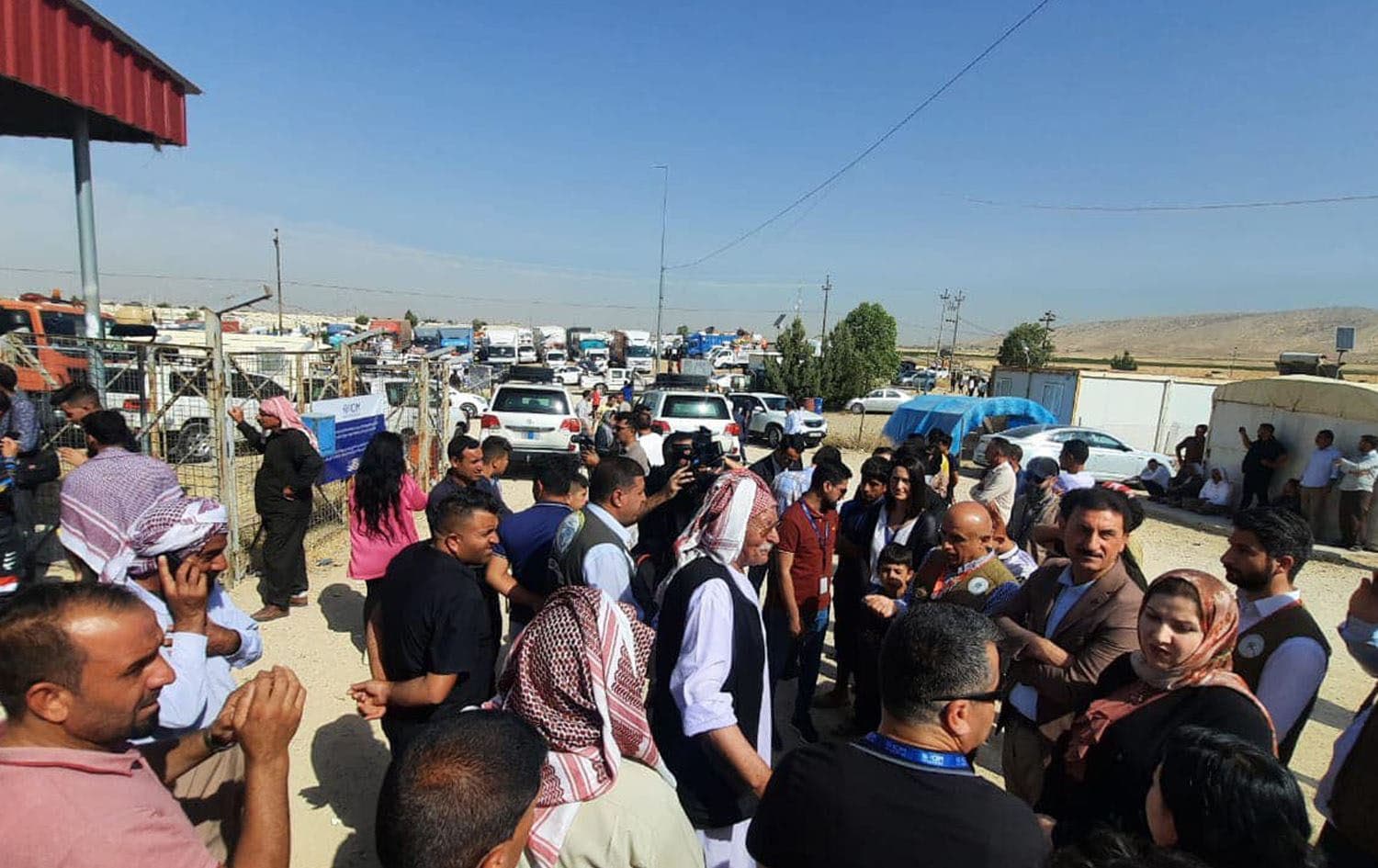

ERBIL, Kurdistan Region - More than 600 displaced people on Sunday returned to the Yazidi heartland of Shingal (Sinjar) from Duhok province, Iraq’s migration ministry said, as officials anticipate a rise in returns once schools go on break.
“The 126 families of 617 people returned to Shingal district from Duhok province,” the spokesperson for the Iraqi Ministry of Migration and Displacement Ali Jahangir told Rudaw on Sunday.
He added that once school holidays begin at the start of summer, the pace of repatriation will increase, noting that over 13,000 families have already returned from the Kurdistan Region in recent years, with around 21,000 still remaining.
In June 2014, the Islamic State (ISIS) seized control of large swathes of territory in Iraq’s north and west. A little over a month later, in August, the group launched a wide-scale attack against the Yazidi community in Iraq's northern Shingal.
During the August 2014 assault, ISIS killed and abducted around 9,900 Yazidis. Recognizing the systematic targeting of the Yazidis as genocidal, the United Nations also reported that up to 200,000 Yazidis were displaced from Shingal, many of whom settled in camps across Dohuk.
According to the migration ministry, returning Yazidi families will be provided with four million dinars (around $3,000) in financial assistance, along with some essential household appliances including a refrigerator, stove, and television.
Though more than ten years have passed since ISIS launched its attack on Shingal, much of the Yazidi community remains displaced. Their return has been hindered by a combination of security concerns, political disputes, and infrastructure and reconstruction challenges. The presence of various armed groups has also created an unstable environment, further deterring many Yazidis from returning.

.webp&w=3840&q=75)