



Error occured during this request! Please try again later.
Iraq

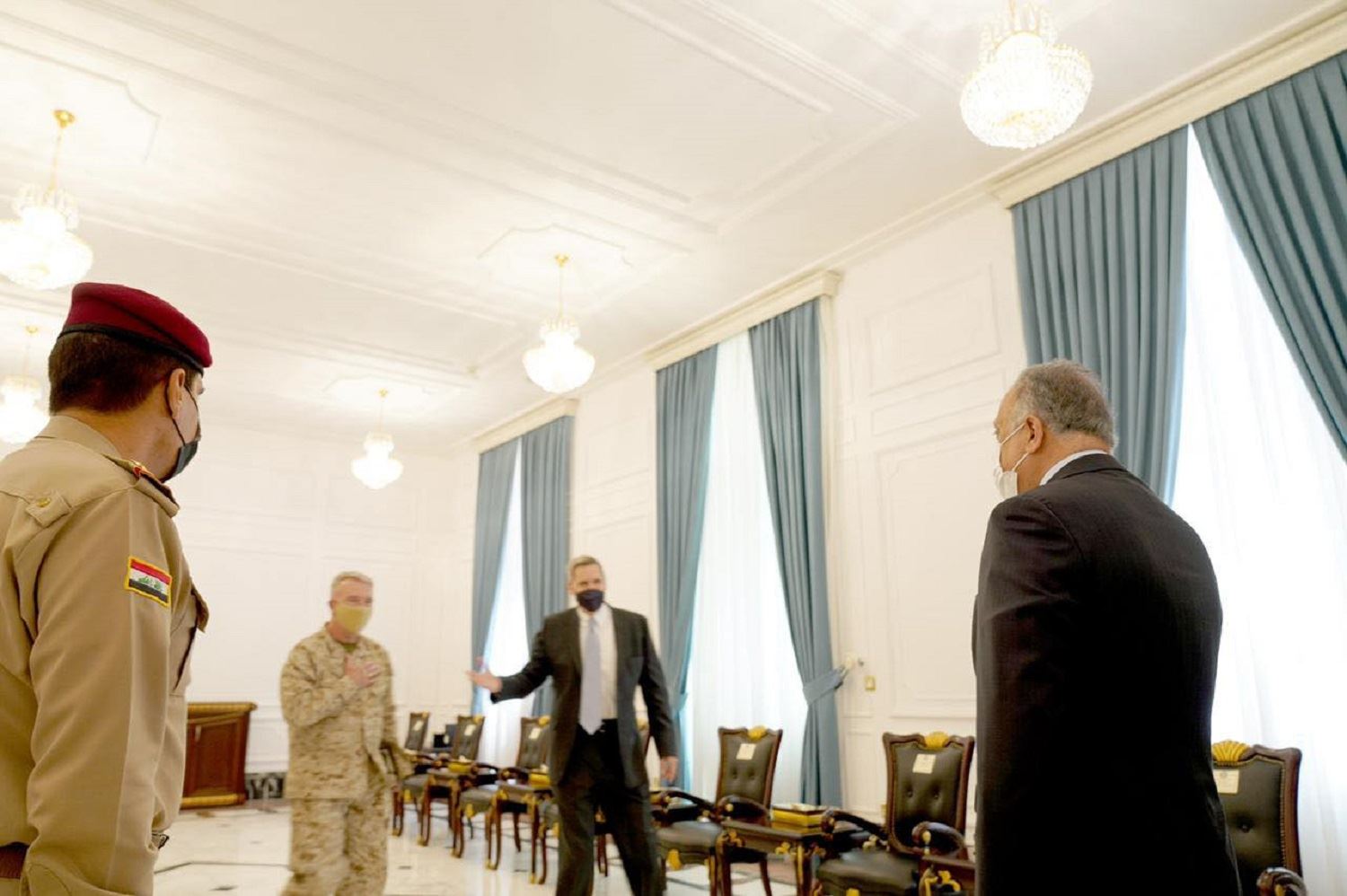
Iraqi Prime Minister Mustafa al-Kadhimi receives Kenneth McKinsey, Commander of the US Central Command, in Baghdad on Thursday, May 20, 2021. Photo: PM's office
ERBIL, Kurdistan Region — Iraq and the United States agreed on Thursday to move forward with a technical committee formed to implement the outcomes of the two countries’ strategic dialogue, according to a statement.
Iraqi Prime Minister Mustafa al-Kadhimi received Kenneth McKinsey, Commander of the US Central Command, in Baghdad on Thursday and discussed the bilateral relations between Iraq and the US and their coordination in combatting terrorism, including the fight against the Islamic State (ISIS) group.
"It was agreed to hold the first session of the specialized technical committee, to lay down mechanisms for implementing the outcomes of the third round of strategic dialogue between Iraq and the United States, to proceed with the withdrawal of the international coalition’s combat forces from Iraq," the statement reads.
Iraqi Foreign Minister Fuad Hussein and his US counterpart Antony Blinken held a third round strategic dialogue earlier in April, continuing discussions on US military disengagement, Iraq’s economy, and other issues. A timetable for the withdrawal of combat troops was being drawn up.
Kadhimi in April ordered the formation of the technical committee to implement the outcomes of the strategic dialogue, according to Major General Yehia Rasool, spokesperson to Kadhimi as Iraq’s commander-in-chief.
US forces came to Iraq in 2014 at the request of the Iraqi government to aid in the fight against ISIS. They have come under repeated attack since the US assassination of Iranian general Qasem Soleimani in Baghdad in January 2020, which was followed by a non-binding parliamentary resolution to expel all foreign troops from the country.
The US announced in January it was reducing its troops in Iraq to 2,500 due to the "increased capabilities of the Iraqi Security Forces" in fighting ISIS and transitions away from "major combat operations."
Iraqi Prime Minister Mustafa al-Kadhimi received Kenneth McKinsey, Commander of the US Central Command, in Baghdad on Thursday and discussed the bilateral relations between Iraq and the US and their coordination in combatting terrorism, including the fight against the Islamic State (ISIS) group.
"It was agreed to hold the first session of the specialized technical committee, to lay down mechanisms for implementing the outcomes of the third round of strategic dialogue between Iraq and the United States, to proceed with the withdrawal of the international coalition’s combat forces from Iraq," the statement reads.
Iraqi Foreign Minister Fuad Hussein and his US counterpart Antony Blinken held a third round strategic dialogue earlier in April, continuing discussions on US military disengagement, Iraq’s economy, and other issues. A timetable for the withdrawal of combat troops was being drawn up.
Kadhimi in April ordered the formation of the technical committee to implement the outcomes of the strategic dialogue, according to Major General Yehia Rasool, spokesperson to Kadhimi as Iraq’s commander-in-chief.
US forces came to Iraq in 2014 at the request of the Iraqi government to aid in the fight against ISIS. They have come under repeated attack since the US assassination of Iranian general Qasem Soleimani in Baghdad in January 2020, which was followed by a non-binding parliamentary resolution to expel all foreign troops from the country.
The US announced in January it was reducing its troops in Iraq to 2,500 due to the "increased capabilities of the Iraqi Security Forces" in fighting ISIS and transitions away from "major combat operations."


Comments
Rudaw moderates all comments submitted on our website. We welcome comments which are relevant to the article and encourage further discussion about the issues that matter to you. We also welcome constructive criticism about Rudaw.
To be approved for publication, however, your comments must meet our community guidelines.
We will not tolerate the following: profanity, threats, personal attacks, vulgarity, abuse (such as sexism, racism, homophobia or xenophobia), or commercial or personal promotion.
Comments that do not meet our guidelines will be rejected. Comments are not edited – they are either approved or rejected.
Post a comment