
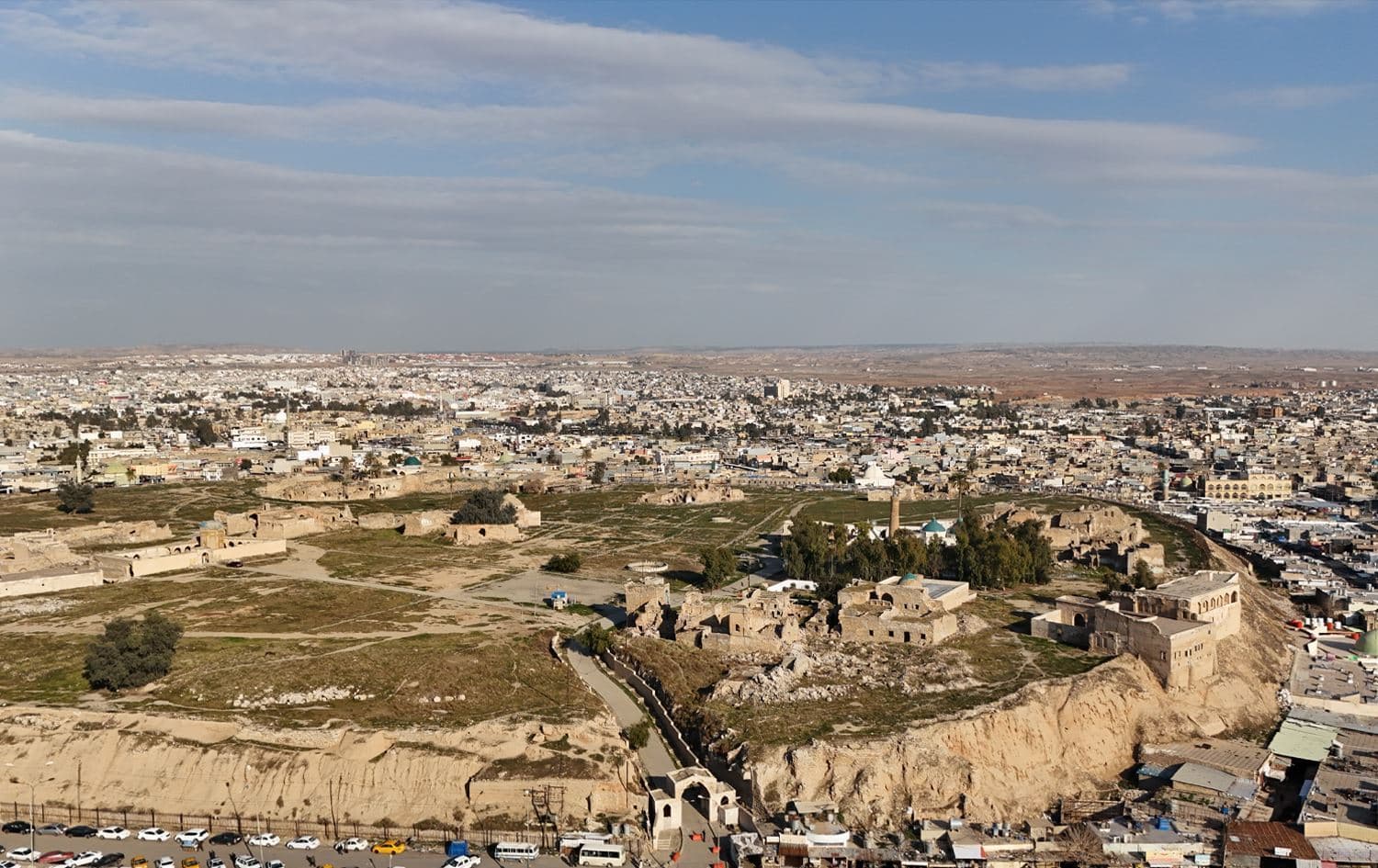
ERBIL, Kurdistan Region - The Kurdistan Regional Government (KRG) has accused Baghdad of engineering demographic change in disputed areas while spending $1.5 billion to implement constitutional provisions meant to secure Kurdish land and rights.
The KRG’s Department of Media and Information on Saturday released a report accusing Baghdad of failing to implement Article 140 of the Iraqi constitution despite allocating more than 2 trillion dinars ($1.5 billion) toward the so-called normalization process since 2005. The report warned that government-sponsored demographic engineering has continued in disputed areas.
After the fall of Saddam Hussein’s Baath regime in 2003, Iraq adopted Article 140 to reverse decades of mass displacement and systemic discrimination policies against Kurds and other minorities known as “Arabization.” According to the report, efforts to shift demographics and power instead increased after the Iraqi military expelled Kurdish Peshmerga forces from Kirkuk in 2017.
Although Kurds form the majority in the oil-rich, multi-ethnic province of Kirkuk, Kurdish officials say they have been marginalized in employment and senior posts. The report notes that Kurds make up only one percent of the Iraqi army.
Kurds were stripped of power in dozens of roles across Kirkuk, Tuz Khurmatu, Salahaddin, and Nineveh’s Zummar and Sinjar districts being reassigned from Kurds to Arabs and Turkmens, according to the report. Arab settlers also received identity cards, food ration cards, and registration documents in violation of Article 140 policies.
Kurds marginalized from power
Shortly after the Iraqi army seized control of Kirkuk, "Arabization resumed in Kirkuk province and other areas,” the report said. “Right from the start of the occupation, most administrative positions in the [Kurdish-majority] areas, especially Kirkuk, Khurmatu, Khanaqin, and Sinjar, were taken from Kurds and replaced with Arabs and Turkmens.”
The directorate accused Baghdad of “changing the demographic boundaries of administrative units” in Kirkuk, Khanaqin, Jalawla, and Sinjar through policies that increased Arab residents while reducing the Kurdish population.
The document states that decisions by post-2003 Iraqi governments to return confiscated land and homes to their original owners and invalidate Baath-era agricultural contracts have not been fully implemented.
The report indicated that since 2012, 118,000 claims have been filed to establish the status of residents and people displaced from Kirkuk, Diyala, Nineveh, and Salahaddin. It added that in Kirkuk, Khanaqin, and Jalawla (Gulala) in Diyala province, 11,800 dunams of land were returned to their rightful owners after agricultural contracts were cancelled, with files for 48,000 households resolved in the same areas.
‘War crimes’ in Kirkuk, Salahaddin
The report claimed attacks and the subsequent “occupation” of the disputed areas by the Iraqi Army and the Popular Mobilization Forces (PFM) violated Article 13 of the constitution, which states that the military cannot be used to oppress citizens, adding that Baghdad imposed “force without legal recourse.”
“Hundreds of thousands of the original inhabitants of these areas were displaced once again,” the report stated. “War crimes and crimes against humanity were committed against the people from these areas, particularly Kirkuk and Tuz Khurmatu [Salahaddin province].”
As a result, “the Arabization process in these areas resumed once again,” the report concluded.
This included awarding agricultural contracts to Arab settlers, seizing residents’ farmland, reducing Kurdish participation in government, shifting administrative boundaries to favor Arabs, and federalizing key economic sectors, including oil fields.
The report warned that farmers have been badly impacted by delays in implementing the constitution and restitution laws.
Land disputes in Kirkuk and other disputed areas date back to the Baath era. In 1975, Kurdish villages were declared prohibited oil zones and residents were stripped of land rights. By 1977, those lands were redistributed to Arab settlers by the Baath Supreme Revolutionary Court.
Land restitution law
In January, Iraq’s parliament passed a land restitution law aimed at returning property confiscated from Kurds and Turkmen during the Baath era. The legislation covers about 300,000 dunams in Kirkuk and other disputed areas and follows a July 2023 federal decision to revoke Baath-era decrees. The bill has been sent to the Iraqi Council of State - Iraq’s top legal and administrative advisory body - and requires final approval by the Council of Ministers.
In addition to ongoing disputes in Kirkuk and Salahaddin, tensions have also resurfaced in Diyala province. Provincial council chair Omar al-Karawi announced that the Iraqi Ministry of Planning approved upgrading Jalawla from a subdistrict to a district, a move Kurds see as a renewed attempt to alter demographics and seize territory.
Fahmi Burhan, the head of the Kurdistan Region's board for disputed territories, told Rudaw that officials are attempting to block an effort to make Qaratapa a district, which the KRG did not approve, Fahmi Burhan, the head of the Kurdistan Region's board for disputed territories, told Rudaw. Major administrative decisions require agreement by the KRG and Baghdad.
"We will do what we can to prevent that unilateral decision from happening,” he added.

.jpeg&w=3840&q=75)