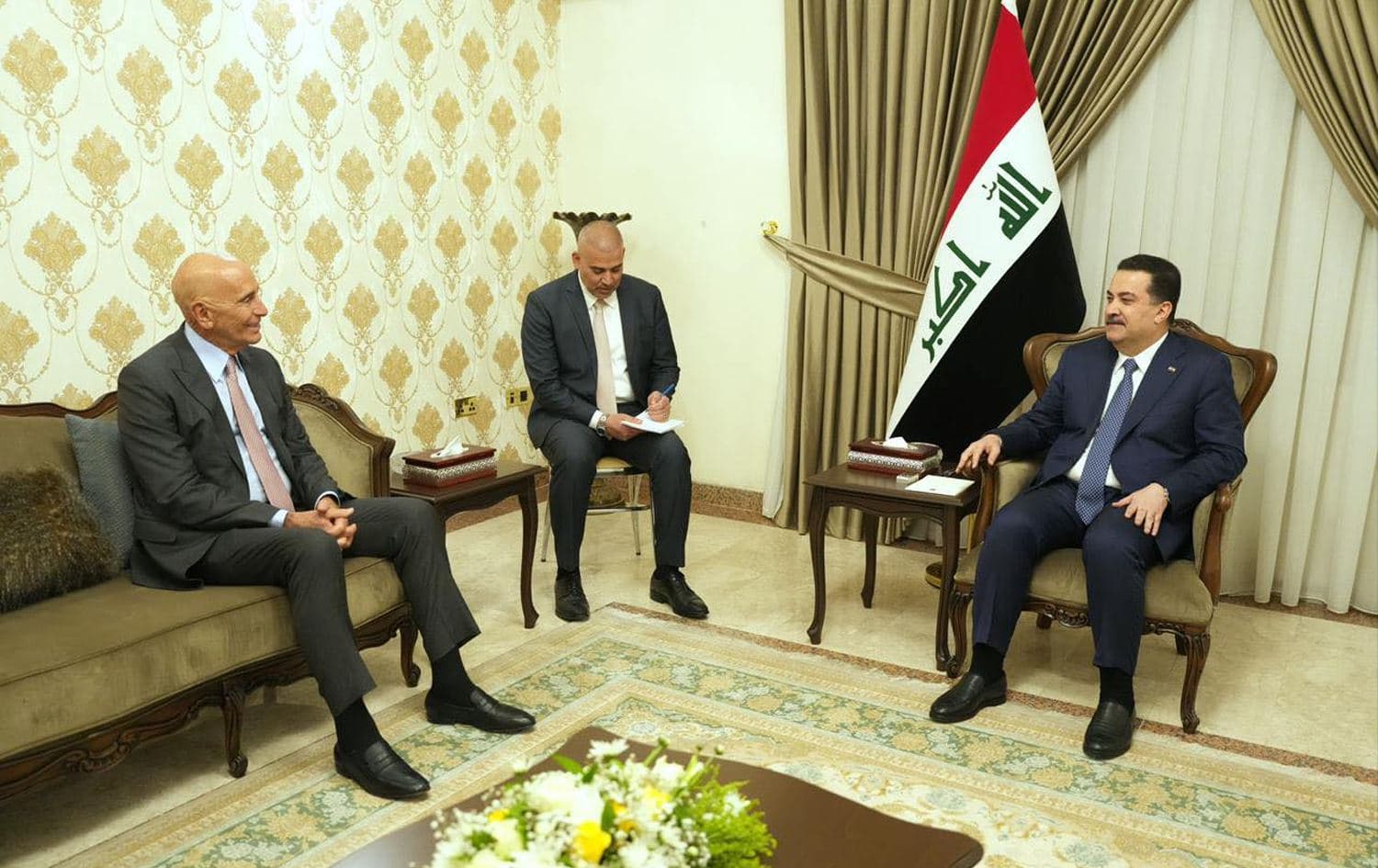
ERBIL, Kurdistan Region - Iraqi Prime Minister Mohammed Shia’ al-Sudani and the United States’ special envoy for Syria, Tom Barrack, on Sunday discussed regional tensions and efforts to prevent escalation, according to a statement from Sudani’s office, as strains continue between Washington and Tehran.
“The meeting also featured an exchange of views on preventing regional escalation and underscored the importance of resorting to dialogue and diplomatic channels to resolve disputes,” the statement said, adding that Sudani emphasized “the need to address deep-rooted problems through fundamental solutions to their underlying causes, and to prevent aggression and violations against the sovereignty of countries and peoples in the region.”
The meeting comes amid ongoing tensions between Tehran and Washington following a second round of indirect talks mediated by Oman on Tuesday. The US has mobilized a large fleet of warships and fighter jets in the region.
US President Donald Trump on Thursday set a 10- to 15-day deadline for Iran, saying it was “enough time” to reach a deal. On Friday, he confirmed reports that he was considering limited strikes.
According to the statement, Sudani and Barrack also discussed “opportunities for economic cooperation and support for comprehensive development that enhances long-term stability.” It added that Barrack “highlighted the importance of Iraq’s role in advancing solutions to regional challenges, reducing tensions, supporting dialogue, and combating terrorism.”
The talks also covered “Iraq’s efforts to support regional stability, particularly stability in Syria,” the statement said.
Attacks by the Syrian army and allied armed groups on the Kurdish-led Syrian Democratic Forces in January triggered ISIS prison breaks, prompting the transfer of 5,700 prisoners to Iraq under US military supervision.