


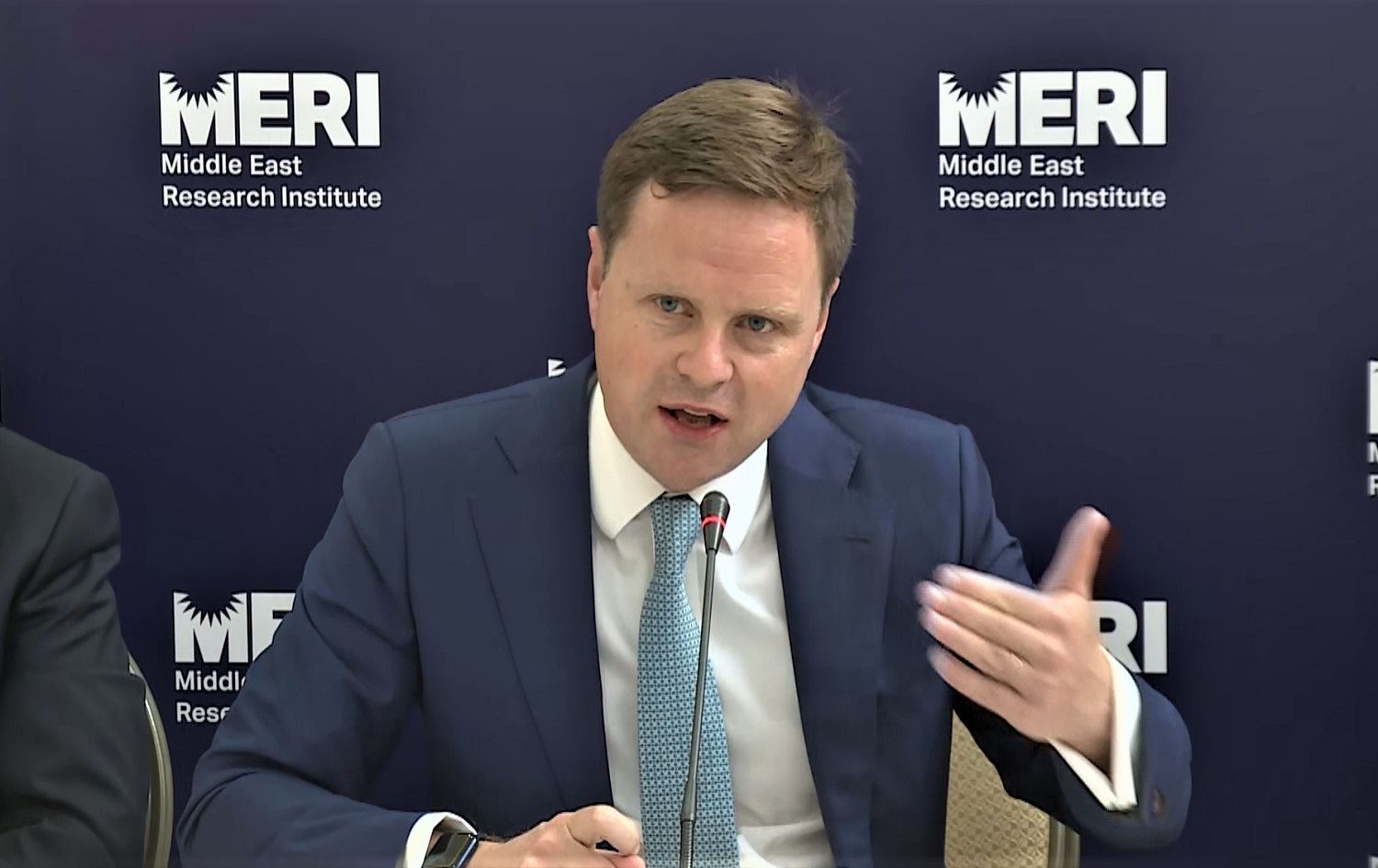
ERBIL, Kurdistan Region — The United Kingdom’s ambassador to Iraq on Thursday said there won’t be “stability” or “security” in Iraq and the Kurdistan Region unless militia groups are reigned in through a multidimensional response.
“As long as these militia groups are able to operate in Iraq, outside of the law, there won’t be stability, there’s not going to be security, not just in the KRI but across the whole Iraq,” Steven Hickey said during a panel held by the Middle East Research Institute (MERI) on Thursday.
“Part of the response needs to come from the Iraqi government in Baghdad, we are supporting them in what they’re trying to do to tackle these groups, that needs to be part military, part through the judiciary, and it needs also a political response,” added Hickey.
His comments come more than a week after Erbil International Airport was hit by an explosives-laden drone to target the coalition forces stationed there, around the same time four rockets were fired at the Zilkan military base home to Turkish personnel, 10 kilometers away from the town of Bashiqa. One Turkish soldier was killed and two civilians, including a twelve-year-old girl, were injured in the attack.
Hickey told Rudaw’s Hadi Salimi following the panel that the attacks are “totally unacceptable” and cooperation is the way to prevent the attacks that have happened on Erbil, while on the panel he stressed that there won’t be progress unless “the entire Iraqi political class acts as one to clampdown these groups.”
“I totally understand the outrage that people here in Erbil feel about the attacks that have happened, and the coalition wants to work very closely with Baghdad and the government here in Erbil to stop these attacks and hold the perpetrators accountable,” the ambassador told Salimi.
Attacks on foreign interests are a frequent occurrence in Iraq and widely blamed on pro-Iran militias within the PMF.
The ambassador said the group has grown stronger over the years and “unfortunately receive funding and support from Iran, and they pose a threat not just to people up here in the KRI but also to Iraqis, to foreigners, investors and to diplomats.”
Adding that the coalition “has a responsibility clearly to protect itself but also to protect Kurds living in Erbil and other Iraqis living close to coalition bases.”
The United States Commission for International Religious Freedom (USCIRF) in its annual report published Wednesday said the militia groups “operated with impunity” in Sinjar and Nineveh Plains in 2020 and continue to commit “heinous violations” calling for “targeted sanctions” against Popular Mobilization Forces (PMF or Hashd al-Shaabi) militia network leaders.
Hickey encouraged Iraq to “fix its problems on their own,” saying “a greater sense of independence, of sovereignty, dare I say – Iraqi nationalism are really important things for the future of Iraq.”
“As long as these militia groups are able to operate in Iraq, outside of the law, there won’t be stability, there’s not going to be security, not just in the KRI but across the whole Iraq,” Steven Hickey said during a panel held by the Middle East Research Institute (MERI) on Thursday.
“Part of the response needs to come from the Iraqi government in Baghdad, we are supporting them in what they’re trying to do to tackle these groups, that needs to be part military, part through the judiciary, and it needs also a political response,” added Hickey.
His comments come more than a week after Erbil International Airport was hit by an explosives-laden drone to target the coalition forces stationed there, around the same time four rockets were fired at the Zilkan military base home to Turkish personnel, 10 kilometers away from the town of Bashiqa. One Turkish soldier was killed and two civilians, including a twelve-year-old girl, were injured in the attack.
Hickey told Rudaw’s Hadi Salimi following the panel that the attacks are “totally unacceptable” and cooperation is the way to prevent the attacks that have happened on Erbil, while on the panel he stressed that there won’t be progress unless “the entire Iraqi political class acts as one to clampdown these groups.”
“I totally understand the outrage that people here in Erbil feel about the attacks that have happened, and the coalition wants to work very closely with Baghdad and the government here in Erbil to stop these attacks and hold the perpetrators accountable,” the ambassador told Salimi.
Attacks on foreign interests are a frequent occurrence in Iraq and widely blamed on pro-Iran militias within the PMF.
The ambassador said the group has grown stronger over the years and “unfortunately receive funding and support from Iran, and they pose a threat not just to people up here in the KRI but also to Iraqis, to foreigners, investors and to diplomats.”
Adding that the coalition “has a responsibility clearly to protect itself but also to protect Kurds living in Erbil and other Iraqis living close to coalition bases.”
The United States Commission for International Religious Freedom (USCIRF) in its annual report published Wednesday said the militia groups “operated with impunity” in Sinjar and Nineveh Plains in 2020 and continue to commit “heinous violations” calling for “targeted sanctions” against Popular Mobilization Forces (PMF or Hashd al-Shaabi) militia network leaders.
Hickey encouraged Iraq to “fix its problems on their own,” saying “a greater sense of independence, of sovereignty, dare I say – Iraqi nationalism are really important things for the future of Iraq.”


Comments
Rudaw moderates all comments submitted on our website. We welcome comments which are relevant to the article and encourage further discussion about the issues that matter to you. We also welcome constructive criticism about Rudaw.
To be approved for publication, however, your comments must meet our community guidelines.
We will not tolerate the following: profanity, threats, personal attacks, vulgarity, abuse (such as sexism, racism, homophobia or xenophobia), or commercial or personal promotion.
Comments that do not meet our guidelines will be rejected. Comments are not edited – they are either approved or rejected.
Post a comment