


Iraq

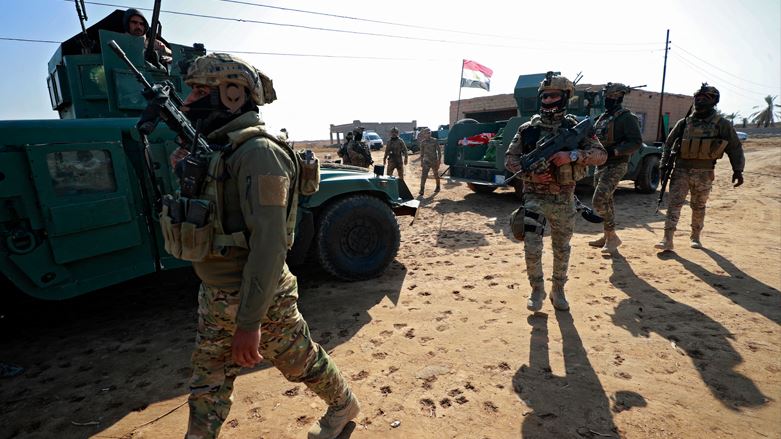
Iraqi security forces deploy to a village in eastern Diyala province to intervene in a tribal dispute. File photo: AFP
ERBIL, Kurdistan Region - Iraq’s interior ministry on Sunday issued a stern warning against tribal conflicts and the practice known as “Degga” - a violent summon used to settle disputes - reaffirming that such acts are prosecuted under the country’s stringent anti-terrorism laws, state media reported.
The state-run Iraqi News Agency (INA) quoted interior ministry Spokesperson Colonel Abbas al-Bahadli as describing tribal disputes as a “negative and uncivilized” phenomenon that undermines “societal peace and security” and is “rejected in all its forms.”
Bahadli said Iraqi security forces “are actively working to combat tribal conflicts, including what is known as the tribal Degga, emphasizing close coordination with the judiciary.” He cautioned that such acts are now categorized under Article 4 of Iraq’s Anti-Terrorism Law No. 13 of 2005.
Traditionally, the Degga was a tribal custom used to signal the need to resolve disputes. In recent years, however, it has increasingly taken a violent form, with members of an aggrieved tribe gathering outside a rival’s home and firing weapons into the air. While not intended to kill, the act serves as an intimidation tactic demanding negotiations with tribal elders.
Article 4 of the Anti-Terrorism Law stipulates that anyone who intentionally conceals a terrorist act or provides shelter to a terrorist for the purpose of covering it up shall be sentenced to life imprisonment.
In 2018, Iraq’s Supreme Judicial Council ruled that Degga constitutes a terrorist act, as it is intended to spread fear and panic, involves violence or threats that endanger lives or property, and undermines societal security and stability.
The interior ministry spokesperson reaffirmed on Sunday that “anyone apprehended” for participating in tribal disputes or in the Degga, “is referred to the judiciary, which has the final rule under the law.”
Bahadi emphasized that “no weapons should exist outside the control of the state, and no customs or regulations may be applied other than the laws currently in force.” He further urged Iraqi tribal leaders and members to “comply with the law” and “report anyone attempting to destabilize social peace and security” to “refrain from reacting violently to conflicts through the use of weapons."
Tribal disputes are a common phenomenon in Iraq, particularly in the country’s southern provinces and the capital Baghdad, where such conflicts often turn deadly and require military intervention. These clashes typically involve light and medium weapons and, in some cases, even mortar shells.
In mid-November seven people were killed and six injured in a tribal clash in the southeastern Maysan province. The previous month, Iraqi authorities arrested more than two dozen individuals involved in tribal clashes that shook the southern Dhi Qar province.
Earlier, in early September, four people - including two police officers and two armed men - were killed in a tribal dispute in Baghdad’s eastern Rusafa district.
Tribal violence is often rooted in longstanding disputes over agricultural land, water resources, and control of border crossings. These conflicts are further exacerbated by the widespread availability of weapons, many of which originate from military stockpiles of the former regime of Iraqi dictator Saddam Hussein as well as various paramilitary groups.
Moreover, tribal conflicts have grown increasingly complex in recent years, with political parties allegedly shielding their tribal affiliates, further hindering government efforts to enforce the rule of law.
The state-run Iraqi News Agency (INA) quoted interior ministry Spokesperson Colonel Abbas al-Bahadli as describing tribal disputes as a “negative and uncivilized” phenomenon that undermines “societal peace and security” and is “rejected in all its forms.”
Bahadli said Iraqi security forces “are actively working to combat tribal conflicts, including what is known as the tribal Degga, emphasizing close coordination with the judiciary.” He cautioned that such acts are now categorized under Article 4 of Iraq’s Anti-Terrorism Law No. 13 of 2005.
Traditionally, the Degga was a tribal custom used to signal the need to resolve disputes. In recent years, however, it has increasingly taken a violent form, with members of an aggrieved tribe gathering outside a rival’s home and firing weapons into the air. While not intended to kill, the act serves as an intimidation tactic demanding negotiations with tribal elders.
Article 4 of the Anti-Terrorism Law stipulates that anyone who intentionally conceals a terrorist act or provides shelter to a terrorist for the purpose of covering it up shall be sentenced to life imprisonment.
In 2018, Iraq’s Supreme Judicial Council ruled that Degga constitutes a terrorist act, as it is intended to spread fear and panic, involves violence or threats that endanger lives or property, and undermines societal security and stability.
The interior ministry spokesperson reaffirmed on Sunday that “anyone apprehended” for participating in tribal disputes or in the Degga, “is referred to the judiciary, which has the final rule under the law.”
Bahadi emphasized that “no weapons should exist outside the control of the state, and no customs or regulations may be applied other than the laws currently in force.” He further urged Iraqi tribal leaders and members to “comply with the law” and “report anyone attempting to destabilize social peace and security” to “refrain from reacting violently to conflicts through the use of weapons."
Tribal disputes are a common phenomenon in Iraq, particularly in the country’s southern provinces and the capital Baghdad, where such conflicts often turn deadly and require military intervention. These clashes typically involve light and medium weapons and, in some cases, even mortar shells.
In mid-November seven people were killed and six injured in a tribal clash in the southeastern Maysan province. The previous month, Iraqi authorities arrested more than two dozen individuals involved in tribal clashes that shook the southern Dhi Qar province.
Earlier, in early September, four people - including two police officers and two armed men - were killed in a tribal dispute in Baghdad’s eastern Rusafa district.
Tribal violence is often rooted in longstanding disputes over agricultural land, water resources, and control of border crossings. These conflicts are further exacerbated by the widespread availability of weapons, many of which originate from military stockpiles of the former regime of Iraqi dictator Saddam Hussein as well as various paramilitary groups.
Moreover, tribal conflicts have grown increasingly complex in recent years, with political parties allegedly shielding their tribal affiliates, further hindering government efforts to enforce the rule of law.


Comments
Rudaw moderates all comments submitted on our website. We welcome comments which are relevant to the article and encourage further discussion about the issues that matter to you. We also welcome constructive criticism about Rudaw.
To be approved for publication, however, your comments must meet our community guidelines.
We will not tolerate the following: profanity, threats, personal attacks, vulgarity, abuse (such as sexism, racism, homophobia or xenophobia), or commercial or personal promotion.
Comments that do not meet our guidelines will be rejected. Comments are not edited – they are either approved or rejected.
Post a comment