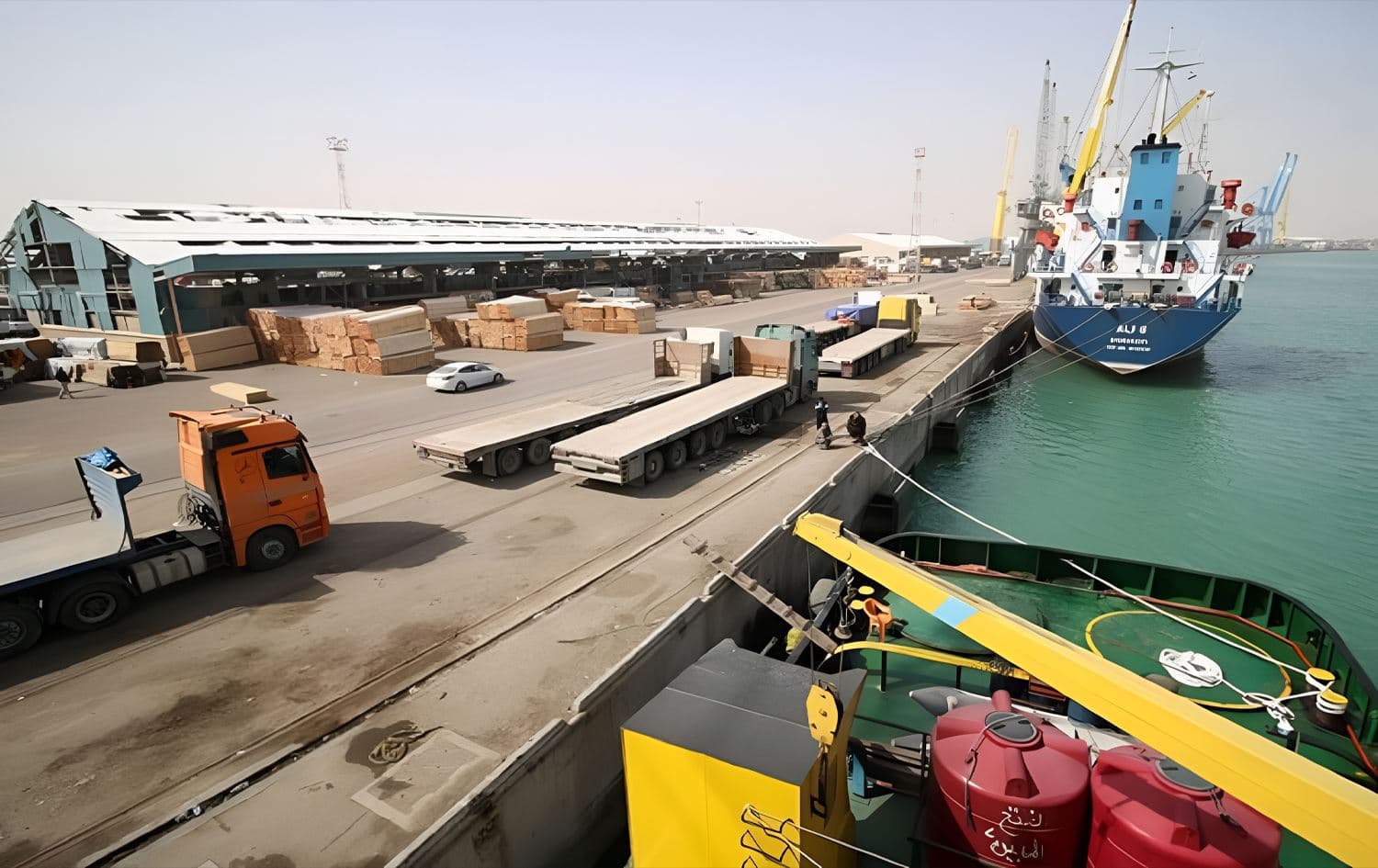
ERBIL, Kurdistan Region - Iraq’s transport ministry said on Monday that the country’s ports generated more than one trillion Iraqi dinars (over $800 million) by October due to improved performance and efficiency across maritime facilities.
Farhan al-Fartousi, director general of the General Company for Iraqi Ports, said total revenues reached 1,063,291,000,000 dinars (over $800 million) this year, crediting the rise to upgraded operations across “various maritime and logistical sectors.”
Fartousi said the growth followed “a package of developmental measures,” including modernized maritime traffic systems, strengthened oversight and administrative collection, and tighter control over port operations. He added that the steps, supported by Transport Minister Razzaq Muhaibis al-Saadawi, aim to ensure “the highest levels of efficiency and quality.”
Transport Ministry spokesman Maysam al-Safi said in September that Iraq’s maritime transport revenues had reached nearly 240 billion dinars - a 37 percent increase over two years - including 216 billion dinars collected in 2023.
Fartousi said the higher revenue shows that operational systems are performing effectively across commercial and oil ports, with improvements in “maritime services, berth management, cargo handling and port fee collection.”
According to the ports company, Iraq owns six ships, four commercial vessels and two tankers.
Meanwhile, the country is expanding its maritime infrastructure to accommodate larger ships, including the construction of the Grand Faw Port on the Arabian Gulf near al-Faw.
Fartousi said in April that Iraq expects to complete the project by the end of the year. The port, being built in partnership with South Korea’s Daewoo E&C at an estimated cost of $4.83 billion, will form the southern terminal of Iraq’s Development Road project.
Once completed, Grand Faw Port will be linked by land to Turkey’s port of Mersin, significantly reducing transport times between Gulf states and Turkey. It is also expected to strengthen Iraq’s geopolitical position, boost the economy, and create thousands of jobs by connecting the Gulf to Europe through Turkey.
Farhan al-Fartousi, director general of the General Company for Iraqi Ports, said total revenues reached 1,063,291,000,000 dinars (over $800 million) this year, crediting the rise to upgraded operations across “various maritime and logistical sectors.”
Fartousi said the growth followed “a package of developmental measures,” including modernized maritime traffic systems, strengthened oversight and administrative collection, and tighter control over port operations. He added that the steps, supported by Transport Minister Razzaq Muhaibis al-Saadawi, aim to ensure “the highest levels of efficiency and quality.”
Transport Ministry spokesman Maysam al-Safi said in September that Iraq’s maritime transport revenues had reached nearly 240 billion dinars - a 37 percent increase over two years - including 216 billion dinars collected in 2023.
Fartousi said the higher revenue shows that operational systems are performing effectively across commercial and oil ports, with improvements in “maritime services, berth management, cargo handling and port fee collection.”
According to the ports company, Iraq owns six ships, four commercial vessels and two tankers.
Meanwhile, the country is expanding its maritime infrastructure to accommodate larger ships, including the construction of the Grand Faw Port on the Arabian Gulf near al-Faw.
Fartousi said in April that Iraq expects to complete the project by the end of the year. The port, being built in partnership with South Korea’s Daewoo E&C at an estimated cost of $4.83 billion, will form the southern terminal of Iraq’s Development Road project.
Once completed, Grand Faw Port will be linked by land to Turkey’s port of Mersin, significantly reducing transport times between Gulf states and Turkey. It is also expected to strengthen Iraq’s geopolitical position, boost the economy, and create thousands of jobs by connecting the Gulf to Europe through Turkey.
Comments
Rudaw moderates all comments submitted on our website. We welcome comments which are relevant to the article and encourage further discussion about the issues that matter to you. We also welcome constructive criticism about Rudaw.
To be approved for publication, however, your comments must meet our community guidelines.
We will not tolerate the following: profanity, threats, personal attacks, vulgarity, abuse (such as sexism, racism, homophobia or xenophobia), or commercial or personal promotion.
Comments that do not meet our guidelines will be rejected. Comments are not edited – they are either approved or rejected.
Post a comment