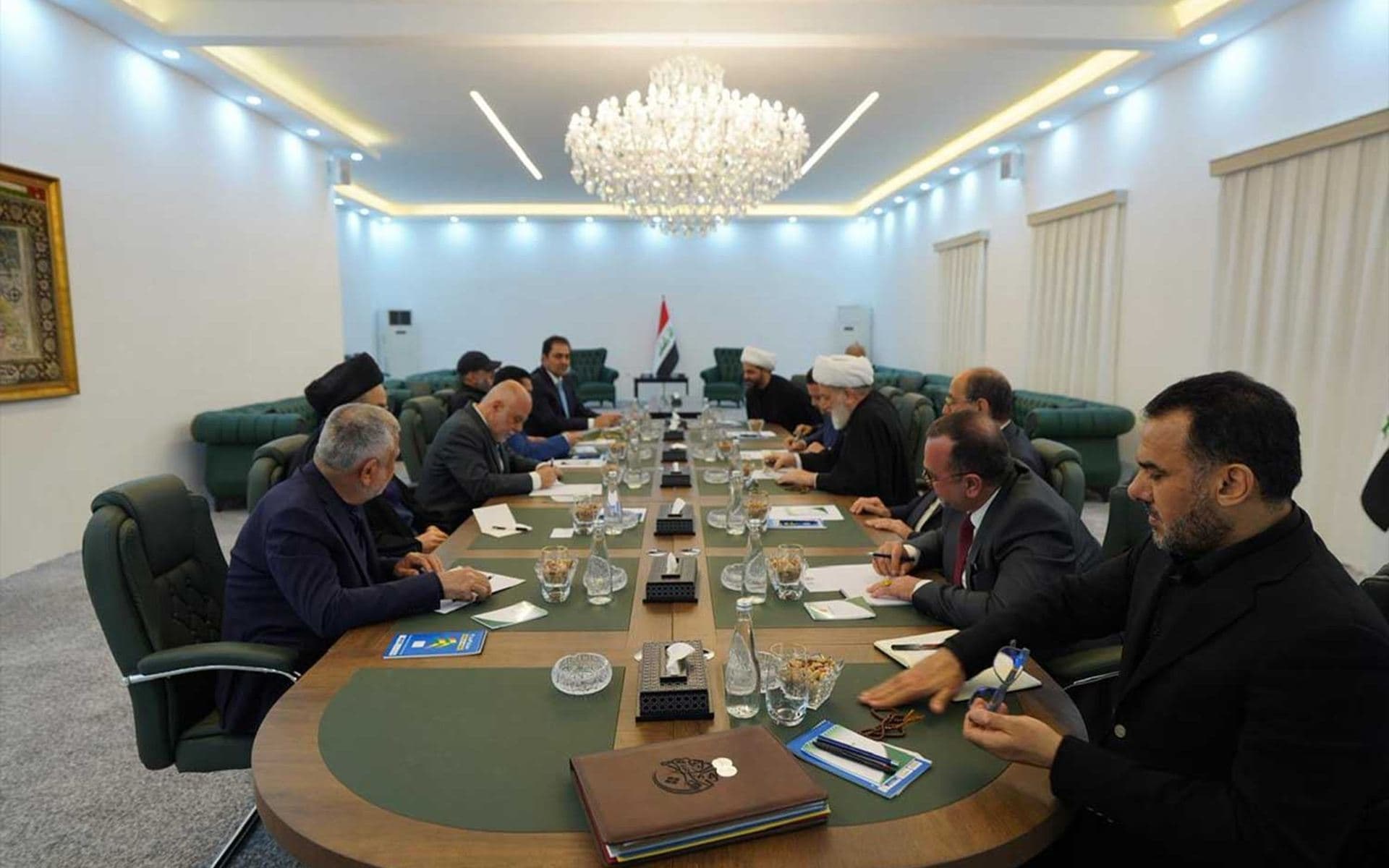
ERBIL, Kurdistan Region - Politicians from the ruling Coordination Framework said Sunday that the Shiite powerhouse is not expected to nominate a candidate for the powerful position of prime minister, despite the constitutional deadline expiring at midnight.
“The leaders of the Coordination Framework are divided,” Mithaq Masari, a member of the Badr Organization’s political bureau, told Rudaw. He added that the Shiite leaders should make “mutual concessions” to reach agreement on a single candidate.
Ali al-Daffayi, spokesperson of the Islamic Supreme Council, told Rudaw that the nomination process “needs several more days.”
The Coordination Framework has made several failed attempts to select a candidate for premier after the Iraqi parliament elected Nizar Amedi - the nominee of the Patriotic Union of Kurdistan (PUK) - as president on April 11. Under the constitution, Amedi must task the candidate of the largest parliamentary bloc - in this case the Coordination Framework - with forming the new Iraqi government within 15 days of taking office.
They are expected to meet again late Sunday as the deadline ends at midnight.
Divisions within the Shiite house surfaced after Donald Trump in January rejected the Coordination Framework’s decision to elect Nouri al-Maliki for the position, saying the move was a “very bad decision” and that Washington would “no longer help Iraq” if he was elected.
Maliki is a veteran Shiite politician who served two consecutive terms as prime minister.
Maliki labeled Trump’s remarks as "blatant American interference” and rejected any disagreements among Shiite leaders over his candidacy.
Nonetheless, Trump’s public rejection has led to rifts within the Coordination Framework, with some leaders calling for a “consensus candidate” while others - such as outgoing Prime Minister Mohammed Shia' al-Sudani - reportedly moving forward with nomination efforts.
In a January phone call with Sudani, Marco Rubio said Washington would oppose any government he viewed as “controlled by Iran” - a possible reference to Maliki.
Both Baseem al-Badri from Maliki’s State of Law Coalition and Basim al-Awadi from Sudani’s Built and Development Alliance are the strongest candidates for the prime minister post. Rudaw learned that on Monday the 12-member Coordination Framework reached a stalemate in voting for the two candidates, with Badri receiving seven votes and Awadi getting five.
“The leaders of the Coordination Framework are divided,” Mithaq Masari, a member of the Badr Organization’s political bureau, told Rudaw. He added that the Shiite leaders should make “mutual concessions” to reach agreement on a single candidate.
Ali al-Daffayi, spokesperson of the Islamic Supreme Council, told Rudaw that the nomination process “needs several more days.”
The Coordination Framework has made several failed attempts to select a candidate for premier after the Iraqi parliament elected Nizar Amedi - the nominee of the Patriotic Union of Kurdistan (PUK) - as president on April 11. Under the constitution, Amedi must task the candidate of the largest parliamentary bloc - in this case the Coordination Framework - with forming the new Iraqi government within 15 days of taking office.
They are expected to meet again late Sunday as the deadline ends at midnight.
Divisions within the Shiite house surfaced after Donald Trump in January rejected the Coordination Framework’s decision to elect Nouri al-Maliki for the position, saying the move was a “very bad decision” and that Washington would “no longer help Iraq” if he was elected.
Maliki is a veteran Shiite politician who served two consecutive terms as prime minister.
Maliki labeled Trump’s remarks as "blatant American interference” and rejected any disagreements among Shiite leaders over his candidacy.
Nonetheless, Trump’s public rejection has led to rifts within the Coordination Framework, with some leaders calling for a “consensus candidate” while others - such as outgoing Prime Minister Mohammed Shia' al-Sudani - reportedly moving forward with nomination efforts.
In a January phone call with Sudani, Marco Rubio said Washington would oppose any government he viewed as “controlled by Iran” - a possible reference to Maliki.
Both Baseem al-Badri from Maliki’s State of Law Coalition and Basim al-Awadi from Sudani’s Built and Development Alliance are the strongest candidates for the prime minister post. Rudaw learned that on Monday the 12-member Coordination Framework reached a stalemate in voting for the two candidates, with Badri receiving seven votes and Awadi getting five.
Nahro Mohammed contributed to this article.
Comments
Rudaw moderates all comments submitted on our website. We welcome comments which are relevant to the article and encourage further discussion about the issues that matter to you. We also welcome constructive criticism about Rudaw.
To be approved for publication, however, your comments must meet our community guidelines.
We will not tolerate the following: profanity, threats, personal attacks, vulgarity, abuse (such as sexism, racism, homophobia or xenophobia), or commercial or personal promotion.
Comments that do not meet our guidelines will be rejected. Comments are not edited – they are either approved or rejected.
Post a comment