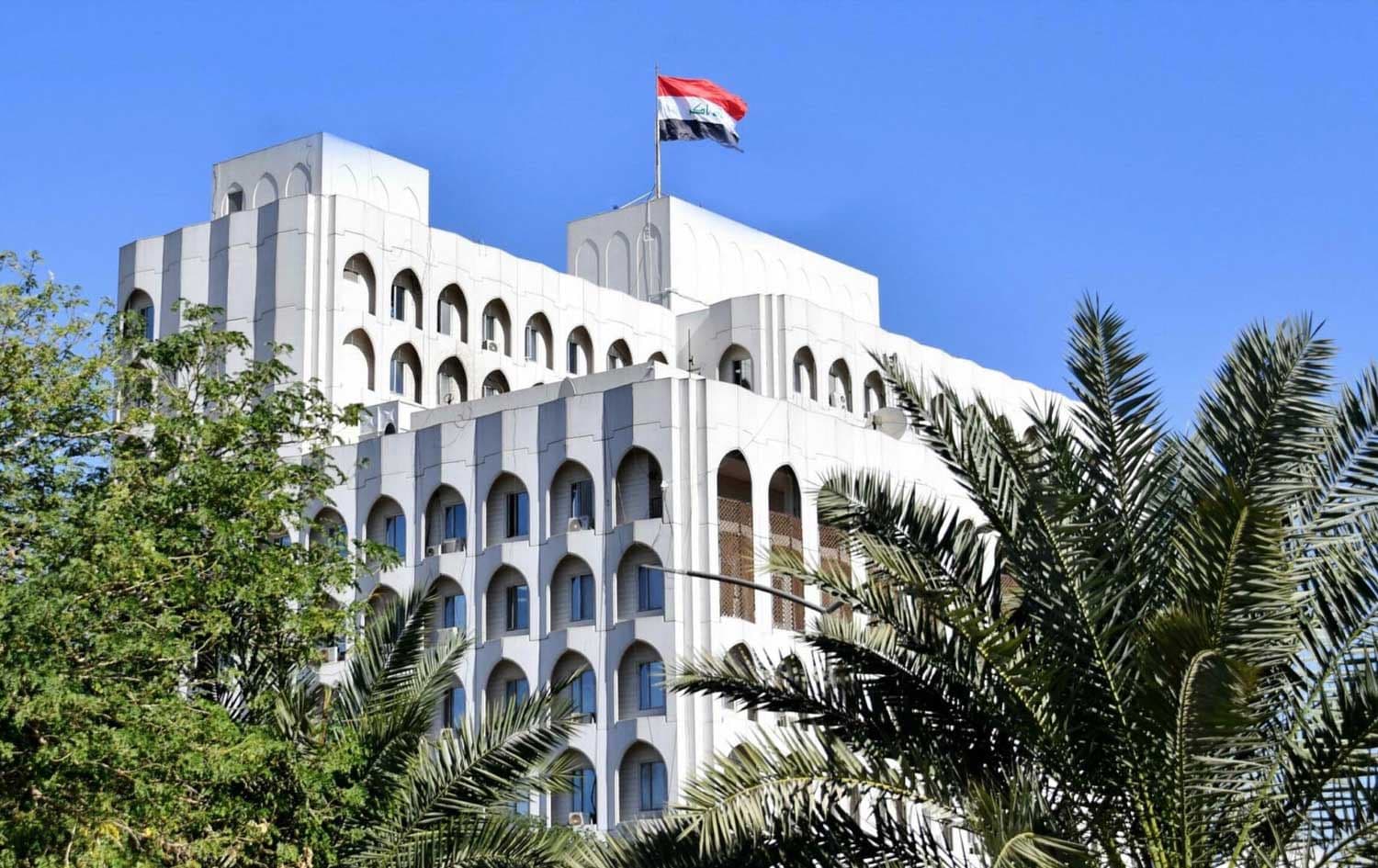
ERBIL, Kurdistan Region - The Iraqi foreign ministry on Thursday summoned the ambassadors of Jordan, Palestine, and Egypt after the three countries issued statements supporting Kuwait in a maritime border dispute, with Baghdad asserting that its recent move to deposit a maritime zones map with the United Nations is an established sovereign right.
All three meetings were held separately at the foreign ministry. Iraqi undersecretary for bilateral relations Mohammed Hussein Bahr al-Uloom hosted Jordan’s Ambassador Maher Salem al-Tarawneh, Palestinian Ambassador Samar Abdulrahman, and Egyptian Ambassador Ahmed Samir Helmy.
The summons followed statements by the three countries after Iraq deposited its maritime zones map with the United Nations. Kuwait protested, saying the map “contains claims regarding Iraqi maritime zones” that infringe on “the sovereignty of the State of Kuwait over its maritime areas and its fixed and stable submerged elevations.”
On Saturday, Kuwait called on Iraq “to act with seriousness and responsibility in accordance with… international law, the 1982 United Nations Convention on the Law of the Sea (UNCLOS), and… bilateral agreements between the two countries.”
The UNCLOS is widely described as the “constitution for the oceans,” and it establishes a comprehensive legal framework governing navigation, maritime boundaries, resource management, and environmental protection.
In three statements on Thursday, the Iraqi foreign ministry said the undersecretary “clearly and explicitly affirmed Iraq's decision regarding its maritime zones map, stating that it is an established sovereign right.”
Regarding Jordan, Iraq stressed that its decision to deposit the map is “an established sovereign right,” adding that the Jordanian statement had “overlooked Iraq’s views, its stance, and the measures it has taken in full compliance" with UNCLOS.
Iraq said its steps were “with full transparency, reflecting Iraq's commitment to addressing all relevant issues through legal and diplomatic frameworks in a manner that safeguards Iraq’s sovereignty and preserves its national rights” and expressed “regret over the issuance of such a statement, given the resulting official and popular dissatisfaction.”
The ministry highlighted “the depth and strength of the fraternal and historical relations” between Iraq and Jordan and stressed “the highest levels of accuracy and objectivity in official statements” with “equal respect for the sovereignty of both countries.”
On Tuesday, the Palestinian Foreign Ministry expressed "support" for Kuwait’s sovereignty and urged Iraq and Kuwait to resolve their dispute through dialogue.
The Iraqi foreign ministry said in a statement that that depositing the map is a sovereign right and said the Palestinian statement had “overlooked Iraq’s views,” citing compliance with international law and UNCLOS, while expressing “regret over the issuance of such a statement.
Iraq also underlined its support for the Palestinian cause as “a principled and fixed position that remains unchanged.”
According to the Iraqi foreign ministry, the Palestinian ambassador said the statement “was intended to enhance Arab cooperation; however, it resulted in unwanted repercussions that do not align with Palestinian foreign policy trends.”
In the meeting with Egypt, Iraq said its decision “is a sovereign right that cannot be rescinded.”
The Egyptian ambassador said Cairo’s position stemmed from “its commitment to supporting security and stability between the two nations” and pledged to convey Iraq’s perspective to the Egyptian leadership in a “clear and detailed manner,” according to the Iraqi foreign ministry.