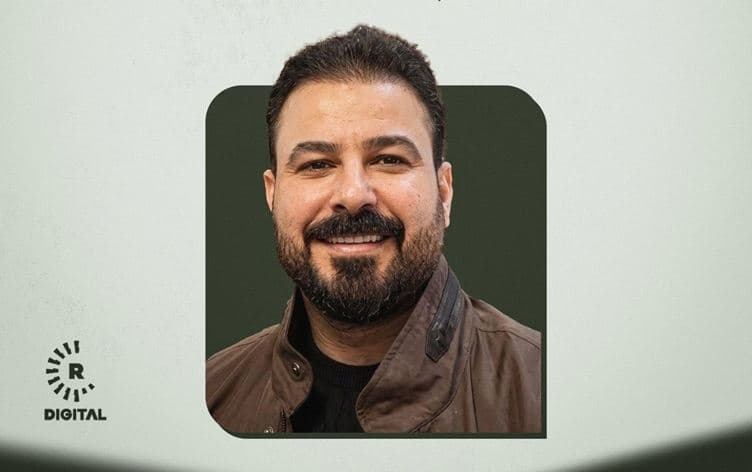

ERBIL, Kurdistan Region - Iraq’s ruling Shiite Coordination Framework on Monday named Ali al-Zaidi as its “consensus candidate” for the post of the country’s next prime minister, the bloc said in a statement, after weeks of consultations among its constituent parties and on the final day of the constitutional deadline for designating a nominee for the top post, traditionally held by a Shiite.
After a meeting held on Monday evening, the Coordination Framework announced that "after reviewing the candidates, Ali al-Zaidi had been selected" as its nominee, "for the position of prime minister and to form the next government."
The Coordination Framework also praised what it described as the “historic and responsible positions” of the head of the State of Law Coalition and former Iraqi prime minister Nouri al-Maliki (2006–2014), and the head of the Reconstruction and Development Coalition and incumbent Prime Minister Mohammed Shia’ al-Sudani, "for withdrawing their candidacies for the premiership and the formation of the next government."
The statement added that this step “reflects a commitment to higher national interests, helps ease the political deadlock, and allows the Coordination Framework to select a candidate who meets the required criteria for the position of prime minister and is suited to the demands and challenges of the current phase.”
Hours earlier, Khalid Walid, a leading member of the Sudani-led RDC, confirmed to Rudaw that the Coordination Framework is set to nominate the Iraqi businessman and politician for the top post.
“We in the Reconstruction and Development Coalition affirm our support for the Coordination Framework’s decision to name Ali al-Zaidi as prime minister," he said, describing the move as a “practical step to end the deadlock and ongoing political disruption.”
Walid added that although consultations to name the next prime minister were “long and complicated,” they reflected “seriousness in maintaining stability and national interest” amid regional escalations.
The RDC “will continue to play an active role in Iraq’s political process and in the formation of the next government," he concluded.
Zaidi’s nomination is seen as a strategic move by the Coordination Framework toward a technocratic premiership, especially as he has a prominent legal and financial background, along with extensive legislative expertise and executive experience in the banking and investment sectors.
He holds a Bachelor’s degree in Law and is a member of the Iraqi bar association, and holds both a Bachelor’s and a Master’s degree in finance and banking and has previously served as chairman of the board of al-Janoob Islamic Bank - a significant player in Iraq’s private banking sector.
Zaidi, 40, currently serves as chairman of the National Holding Company, a prominent private investment group, overseeing a diverse portfolio of enterprises and contributing to efforts to diversify Iraq’s income sources and strengthen the private sector.
Beyond finance, the prime minister nominee also serves as chairman of the board of Al-Shaab University - a private university in Baghdad that focuses on integrating higher education with traditional academic learning and digital technology - as well as its sister institution, the Ishtar Medical Institute.
As Zaidi is recognized in national dialogue circles, he is expected to adopt a service-oriented leadership approach similar to that of outgoing Prime Minister Sudani.
Iraq held legislative elections in early November, and in late December, parliament elected its speaker and two deputies.
On April 11, parliament elected the Patriotic Union of Kurdistan (PUK) nominee, Nizar Amedi, as president. Under the constitution, once sworn in, the president has up to 15 days to task the nominee of the largest parliamentary bloc - the Coordination Framework - with forming a government.
Zaidi’s nomination comes on the final day before the constitutional deadline expires, following weeks of deliberations among the Coordination Framework’s 12 Shiite parties, which were marked by deep internal divisions.
Abu Mithaq al-Masari, a prominent Iraqi political analyst, on Monday said that Zaidi’s sudden rise as a “consensus candidate” for the premiership suggests he may be a “serious candidate,” noting his “closeness to one of the influential ‘turbans’ [religious clerics] within the Coordination Framework.”
In a post on his Facebook page, Masari also suggested that another possibility is that Zaidi is a “burnt card [sacrificial candidate] used to buy time and deflect media pressure after exceeding the constitutional deadline.”
Last updated at 9:50 pm.