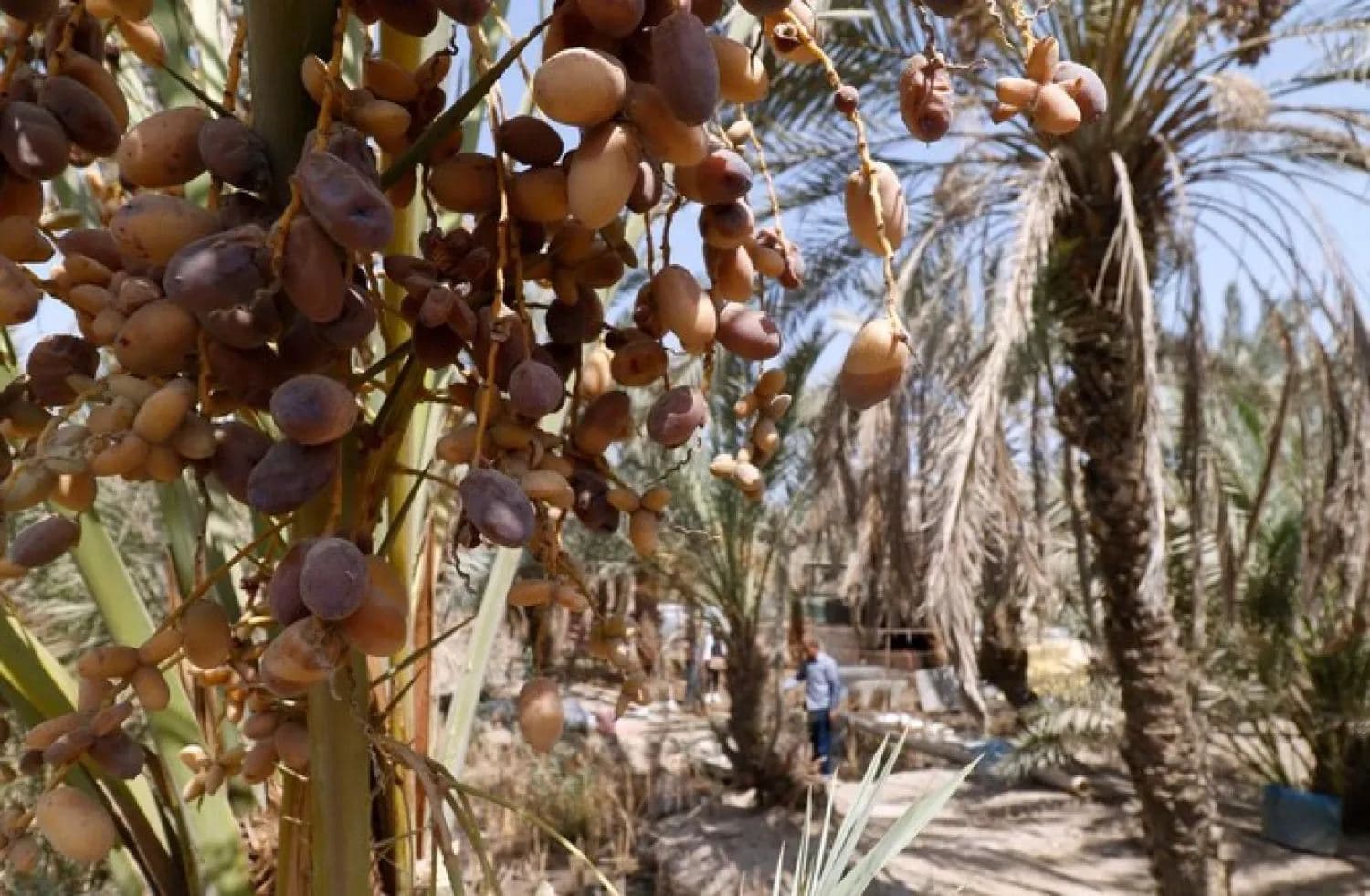
ERBIL, Kurdistan Region - Iraq’s ministry of agriculture has warned of the rapid spread of a highly destructive insect threatening millions of palm trees across the country, describing it as a deadly “hidden enemy” capable of wiping out trees from the inside before symptoms become visible.
The Red Palm Weevil has already spread among date palm groves in the central Euphrates region, according to Adnan Hameed, head of palm tree assets at the agriculture ministry.
“The [Red Palm Weevil] has spread among date palm trees in the central Euphrates area,” Hameed told Rudaw. “It has threatened 10 million palm trees in these areas.”
Hameed said the invasive insect is new to Iraq and was previously unknown in the country. Its danger lies in its ability to operate unnoticed.
“The weevil is active at night and spreads rapidly. It lives inside the trunk of the tree, where it begins destroying it from within,” he explained.
Describing the pest as a “hidden enemy,” Hameed said the insect lays its eggs deep inside the trunk. Once hatched, the larvae feed on the tree’s interior, gradually weakening it.
“The palm tree may look completely normal from the outside, but it is destroyed on the inside. By the time it is detected, it is often too late to save it,” he said.
Iraq is home to more than 22 million palm trees, according to the ministry of agriculture, placing the country among the world’s leaders in palm tree numbers and ranking it fourth globally in date production.
Date palms are a vital component of Iraq’s agricultural economy and cultural heritage, particularly in southern and central provinces.
Hameed said palm groves in Basra, Babil, Diyala, and Wasit have been hit hardest by the outbreak.
In the Aziziya district of Wasit alone, more than 200 palm trees have already been destroyed.
The Red Palm Weevil is considered one of the most devastating pests affecting palm trees worldwide. Originating in South and Southeast Asia, it has spread over recent decades to the Middle East, North Africa, and parts of Europe, causing widespread losses in date and coconut palm plantations.
Commenting on the factors behind its spread in Iraq, Hameed said the import of low-quality pesticides, combined with prolonged drought and the effects of climate change, may have contributed to the outbreak.
In response, the ministry of agriculture has begun implementing emergency measures to contain the infestation. These include deploying specialized teams to border areas to prevent the import of low-quality pesticides and agricultural medicines, as well as increasing monitoring efforts in affected regions.
Officials warn that without swift and coordinated action, the pest could pose a serious long-term threat to Iraq’s palm tree population and date production.
Malik Abbasi contributed to this article