
ERBIL, Kurdistan Region – A Russia defense ministry-affiliated commission for reconciliation in Syria has accused Turkish-backed forces of committing “fundamental change” in the demography of once predominantly Kurdish areas in northern Syria.
Turkish and Turkey-backed forces have displaced some 250,000 Kurds from the northwest Syrian district of Afrin, and 135,000 from Sari Kani (Ras al-Ain) and Gire Spi (Tel Abyad) – resettling ethnic Turkmen in their place, according to a statement released Tuesday by the Russian Center for Reconciliation in Syria, established in 2016 as a joint Russia-Turkey enterprise.
In early 2018, Turkey invaded the Kurdish enclave of Afrin with the help of its Syrian proxies. It launched another offensive on northern Syria in October 2019, this time driving the Kurdish-led Syrian Democratic Forces (SDF) out of major towns along north Syria-Turkey border areas.
In Afrin, a widespread campaign of demographic change has been ongoing for almost two years. Much of its original Kurdish population now live in displacement camps in nearby Tel Riffat, Shahba and Sherawa.
Speaking to Rudaw on Tuesday night, Bashar Amin, a member of the Kurdistan Democratic Party-Syria (PDK-S) which forms part of the Syrian Kurdish National Council (ENKS) echoed the reconciliation center's statement.
Demographic change in once Kurdish-majority areas has been raised in meetings with American, Russian, and French officials, Amin said, who have urged “unity among the Kurdish sides.”
The PDK-S official added that the aforementioned countries have agreed to act as guarantors in order for them to be able to stop the continued demographic changes of the Kurdish region.
"They have not turned down our request to become guarantees. Our meetings with them will continue," Amin said.
An ENKS delegation met last month with Turkish foreign minister Mevlut Cavusoglu to discuss abuses and demographic changes.
Turkey’s foreign minister rejected demographic change at the meeting and supported the return of displaced families to their homes, according to an ENKS post-meeting statement.
A report published Tuesday by the UN’s Independent International Commission of Inquiry on Syria apportioned blame for civilian casualties across international parties involved in conflicts across northern Syria, including Russia.
The UN panel accused Moscow for the first time of direct involvement in war crimes for the indiscriminate bombing of civilian areas in Idlib, where Moscow has provided air support in the Syrian regime’s push to take the northwest Syrian province and its surrounding areas from the control of Hayat Tahrir al-Sham (HTS) jihadists and their allied, Turkish-backed rebel groups.
In two incidents – one recorded in July, the other in August - the Russian Air Force “did not direct the attacks at a specific military objective, amounting to the war crime of launching indiscriminate attacks in civilian areas,” the report said.
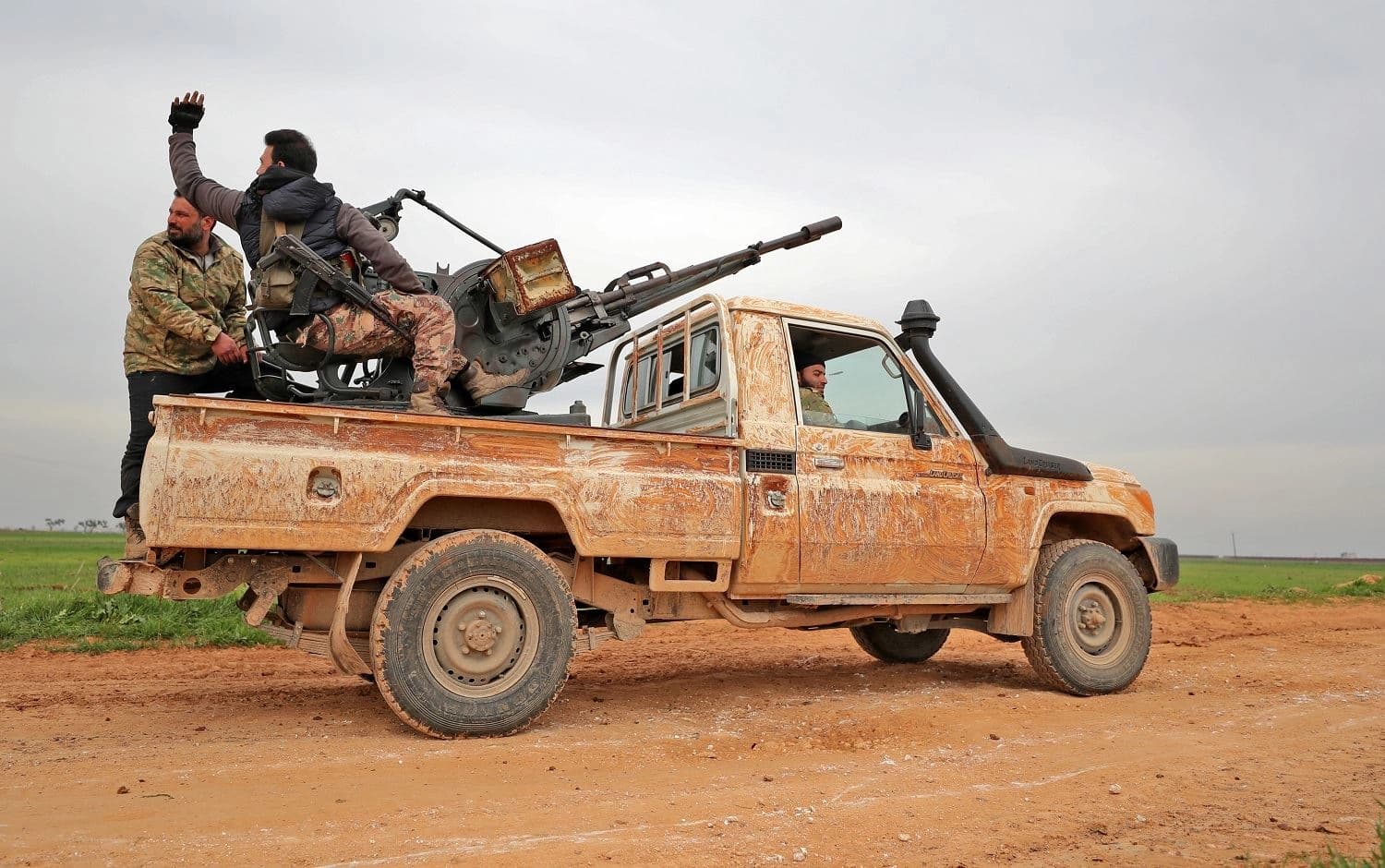
Turkish-backed Syrian proxies are accused by the inquiry of arbitrary arrest and torture, and looting of properties of Kurds in Afrin.
"Cases of detentions, killings, beatings and abductions, in addition to widespread looting and appropriation of civilian homes, by a variety of armed groups operating under the umbrella of the Syrian National Army have been documented, in a consistent, discernible pattern previously documented in Afrin," the report detailed.
"The reported incidents primarily affected Kurdish residents in Afrin and adjacent areas," the report added. "Syrian National Army (SNA) fighters have placed family members in some of the homes of Kurdish owners who fled the area and provided "rental contracts" to newly accommodated individuals," it said of the SNA, an umbrella of Turkey-backed Syrian proxy groups.