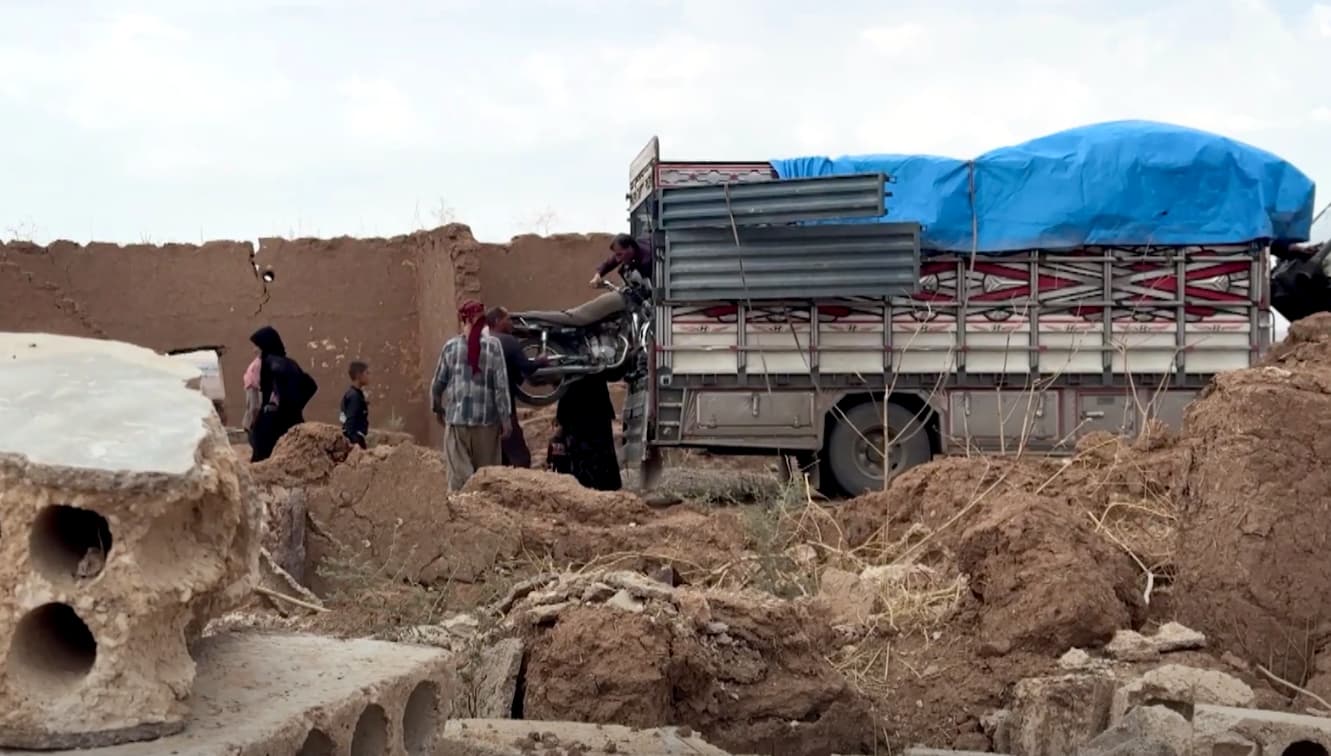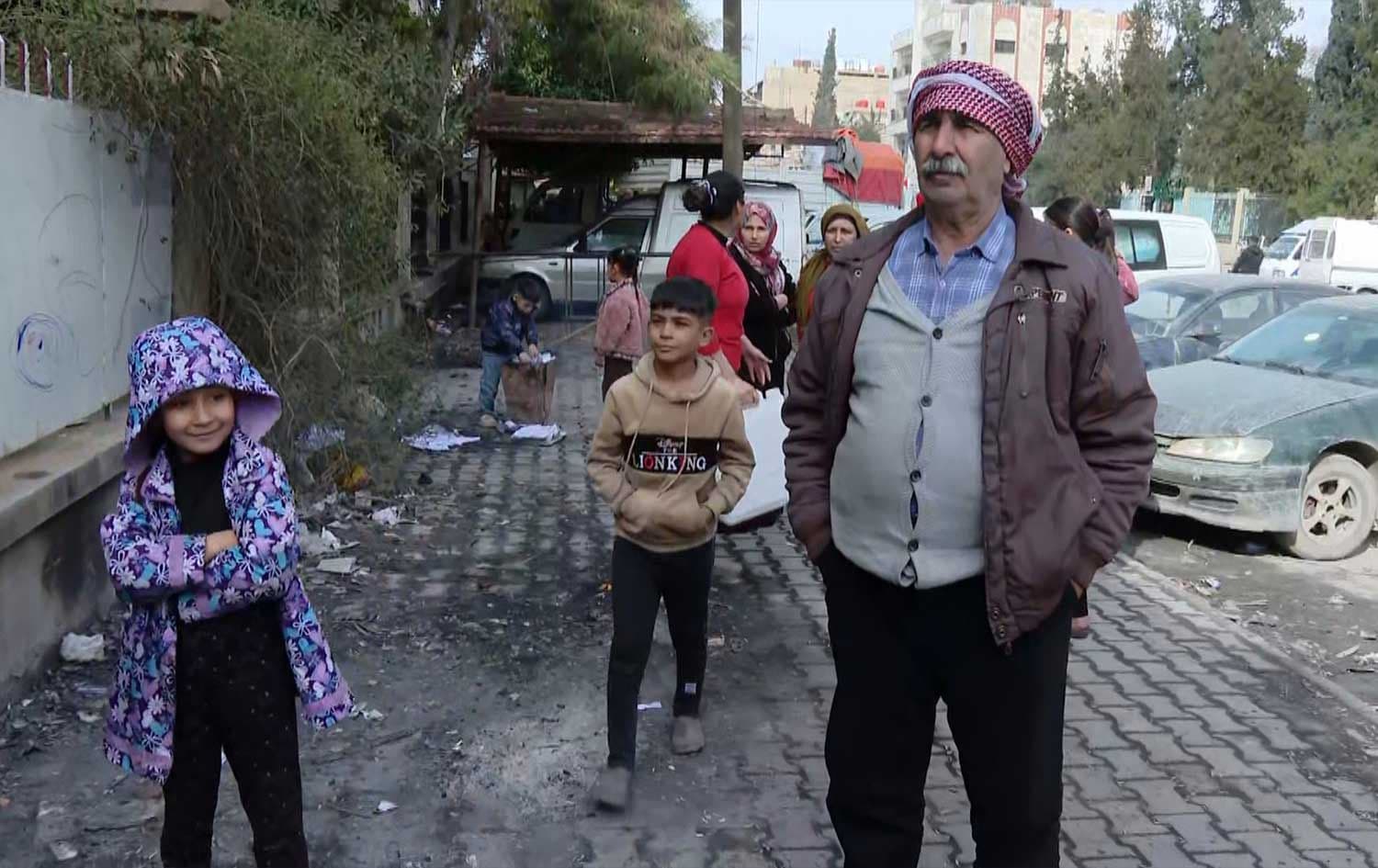

ERBIL, Kurdistan Region - An estimated 150,000 to 175,000 internally displaced people (IDPs) have sought refuge in Kurdish cities across northeast Syria (Rojava) following weeks of insecurity and displacement, according to the Kurdish Red Crescent in Rojava.
Dilgash Issa, co-chair of the Crescent, told Rudaw in Qamishli on Thursday that the final figures are still being compiled. “There has been much discussion regarding the exact numbers, but it is estimated to be between 150,000 and 175,000 people,” he said, adding that “the final results will be released this coming Sunday.”
The wave of displacement was triggered by a mid-January offensive led by the Syrian Arab Army and allied armed groups against the Syrian Democratic Forces (SDF) in areas controlled by the Kurdish-led forces across eastern Aleppo, Deir ez-Zor, Raqqa, and Hasaka provinces.
The SDF, which serves as the de facto military force in Rojava and key ally of the US-led Global Coalition to Defeat ISIS, had previously liberated these areas and maintained control to prevent an ISIS resurgence.
On Friday, the SDF and Damascus announced that they had reached an internationally brokered agreement to end hostilities and integrate Rojava’s civil and military institutions, including the Kurdish-led forces, under Syrian state control. Despite this, many families have yet to return home.
Issa noted that cold weather and emergency movements make tracking displaced people difficult. “Their locations shift frequently. Therefore, we don’t have an exact figure in hand yet,” he said.
“They are from cities across Rojava, from [al-Malikiyah] Derik to al-Darbasiyah and Hasaka. There are also people from Afrin who were displaced to Shahba in 2018,” he detailed.
The Kurdish Red Crescent co-chair further explained that displacement had intensified following the fall of longtime dictator Bashar al-Assad’s regime. “When the Assad regime fell a year and a half ago - on December 8, [2024] - people were displaced from Tabqa, Raqqa, and cities throughout northeast Syria.”
Issa said renewed tensions in recent weeks have forced further displacements. “Following the recent events in [Ashrafiyeh and] Sheikh Maqsoud since [January] 6 and continuing to today, people from Raqqa, Tabqa, and Sheikh Maqsoud have moved here. There was also a threat to Hasaka, which led residents to seek refuge in Qamishli and other cities,” he said.
According to Issa, while the security situation in Hasaka has improved, the displacement crisis remains acute.
“Currently, these displaced persons are sheltered in 115 schools in Qamishli, nearly 20 mosques, and many public halls. Many others have moved in with their relatives,” Issa said.
On Monday, the UN Office for the Coordination of Humanitarian Affairs (OCHA) said it and its partners continue to provide vital assistance to thousands of people in Rojava.
OCHA reported that a convoy of more than 20 trucks and a mobile clinic arrived in the Kurdish city of Kobane, carrying ready-to-eat food, health supplies, and fuel, marking the second such delivery within a week as the city faces shortages of water, communications, medical supplies, and food due to the weeks-long siege imposed by the Damascus forces.
As of January 25, the agency said more than 170,000 people had been forced to flee their homes across 178 communities in northeast Syria, mostly in Hasaka, with women and children comprising the vast majority.
Last week, around 130 trucks carrying 10 tons of aid from the Kurdistan Region were dispatched to Rojava. The humanitarian assistance, valued at more than 1.3 billion Iraqi dinars (approximately $932,000), was sent to the Kurdish-led Rojava as part of Rudaw’s Ranj campaign, led by lead anchor Ranj Sangawi.
The United Nations and humanitarian agencies say the Syrian crisis remains among the world’s worst displacement emergencies. Humanitarian agencies warn that civilians are especially vulnerable amid stretched support services, harsh winter conditions and lingering security risks.
Over 6.7 million people remain internally displaced inside Syria, with 3.7 million Syrian refugees living outside the country, the UN reports. More than 1.4 million Syrian refugees have returned home from neighboring countries, while nearly 2 million displaced Syrians have returned home since Bashar al-Assad’s regime was toppled in late 2024.