
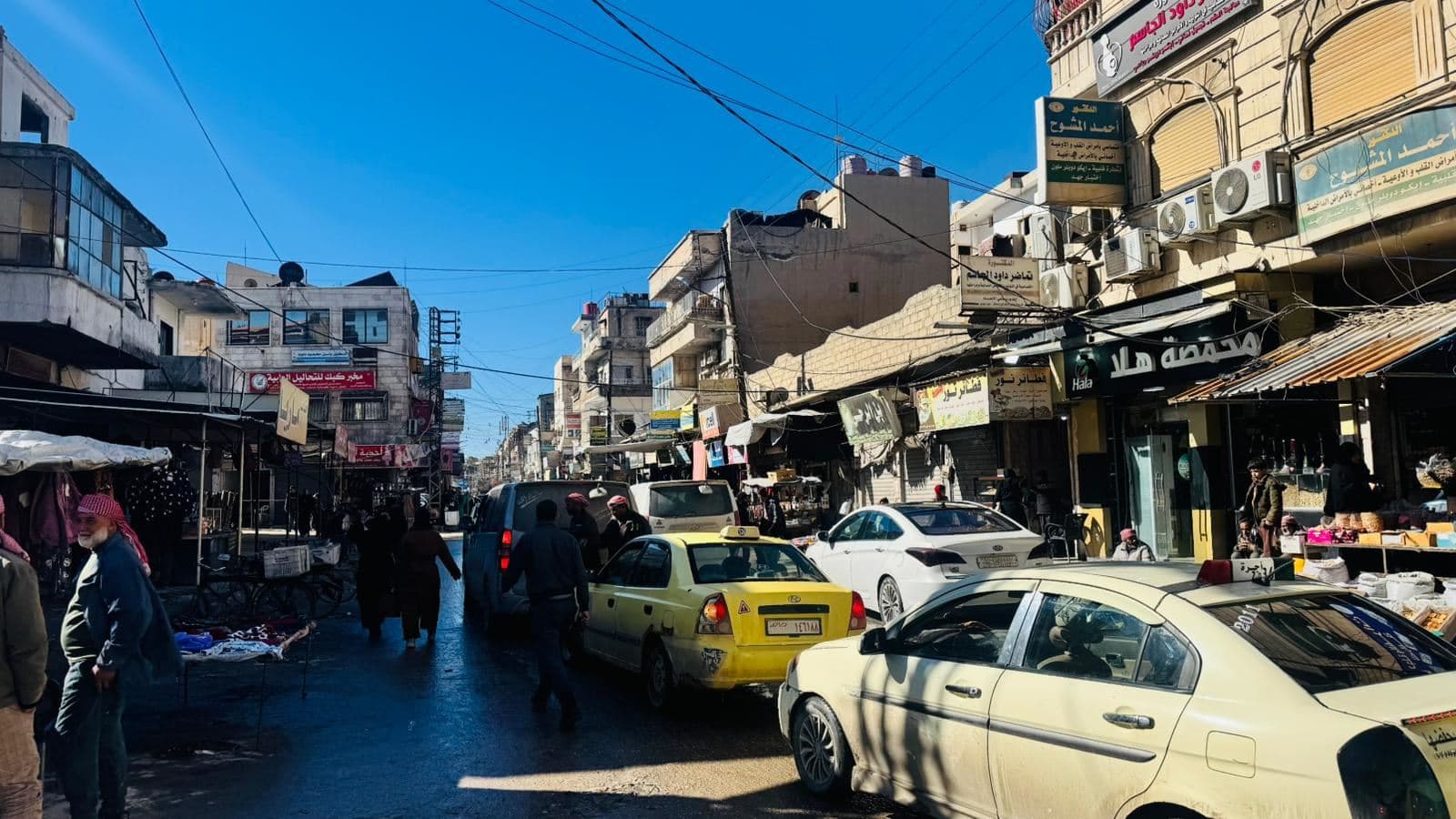
HASAKA, Syria - A cautious calm has settled over Kurdish-majority northeast Syria (Rojava) as Damascus security forces entered cities and towns long controlled by the local Kurdish government.
Shops were open for business on Wednesday following two days of dusk-to-dawn curfews by the Kurdish Internal Security Forces (Asayish), which remains the central force in Kurdish-majority areas. Syrian internal security forces deployed in two major cities - Hasaka and Qamishli on the Turkish border - under a ceasefire agreement that will bring autonomously-run Kurdish security and local governments under federal authorities.
Life was slowly returning to normal in northeast Syria after the Syrian Arab Army, backed by armed groups, seized Kurdish-held areas in the north and laid siege to major cities in Rojava.
Weeks of fighting and tense standoffs with the Asayish-affiliated Syrian Democratic Forces (SDF) triggered a humanitarian crisis that has displaced 170,000 people and caused critical shortages of food, fuel, water and electricity.
Cars queued for fuel in Hasaka city, where streets were strewn with rubbish. Workers struggled to clear drainage systems after days of rainfall left roads semi-submerged.
“When the government forces returned, we felt it was like Eid,” 40-year-old Abdullah Abdullah from the Hasaka district of Guwayran told Rudaw, referring to Damascus security forces entering the city on Monday. He said residents were impoverished and few children were attending school.
“Today I am desperate for diesel,” he added. Another resident nodded in agreement.
Abdullah has five children, the eldest of whom is unemployed despite having a bachelor’s degree. The rest are not attending school.
When asked what the future holds for the Hasaka region, he raised both his hands and looked up to the sky, saying “the almighty God knows.”
Quiet but tense frontlines
Barely a half an hour drive from where Abdullah stood is the frontline where the road was blocked by a massive berm.
The frontlines, where Kurdish forces and the Syrian Arab Army were engaged in a tense standoff as the ceasefire was being negotiated, have mostly held despite Syrian drones occasionally flying over the region.
The frontlines on Shaddadi road were calm when Rudaw visited on Wednesday, in sharp contrast to a week earlier when frontlines were fortified and mortar fire echoed across the area.
A single Kurdish fighter guarded the berm on the road between Hasaka and Shaddadi, a sign that tensions had dramatically declined.
“It’s mostly been peaceful, except for occasional drones flying overhead,” Juma Derbasi, an SDF fighter, said.
Military activity remains high as ISIS prisoners bussed out
He hoped for peace but said the SDF remain targets of “the other side,” in reference to armed groups and the Syrian Arab Army.
“A drone dropped a munition on Monday afternoon and I was almost hit,” he said.
Juma said no Syrian drones had flown over the Shaddadi area since, and that a US fighter jet constantly circled overhead. When asked if the SDF retaliated by flying their own drones, he shrugged and said no.
At the entrance to Hasaka city, Rudaw witnessed another group of Islamic State (ISIS) fighters being bussed from the Guwayran prison, a major ISIS detention facility, towards the Iraqi border along with a half-dozen armored personnel carriers. Local shopkeepers confirmed this was happening daily.
In late January, the US said it would transfer up to 7,000 ISIS prisoners from Syria to Iraq as Damascus prepares to take over SDF-run detention centers.
On Wednesday night, the bazaar in Qamishli was lively and boisterous. There is hope that the agreement can create stability in the northeast and nationwide as the country recovers from a decade-long civil war.
New Hasaka governor bridges divides
Newly-appointed Hasaka Governor Nour al-Din Issa Ahmed, who Rudaw interviewed Wednesday, is well regarded by both local Kurds and Arabs.
“He has extensive contacts with the Arab population and is well-liked by both sides,” said a resident of Qamishli, a major city in Hasaka province.
Ahmed lost 13 family members fighting the Assad regime and extremist groups.
“My son and 10 other fighters fought ISIS until another force withdrew to a safer location - they fought until the end and were martyred,” Ahmed said.
His son was killed fighting ISIS in Kobane in 2014, a fierce battle that became a symbol of the Kurdish-led resistance to extremism.
Ahmed told Rudaw he will focus on improving weak services in Hasaka and Qamishli.
“I promise the province will serve the people of Hasaka,” he said.