
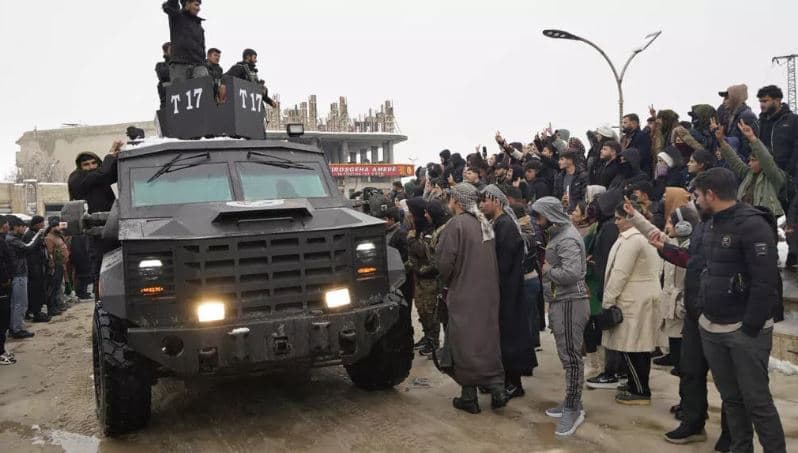
ERBIL, Kurdistan Region - A humanitarian crisis is ongoing in the Kurdish city of Kobane in northeast Syria (Rojava), locals told Rudaw, citing an ongoing siege by Syrian government forces and the cutoff of basic services. This as the United Nations has acknowledged the shortages and says it is working to deliver as much assistance as possible.
In mid-January, the Syrian Arab Army and allied armed groups launched a large-scale offensive to push back Rojava’s de facto military force, the Kurdish-led Syrian Democratic Forces (SDF), from areas in northern and northeastern Syria.
These territories - including parts of Aleppo, Deir ez-Zor, Raqqa, and Hasaka provinces - had initially been liberated from the Islamic State (ISIS) by the SDF, which then maintained control to prevent the extremist group’s resurgence. The SDF is a key on-the-ground partner of the US-led Global Coalition Against ISIS.
On Friday, the SDF and Damascus announced they had reached an internationally brokered agreement to end hostilities and integrate Rojava’s civil and military institutions under state control.
Despite the agreement, the Kurdish city of Kobane in Rojava “remains under a strict blockade that has been ongoing for three weeks,” Sheikh Nabi Heme, a local dignitary, told Rudaw on Tuesday.
He added that “electricity, water, and basic food supplies are not allowed in the city” and warned that “a major humanitarian disaster is unfolding in Kobane,” urging immediate efforts to deliver aid.
Rudaw learned on Sunday that at least six children passed away last month, with the Kurdish Red Crescent in Rojava attributing their deaths due to limited medical services.
Heme also reported on Tuesday that “due to lack of food and the absence of heating, many children in Kobane have fallen ill with various diseases,” but doctors are unable to provide treatment as the city’s Damascus-controlled checkpoint remains closed.
Asked by Rudaw about the situation in Kobane, Stephane Dujarric, spokesperson for the UN secretary-general, said Wednesday, “We understand the shortages are still going on. I think people are trying to work through all of their needs.”
He added, “We're trying to deliver as much as we can, and we hope that, obviously, people will benefit from all basic services as quickly as possible.”
Of note, the agreement brokered by international powers, including France and the United States, led to Damascus-affiliated internal security forces entering Hasaka and Qamishli on Monday and Tuesday, respectively, with another convoy reaching the outskirts of Kobane.
Shahyan Tahseen contributed to this report from Erbil, Kurdistan Region and Namo Abdulla contributed from New York.