


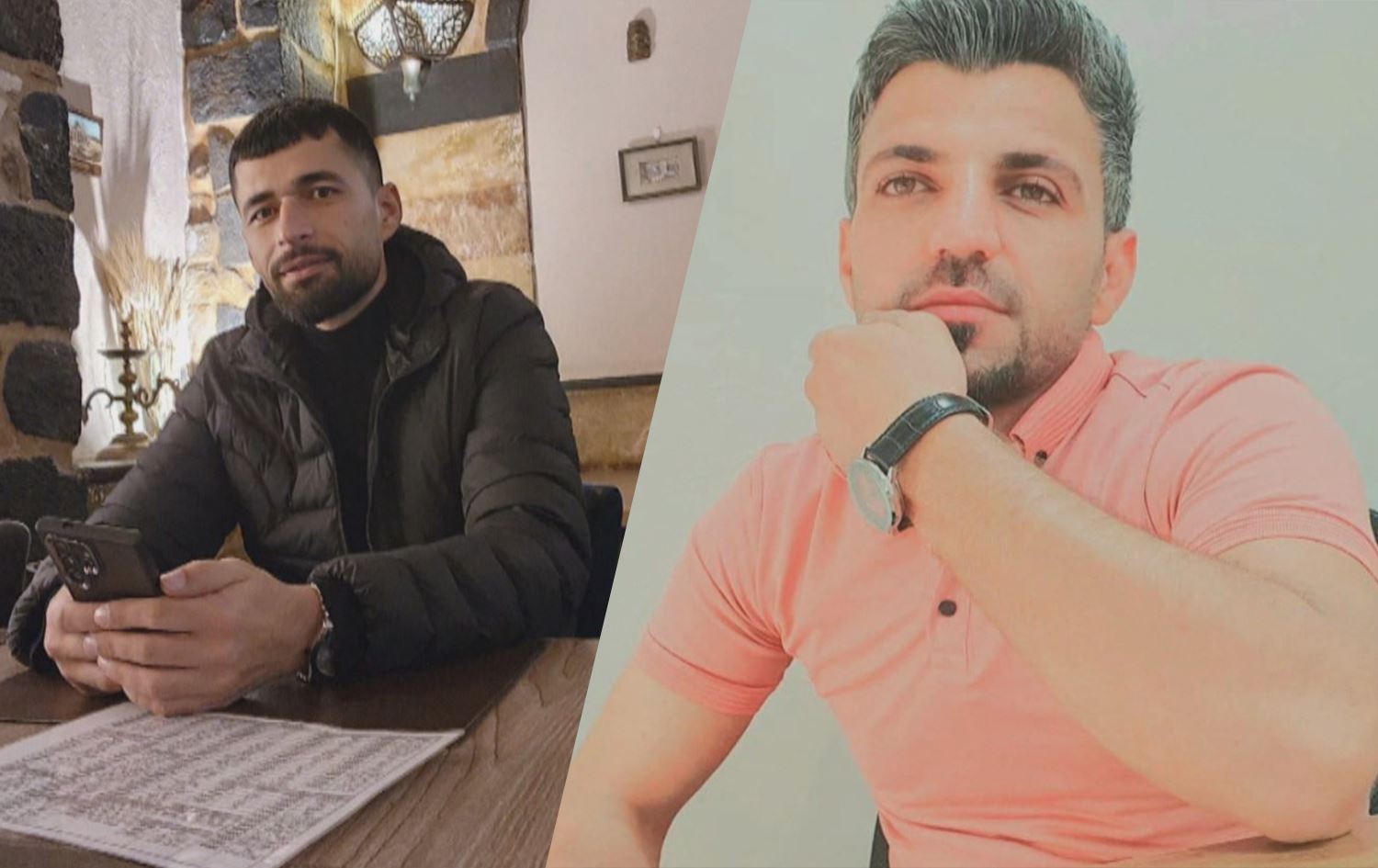
ERBIL, Kurdistan Region - Two young Kurdish men from Kobane, northeast Syria (Rojava) have been missing for 10 days in the Syrian capital Damascus. Their families fear they were detained by government security forces amid an apparent spate of arrests of Kurds.
Ahmed Mohammed told Rudaw on Friday that his brother, Mustafa Mohammed, and a friend, his business partner, traveled from Kobane to Damascus 10 days ago to buy a sewing machine.
“My brother and his friend arrived in Damascus at 11:00 am, but after 11:30 am our contact with them was completely cut off," Mohammed said. "They were supposed to return the next day. They had work in Damascus.”
The families have sought information through government channels and lawyers but have had no success. Mohammed said he sent photos of the men and their car, which has a Rojava license plate, to hundreds of people, “but there was no trace.”
Their disappearance coincides with a surge of reported arrests of Kurds in Damascus, particularly in neighborhoods with large Kurdish populations like Zorava and Rukn al-Din. The Syrian Observatory for Human Rights has reported the arrests of at least nine young Kurdish men in Damascus. The Democratic Union Party (PYD) said on Thursday that Syrian security forces have arrested over 30 Kurds in the capital. The reasons for their arrests are not known.
Mohammed said his cousin and four friends in Homs have also been arrested recently.
He said he knows of no reason why his brother would be arrested, saying he had traveled to Damascus previously, most recently bringing guests to the airport on June 23, and pleaded for any information about his brother and friend.
The safety of minority populations - Kurds, Alawites, Druze, Christians - is a key concern in Syria after the fall of the Bashar al-Assad regime and the installation of a transitional government led by Islamist rebels.




Comments
Rudaw moderates all comments submitted on our website. We welcome comments which are relevant to the article and encourage further discussion about the issues that matter to you. We also welcome constructive criticism about Rudaw.
To be approved for publication, however, your comments must meet our community guidelines.
We will not tolerate the following: profanity, threats, personal attacks, vulgarity, abuse (such as sexism, racism, homophobia or xenophobia), or commercial or personal promotion.
Comments that do not meet our guidelines will be rejected. Comments are not edited – they are either approved or rejected.
Post a comment