
ERBIL, Kurdistan Region – Over the past six months since the fall of Syrian dictator Bashar al-Assad, 7,670 people - mostly civilians - have been killed across Syria amid ongoing violence and widespread "security chaos," the UK-based Syrian Observatory for Human Rights (SOHR) reported on Sunday.
The war monitor also documented over 2,130 extrajudicial executions and identity-based killings, warning of a troubling “pattern of organized violence.”
In its Sunday report, SOHR - which relies on a network of sources across Syria - documented “the killing of 7,670 people across Syria from December 8, 2024, to June 6, 2025,” adding that this number comprises “5,784 civilians, including 306 children and 422 women.”
The UK-based war monitor warned that “this grim toll is a result of ongoing violence and violations by local and external parties, alongside widespread security chaos,” and reflects “the fragility of the security situation and the increasing danger to the most vulnerable constituents of society.”
SOHR further pointed to what it said was an “escalation of extrajudicial executions and identity-based killings,” noting that it had documented 2,133 of such killings that were “committed in brutal ways.”
The human rights watchdog reported that in the month of March alone, it recorded “1,726 liquidations,” coinciding with the violence that broke out that month in the Alawite-majority coastal areas of western Syria after Assad loyalists launched attacks on security forces affiliated with the new Syrian leadership.
SOHR then reported that more than 1,700 people - mostly Alawite civilians - were killed in the violence, adding that Damascus and Damascus-affiliated security forces were responsible for the majority of casualties.
The UK-based war monitor further noted on Sunday that since the fall of Assad, some 1,886 non-civilian combatants have been killed, including 496 armed personnel linked to the Syrian defense and interior ministries. Additionally, 627 members of various armed and Islamist factions, many affiliated with the new leadership in Damascus, were also among the dead.
It further added that 252 fighters from the Kurdish-led Syrian Democratic Forces (SDF) and affiliated formations were also killed. The SDF - backed by the United States - acts as the de-facto army in northeast Syria (Rojava).
According to SOHR documentation, civilians constituted 75.4 percent of the total fatalities during these six months, while non-civilians accounted for 24.6 percent.
The war monitor finally underlined the importance of justice and accountability to achieve peace and stability, urging the formation of an independent investigation mechanism, the enforcement of international law by all parties, and the guarantee of full justice for victims.
Additionally, “efforts are needed for awareness campaigns, disarmament, and the removal of war remnants,” SOHR concluded.
Following a swift offensive in December, a coalition of opposition groups- led by the now-dissolved Hay’at Tahrir al-Sham, then-headed by Ahmed al-Sharaa - toppled Assad’s regime.
In late January, Sharaa was appointed Syria’s interim president and pledged a commitment to an inclusive political process. However, his efforts have been widely criticized as exclusionary, particularly by minority groups within Syria.
Since taking office, the new leadership in Damascus has prioritized the lifting of international sanctions. However, Western governments have repeatedly warned that sanctions could be reinstated if the interim government fails to demonstrate tangible progress toward inclusive governance, prevention of human rights violations, and protection of Syria’s diverse ethnic and religious communities.
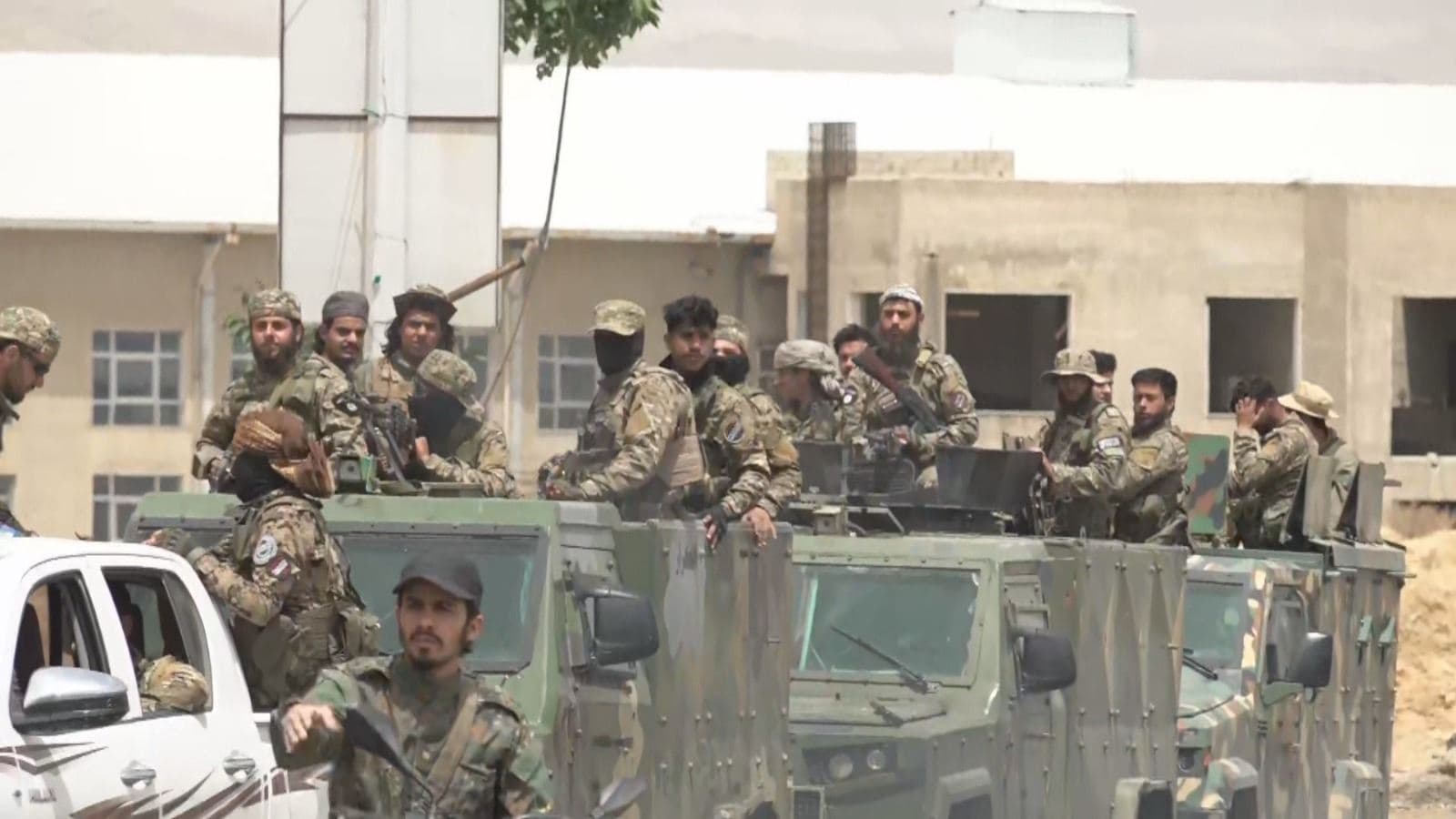
In recent days, a proposal by the new Syrian leadership to integrate around 3,500 foreign fighters - mainly Uyghurs from China and neighboring countries - into a newly formed military unit alongside Syrian nationals has sparked concern and criticism from various sectors of Syrian society.
Speaking to Rudaw on Wednesday, Sanharib Barsom, a senior member of the delegation representing northeast Syria (Rojava) in talks with Damascus, commented, “We, like all Syrians, were surprised by the decision to allow foreigners to be integrated into the new Syrian army we’re trying to establish in a professional, ethical manner.”
He added, “There were other ways to keep these foreigners out of Syria rather than integrating them into the Syrian army,” warning that “this could create many problems, as these groups have well-known ideologies, which makes this decision undesirable and incomprehensible to us.”