ERBIL, Kurdistan Region - US President Donald Trump on Wednesday called on Syria’s interim President Ahmed al-Sharaa to normalize relations with Israel and assume responsibility for detention centers harboring affiliates of the Islamic State (ISIS) in northeast Syria (Rojava), currently under the control of the Kurdish-led Syrian Democratic Forces (SDF).
Trump made the remarks during a high-profile meeting in Riyadh, hosted by Saudi Crown Prince Mohammed bin Salman (MbS) and attended remotely by Turkish President Recep Tayyip Erdogan.
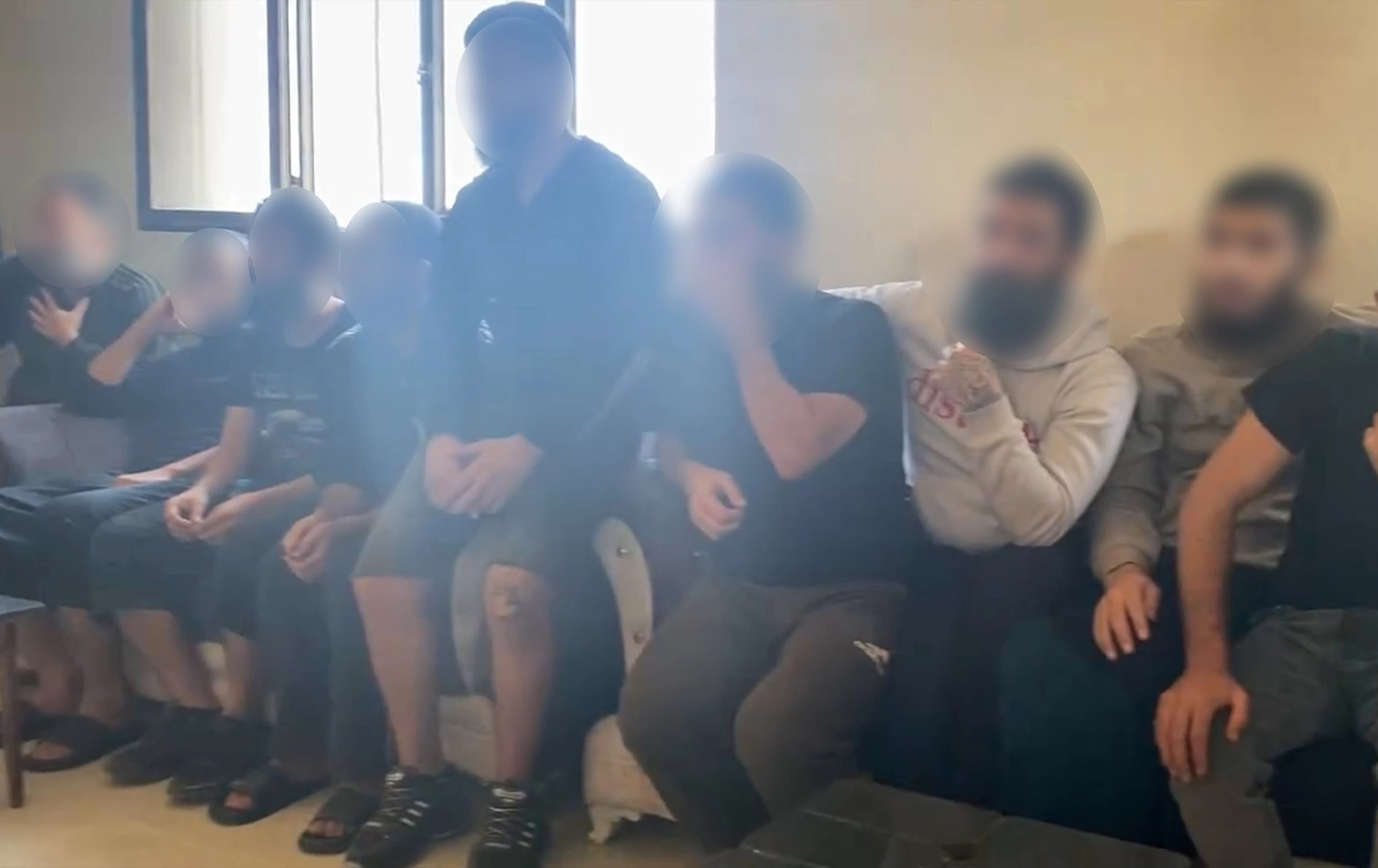
In a statement post on X, White House Press Secretary Karoline Leavitt said that President Trump urged Sharaa to “sign onto the Abraham Accords with Israel, tell all foreign terrorists to leave Syria, deport Palestinian terrorists, help the United States to prevent the resurgence of ISIS [and] assume responsibility for ISIS detention centers in Northeast Syria [Rojava].”
Leavitt quoted Sharaa as thanking “President Trump, the [Saudi] Crown Prince, and [the Turkish] President Erdogan for their efforts to put together the meeting, and recognized the significant opportunity presented by the Iranians leaving Syria, as well as shared US-Syrian interests in countering terrorism and eliminating chemical weapons.”
The Abraham Accords are a series of normalization agreements between Israel and several Arab countries - beginning with the UAE and Bahrain in 2020 - brokered by the US under Trump’s first term in office.. These accords established formal ties in areas like diplomacy, security and trade.
The White House press secretary also quoted Sharaa as affirming “commitment to the 1974 disengagement with Israel” and expressing “hope that Syria would serve as a critical link in facilitating trade between east and west, and invited American companies to invest in Syrian oil and gas.”
The Syria-Israel Disengagement Agreement, brokered by the US in 1974, established a ceasefire and created a buffer zone monitored by the United Nations in the Golan Heights. The agreement aimed to reduce tensions by delineating separation lines between Syrian and Israeli forces without establishing formal peace.
For its part, the Syrian foreign ministry on Wednesday lauded the meeting between Trump and Sharaa as “historic,” quoting the US President as reaffirming Washington’s “commitment to standing by Syria during this pivotal phase,” and Sharaa as expressing “his gratitude for the regional and international support” and “underscoring Syria’s confident path toward the future.
According to the Syrian foreign ministry, the key meeting also touched on “the prospects of Syrian-American partnership in counterterrorism efforts and cooperation in eliminating the influence of non-state actors and non-Syrian armed groups that undermine stability [in Syria], including ISIS and other threats.”
“During the meeting, the participants emphasized the importance of lifting sanctions imposed on Syria and supporting its recovery and reconstruction process,” the ministry said.
Meanwhile, Turkey's state-run news agency, Anadolu, reported on Wednesday that the Turkish President, Erdogan, “participated in an online meeting with leaders from the US, Saudi Arabia, and Syria,” quoting him as praising the US President’s “decision to lift sanctions on Syria is of historic importance.”
The Turkish president further “expressed his belief that this decision would set an example for other countries imposing sanctions, potentially opening up investment opportunities in various sectors in Syria,” and his hope for “Syria to become a stable, prosperous country that collaborates with regional countries and poses no threat to its neighbors,” adding that “Turkey is making efforts toward this objective.”
President Erdogan also affirmed his country’s “support to the Damascus administration in its fight against terrorist organizations, especially ISIS,” reaffirming Ankara’s readiness “to assist in the management and security of prisons holding ISIS terrorists.”
For its part, the state-run Saudi Press Agency (SPA), reported on Wednesday that the key meeting saw discussions focus on “the future situation in Syria, emphasizing the importance of its stability, sovereignty, territorial integrity, and achieving security and prosperity for the Syrian people.”
The state-run Saudi agency further quoted Sharaa as praising the US’s lifting of sanctions on Syria as a decision that “would open a new chapter for rebuilding Syria, revitalizing its economy, and contributing to its security and stability.”
“The situation in the region and the importance of finding appropriate solutions were also addressed,” SPA added.
The Wednesday meeting between the US president and Sharaa marks a major diplomatic boost for the interim Syrian government.
On December 8, a coalition of opposition groups led by Hay’at Tahrir al-Sham (HTS), then commanded by Sharaa, ousted the regime of Syrian dictator Bashar al-Assad. Sharaa was appointed interim president in late January.
While the HTS remains designated as a terrorist organization by Washington, the US previously offered a $10 million reward for Sharaa’s capture, but the bounty was dropped in late December.
The development also comes a day after the US President announced on Tuesday that he will lift sanctions on Syria as part of a broader push to normalize relations with Damascus.
"I will be ordering the cessation of sanctions against Syria in order to give them a chance at greatness," Trump declared during a speech in Saudi Arabia - the first stop on a regional tour that also includes the United Arab Emirates and Qatar.
A day prior, Trump had stated that he may ease US sanctions on Syria to allow Damascus a “fresh start.”
“We’re going to have to make a decision on the sanctions, which we may very well relieve. We may take them off of Syria because we want to give them a fresh start,” he said, noting that Turkish President Erdogan and “many people” had urged him to do so.
“The way we have them sanctioned, it doesn’t really give them much of a start. So we want to see if we can help them out. We’ll make that determination.”
Since taking power, the new leadership in Damascus has repeatedly called on the international community to lift Assad-era sanctions, arguing that they are hindering the country’s economic recovery and post-war reconstruction.
The US had previously issued a six-month sanctions exemption to facilitate humanitarian aid, though Syrian officials had repeatedly stated that the move had limited effect.