


Syria

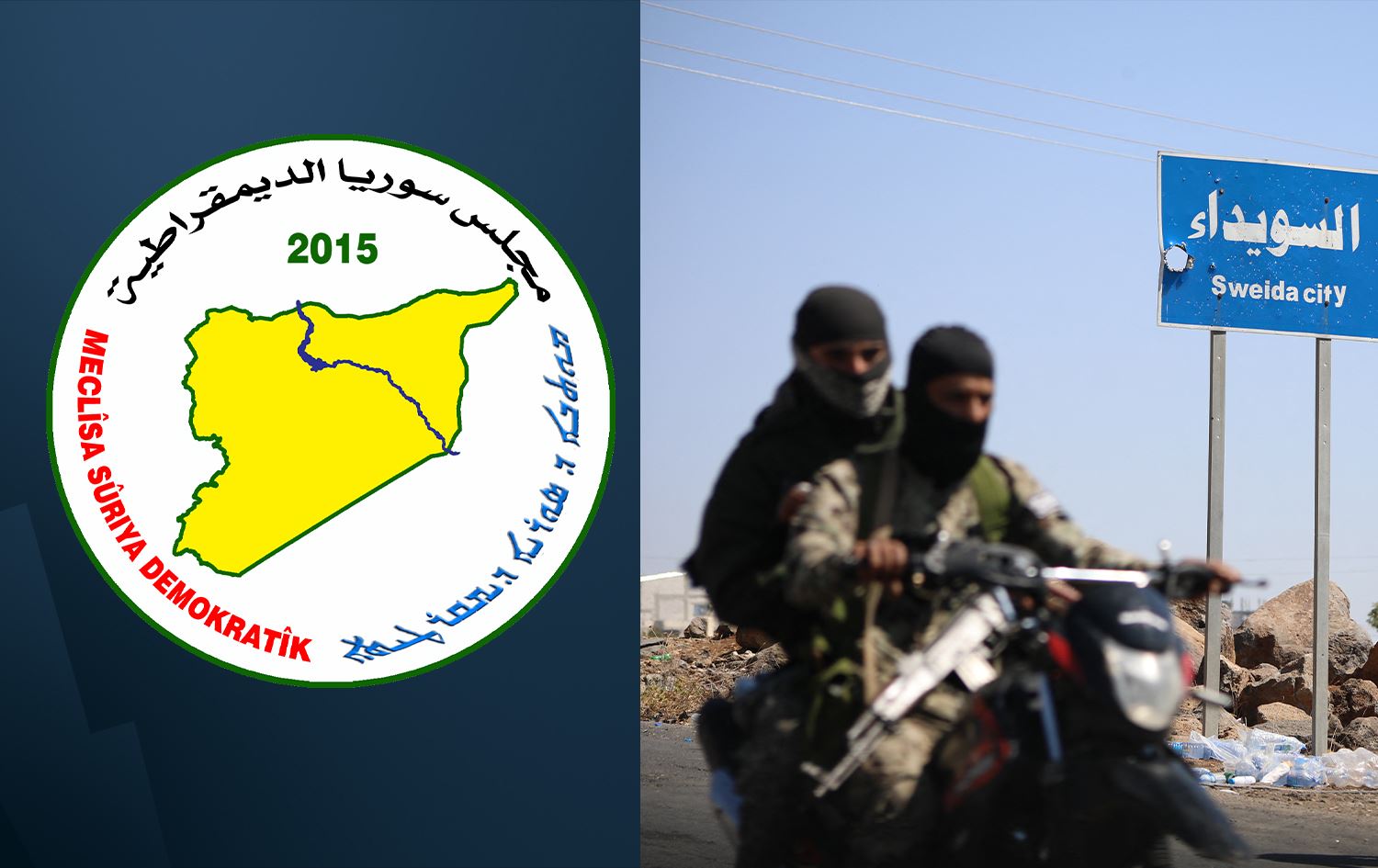
Logo of the Kurdish-led Syrian Democratic Council (left) and scenes from southern Syria's Suwayda province (right). Graphic: Rudaw. Photo: AFP
ERBIL, Kurdistan Region - The Kurdish-led Syrian Democratic Council (SDC), which rules northeast Syria (Rojava), on Tuesday issued an urgent call for an inclusive national dialogue involving all democratic national actors, while also urging an investigation into the recent clashes between Druze militants and Sunni fighters. A fragile ceasefire seems to be holding.
“We urgently call for the launch of an inclusive national dialogue. This dialogue should culminate in a broad-based national conference that brings together all democratic national actors. The goal must be to shape a new Syrian political project grounded in transitional justice,” the SDC said in a statement.
The SDC is the political wing of the US-backed Syrian Democratic Forces (SDF), the de facto army of Rojava.
The statement highlighted the importance of inclusive national dialogue, aiming to bring an “end to authoritarianism,” and emphasized the need to establish a democratic, decentralized, and pluralistic system in Syria that will “guarantee genuine participation for all segments of Syrian society without exception.”
It further called for an independent and transparent investigation into the recent clashes in the southern province of Suwayda.
The fighting erupted between the Druze and Bedouin tribes on July 13, leading to a regional crisis as Israel intervened in support of the Druze - hitting several targets - including Syrian state forces and an airstrike on the building of the defence ministry in Damascus. Syrian state forces were accused of siding with the tribal fighters.
The ceasefire between Israel and Syria - brokered by Washington - was announced Saturday by the US Special Envoy for Syria Tom Barrack.
Several clashes between the Druze and Bedouin fighters were reported hours later but the truce currently seems to be holding. The Druze are in control of the province while the state forces are guarding the entrance of the province to prevent Sunni fighters from entering it in a bid to avoid further tensions. Bedouin families who were stuck in the province were escorted out on Monday.
The recent clashes have killed at least 1,265 people, according to the SOHR.
“It is essential to ensure that those responsible for violations are held accountable. This must be done without discrimination or bias,” the SDC said.
It criticized the recent clashes as “a direct manifestation of the broader collapse of the political and institutional structures,” amid affirming it as a threat to Syria’s territorial integrity.
Three ceasefires between Damascus and the Druze fighters have failed since the fall of Bashar al-Assad’s regime in December.
“We warn of the grave danger of being drawn into internal conflicts driven by sectarian, regional, or communal divisions,” the SDC said.
Kurds in Rojava, like other minorities in Syria, remain concerned about the centralization of power and reliance on Islamic jurisprudence in the transitional constitution that has been adopted by the interim government in Damascus.
While Syrian interim President Ahmed al-Sharaa has pledged to form an “inclusive transitional government that would reflect Syria’s diversity,” he continues to face domestic and international criticism over his perceived marginalization of minority communities.
“We urgently call for the launch of an inclusive national dialogue. This dialogue should culminate in a broad-based national conference that brings together all democratic national actors. The goal must be to shape a new Syrian political project grounded in transitional justice,” the SDC said in a statement.
The SDC is the political wing of the US-backed Syrian Democratic Forces (SDF), the de facto army of Rojava.
The statement highlighted the importance of inclusive national dialogue, aiming to bring an “end to authoritarianism,” and emphasized the need to establish a democratic, decentralized, and pluralistic system in Syria that will “guarantee genuine participation for all segments of Syrian society without exception.”
It further called for an independent and transparent investigation into the recent clashes in the southern province of Suwayda.
The fighting erupted between the Druze and Bedouin tribes on July 13, leading to a regional crisis as Israel intervened in support of the Druze - hitting several targets - including Syrian state forces and an airstrike on the building of the defence ministry in Damascus. Syrian state forces were accused of siding with the tribal fighters.
The ceasefire between Israel and Syria - brokered by Washington - was announced Saturday by the US Special Envoy for Syria Tom Barrack.
Several clashes between the Druze and Bedouin fighters were reported hours later but the truce currently seems to be holding. The Druze are in control of the province while the state forces are guarding the entrance of the province to prevent Sunni fighters from entering it in a bid to avoid further tensions. Bedouin families who were stuck in the province were escorted out on Monday.
The recent clashes have killed at least 1,265 people, according to the SOHR.
“It is essential to ensure that those responsible for violations are held accountable. This must be done without discrimination or bias,” the SDC said.
It criticized the recent clashes as “a direct manifestation of the broader collapse of the political and institutional structures,” amid affirming it as a threat to Syria’s territorial integrity.
Three ceasefires between Damascus and the Druze fighters have failed since the fall of Bashar al-Assad’s regime in December.
“We warn of the grave danger of being drawn into internal conflicts driven by sectarian, regional, or communal divisions,” the SDC said.
Kurds in Rojava, like other minorities in Syria, remain concerned about the centralization of power and reliance on Islamic jurisprudence in the transitional constitution that has been adopted by the interim government in Damascus.
While Syrian interim President Ahmed al-Sharaa has pledged to form an “inclusive transitional government that would reflect Syria’s diversity,” he continues to face domestic and international criticism over his perceived marginalization of minority communities.


Comments
Rudaw moderates all comments submitted on our website. We welcome comments which are relevant to the article and encourage further discussion about the issues that matter to you. We also welcome constructive criticism about Rudaw.
To be approved for publication, however, your comments must meet our community guidelines.
We will not tolerate the following: profanity, threats, personal attacks, vulgarity, abuse (such as sexism, racism, homophobia or xenophobia), or commercial or personal promotion.
Comments that do not meet our guidelines will be rejected. Comments are not edited – they are either approved or rejected.
Post a comment