
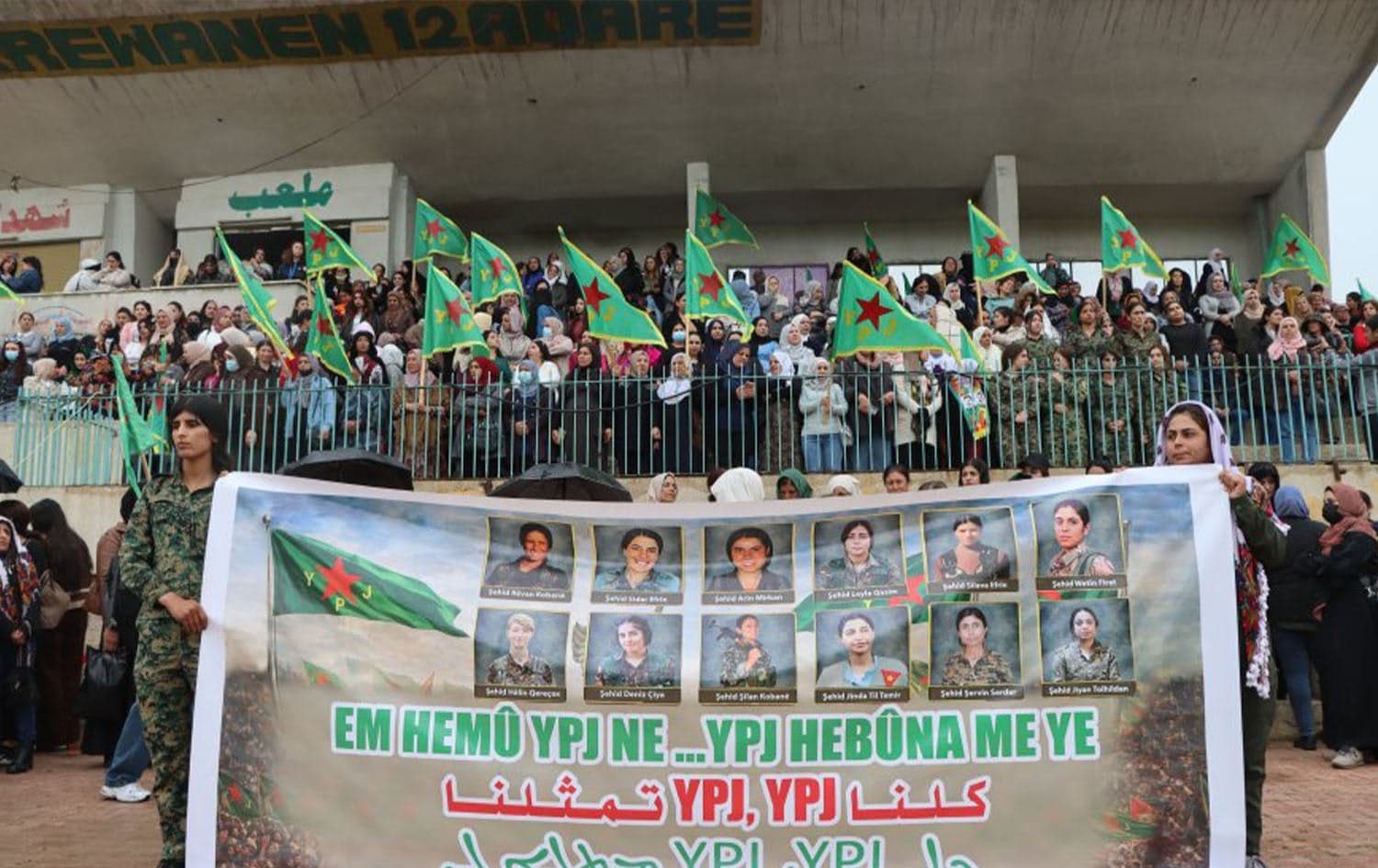
ERBIL, Kurdistan Region - Women’s organizations and activists in northeast Syria (Rojava) on Sunday called for the ongoing integration process between Damascus and the Kurdish-led administration to include the Women’s Protection Units (YPJ).
“YPJ has proven to be the most efficient force and the supreme symbol of women's organization throughout Syria,” read a statement from a platform of women’s organizations and activists in Rojava, as cited by the Rojava-affiliated Hawar News. The statement added that the force has been instrumental in fighting the Islamic State (ISIS) and saving “thousands of women and children.”
The YPJ, an all-female force affiliated with the People’s Protection Units (YPG), serves as a backbone of the Syrian Democratic Forces (SDF).
After weeks of clashes between Kurdish forces and Damascus-affiliated groups, both sides reached a 14-point agreement on January 29 to accelerate the stalled process of integrating the SDF into state institutions. The deal includes forming a division for the Kurdish-majority Hasaka province, with the SDF to be incorporated into three brigades.
The activists’ demands include recognizing the YPJ as a regular armed force, maintaining its structure, allowing it to operate in Rojava, and releasing female detainees - numbering 35, 13 of whom were released earlier this month, according to YPJ spokesperson Rukan Jamal.
“The presence of YPJ within the army is a guarantee of the army's commitment to its principles regarding its ability to defend peace and security,” the activists said.
They added that the all-women force represents a “moral compass” for the Syrian army, saying its presence would aid in combating terrorism, protecting women, and maintaining stability.
The YPJ spokesperson told Rudaw earlier in April that the force is seeking to join the SDF brigades as an “independent and equal force.” However, a member of Damascus’s team overseeing the SDF integration said at the time that YPJ fighters cannot join the army but can “volunteer” as members of police forces.
Meanwhile, Elham Ahmad, co-chair of Rojava’s foreign relations department, said Monday that discussions with Damascus about “granting official status to the YPJ” are ongoing, noting that no “new outcomes” have been reached.
Since its establishment as a Kurdish self-governance structure in 2012, Rojava has operated along leftist lines, presenting itself as a promoter of grassroots democracy and equal participation of women in politics and defense.
The current Syrian leadership, which came to power following the ouster of Bashar al-Assad in December 2024, has an Islamist background. The presence of an all-female force with an independent military structure poses a challenge to its more centralized vision of the state.
The SDF, which functions as the de facto military force in Rojava and is a key on-the-ground partner of the US-led Global Coalition to Defeat ISIS, had maintained control of these areas since liberating them from Islamic State (ISIS) to prevent the group’s resurgence.
The activists said Sunday that since the Constitutional Declaration, a 53-article document released in January 2025, does not include any clause restricting military service to men, “this allows room to enhance women's participation in military and security institutions.”
As part of the integration process, Damascus has appointed an SDF-affiliated governor for Hasaka province, assigned a deputy defense minister for SDF-held areas, and named a deputy head for Hasaka’s state-affiliated internal security forces.
.JPG&w=3840&q=75)