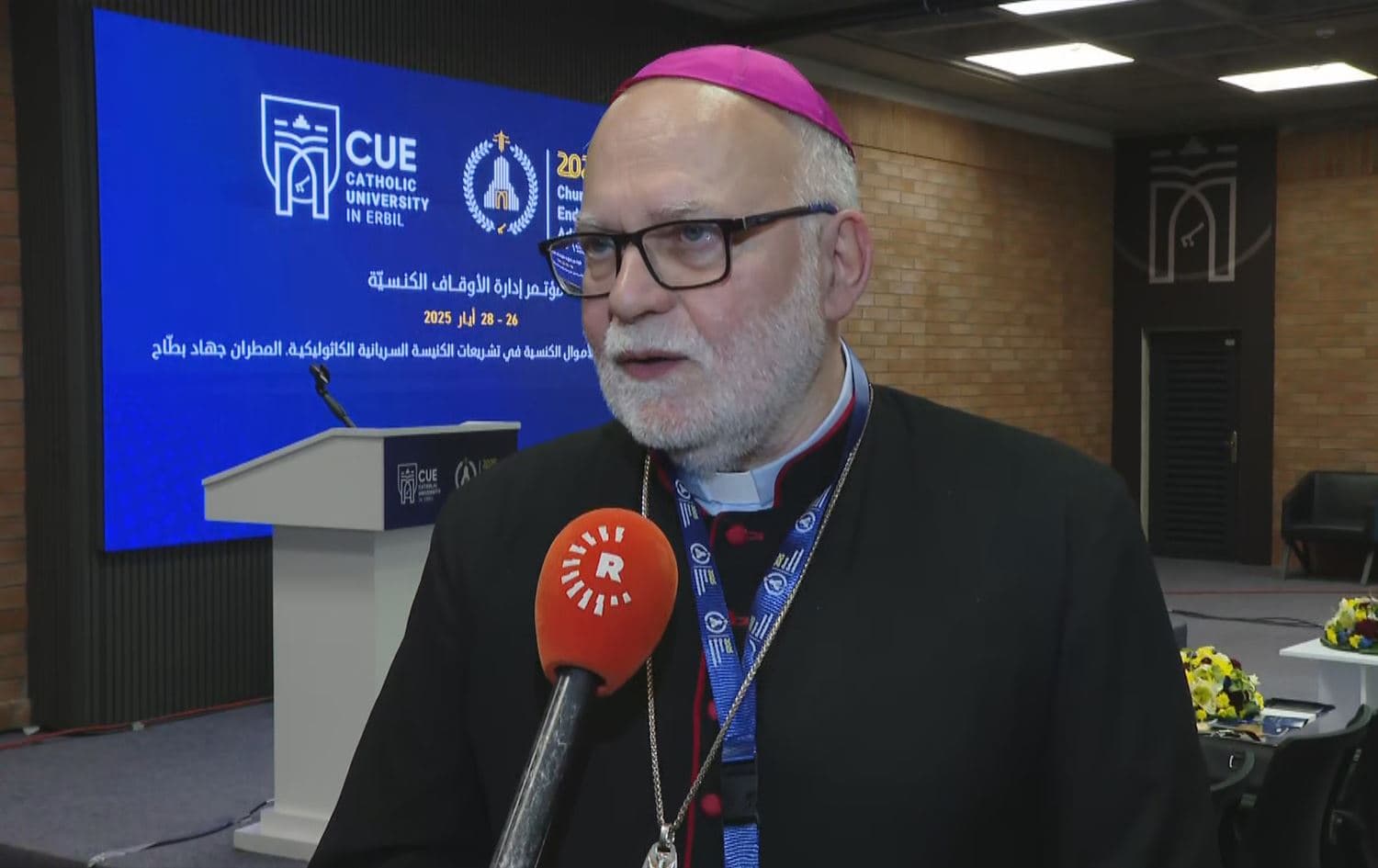
“We will not compromise on our rights. It is within our rights to participate in writing the constitution. We are a key component of the nation,” Syriac Catholic Archbishop of Damascus Youhanna Jihad Battah told Rudaw on the sidelines of the Church Endowments Administration Conference, hosted by the Catholic University in Erbil.
The Syrian constitutional declaration, signed in March by interim President Ahmed al-Sharaa, emphasizes Islamic jurisprudence, to the ire of minority communities in the country. It has been condemned by the country’s Christian, Druze, and Kurdish communities as exclusionary and promoting marginalization.
“It is clear that most components rejected the constitutional declaration,” said Archbishop Battah. “Sharia [law] can be one of the sources. Islamic Sharia or Fiqh is advanced but we also have excellent church institutions.”
He stressed that the Christian minority has “reservations” about Sharia law being the basis of the new constitution.
Following a swift offensive in early December, the Hay’at Tahrir al-Sham (HTS), then headed by Sharaa, spearheaded a coalition of opposition groups that toppled the regime of Syrian dictator Bashar al-Assad.
Sharaa was in late January named interim president when he vowed to form an “inclusive transitional government that would reflect Syria's diversity.” He has, however, faced domestic and international criticism that he has marginalized minority communities.
Ranja Jamal contributed to this report.

.png&w=3840&q=75)