
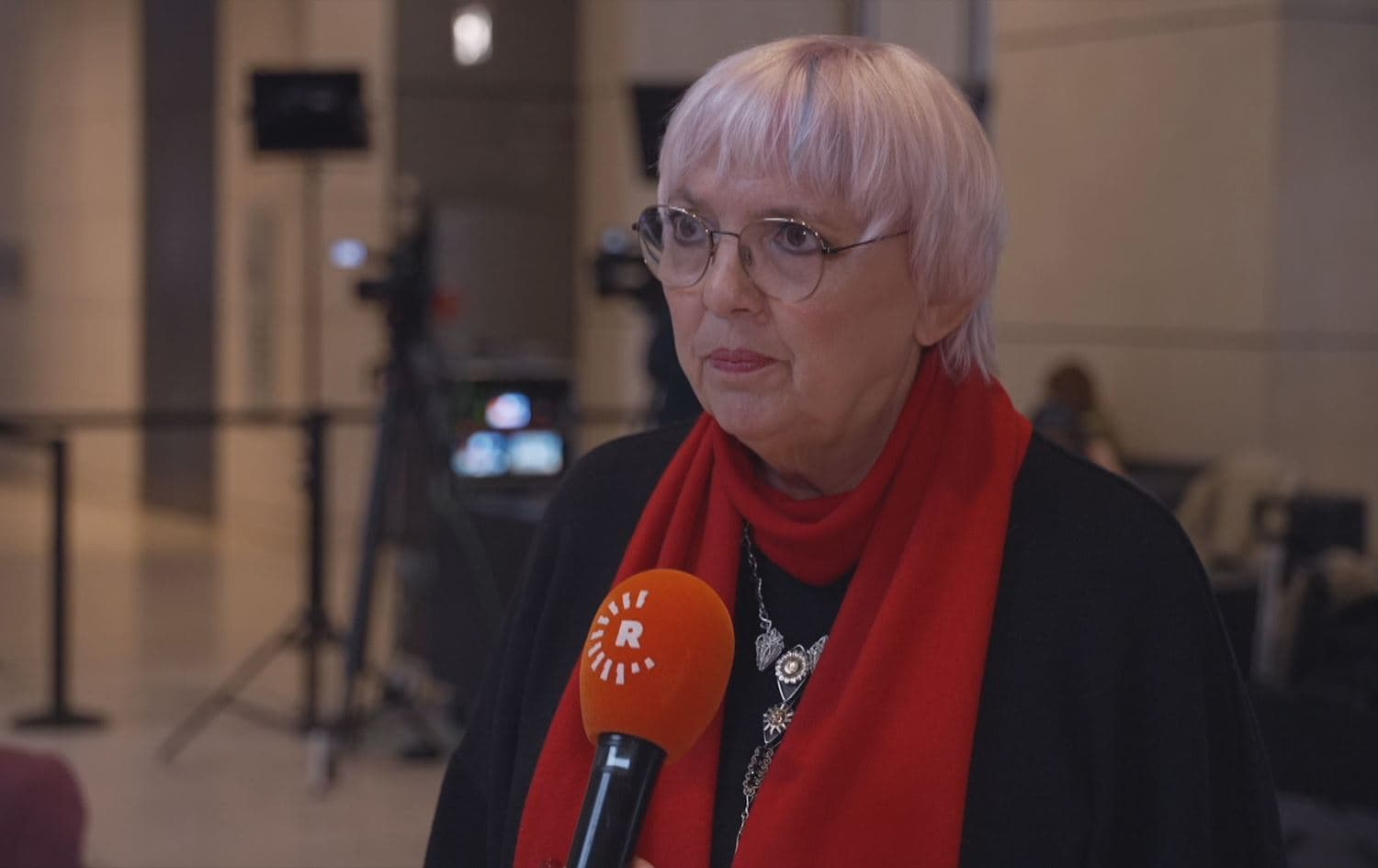
ERBIL, Kurdistan Region - German lawmakers have criticized Germany and the European Union for remaining silent during attacks on the Kurdish-majority northeast Syria (Rojava), saying Kurds once again feel betrayed as they face threats and a humanitarian crisis.
“I truly understand the pain, grief and despair of many Kurds, who have always had - and again have - the feeling that they have either been left alone or been betrayed,” German MP Claudia Roth told Rudaw's Alla Shally on Thursday in Berlin. She noted that Kurdish forces suffered casualties fighting the Islamic State (ISIS) not only for Syria and the region but for the world.
The Syrian Arab Army and allied armed groups seized Kurdish-held northern cities and territories in January, triggering fighting and a humanitarian crisis. Damascus and Kurdish leaders on Friday announced an agreement for a permanent ceasefire amid deteriorating humanitarian conditions including blocks on aid.
Human Rights Watch on Wednesday warned of a “serious humanitarian situation” unfolding in the town of Kobane on the Turkish border and highlighted the impact of “massive displacement” as tens of thousands of civilians fled fighting across Rojava. Clashes between the Syrian Arab Army and allied armed groups and the Kurdish-led Syrian Democratic Forces (SDF) have created shortages of food, water and fuel as routes were cut off to Kobane and other towns.
Kobane ‘under siege’
Roth said she was on the Turkish side of the border during the legendary battle of Kobane in 2014, when Kurdish all-female units known as the YPJ repelled fierce Islamic State (ISIS) attacks that destroyed the Kurdish-majority border town. Observing the fighting, she asked, “Where is the world?”
“Now Kurds are being oppressed - Kobane in particular is under a dangerous siege - and aid can’t get there. On one side, there are Turkish soldiers, and on the other side, the Syrian army,” Roth said.
She warned that as Kurdish-held areas were coming under siege, Iraq’s Kurdistan Region was the only remaining route for civilians to access aid which could trigger a new wave of refugees into Iraq.
Rula Amin, spokesperson for the UN High Commissioner for Refugees (UNHCR), told Rudaw that more than 100,000 people have been displaced with more than 4,000 families staying in shelters in Hasaka province.
Germany currently hosts about 1 million Syrian refugees, many of them minorities who fled violence by extremist groups and Bashar al-Assad’s brutal government during Syria’s 14-year civil war.
European role in Syria’s stability questioned
European Union and German officials have said assistance to Syria is conditional on protecting ethnic and religious groups, preventing violence and ensuring minorities are represented in a democratic political system.
Wolfgang Ischinger, president of the Munich Security Conference which is slated for mid-February, said, “I definitely understand that concern and frustration.”
He said he was “saddened” that the European Union did not play a larger role “to find a peaceful way to deal with Kurds” as the new Syrian government attempts to unify its territory and shore up international support for its post-war recovery.
As clashes intensified earlier this month in Aleppo, European Commission President Ursula von der Leyen announced 620 million euros to support humanitarian aid and rebuilding government institutions through 2027.
Ischinger said he hopes Syrian representatives will focus on rebuilding “and not once again talk about internal turmoil and war with Kurds” during the conference.
Kurdistan Region President Nechirvan Barzani has been invited, he said, adding, “Kurdish representatives are always warmly welcomed in Munich, and their presence is important.”
Armin Laschet, chair of the German parliament’s foreign affairs committee, said Europe and the United States must “take into account the important role of Kurds in the war against ISIS.”
“For the new Syria, we want the country’s president to recognize Kurdish rights and autonomy is the best solution," he said.
A Syrian presidential decree earlier this year pledged historic guarantees for Kurdish cultural, linguistic, land, and citizenship rights.
Laschet warned that if Damascus fails to draft a constitution protecting Kurds and other minorities such as Alawites, Christians and Druze, “then the new Syria cannot become a partner of Europe.”