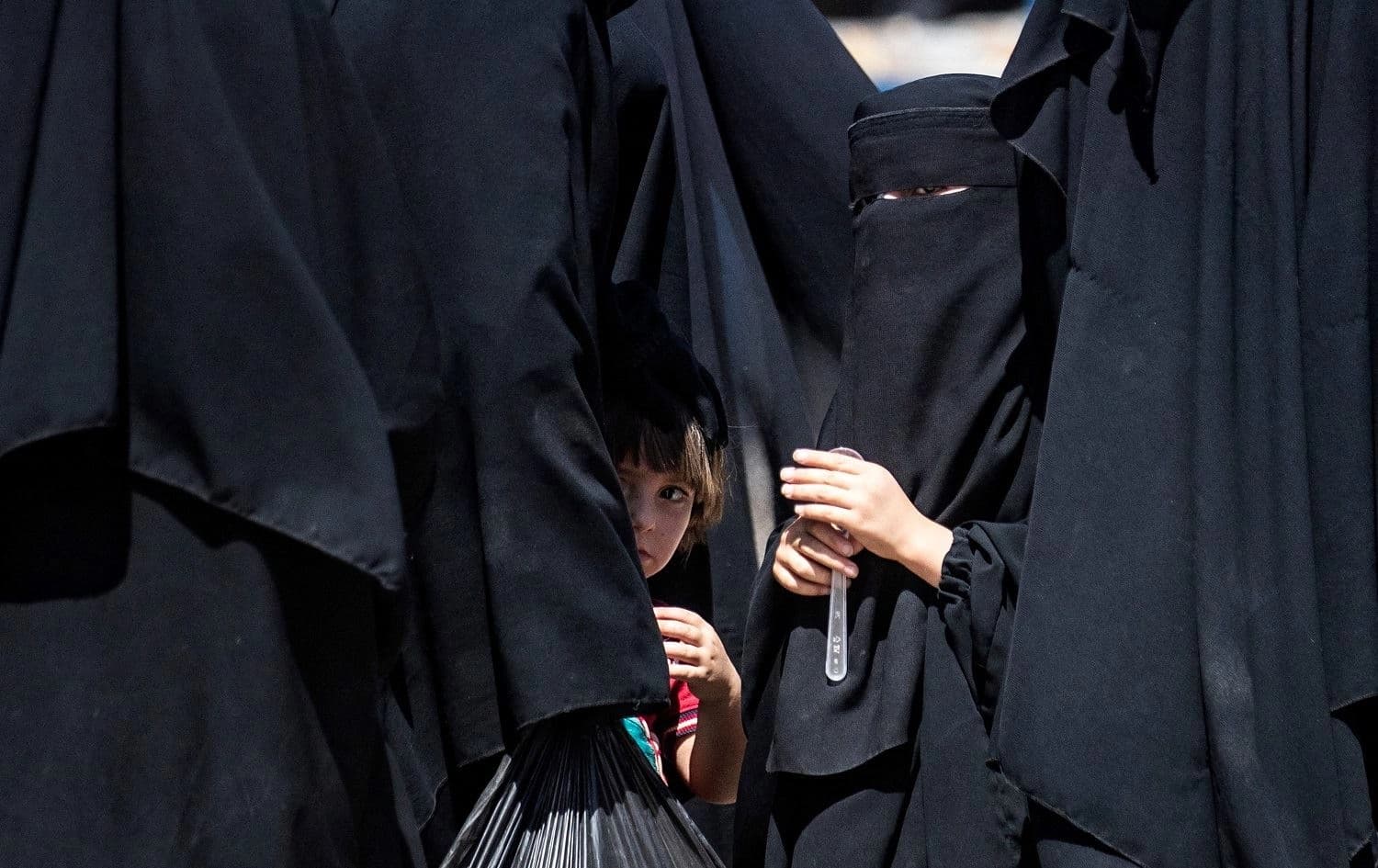

ERBIL, Kurdistan Region – Nineteen Albanian nationals linked to the Islamic State (ISIS) are being repatriated from Kurdish-controlled camps in northeastern Syria (Rojava).
"The Albanian government seeks not to leave its children homeless outside their country. We will work until the last child is retrieved so that we can return them to their country and rehabilitate them to lead a decent life because they are innocent and they do not know where they are going," Mark Gharib, the Albanian ambassador to Syria, Lebanon and Jordan said in a press conference covered by Hawar News Agency, affiliated with Kurdish authorities in Rojava, on Saturday.
Five women and 14 children linked to ISIS were handed over back to the Albanian government on Saturday, the agency reported.
This is the third repatriation by the Albanian government. In October 2020, the country repatriated a woman and four children.
The radicalization of thousands of children in Rojava camps has been a constant cause of concern. “It will be a military problem in a few years if we don’t fix the non-military aspects of it now,” commander of US Central Command (CENTCOM) General Kenneth McKenzie said late April.
Kosovo repatriated a number of its ISIS-affiliated nationals from Rojava camps, the Ministry of Interior announced earlier this month. Finland also repatriated about 30 of its nationals in July.
ISIS took control of swathes of Iraq and Syria in 2014. Kurdish forces arrested tens of thousands of ISIS fighters and their family members when they took control of its last bastion, Baghouz, in March 2019.
Al-Hol and Roj camps together hold more than 60,000 people.
According to Finland, there are still nearly 900 European citizens – 600 children and 300 women – in Rojava’s camps, including several Finns.
Kurdish and US officials have made repeated calls on the international community to repatriate their nationals from overcrowded camps where children are exposed to ISIS ideology. But only a few countries have responded positively. Most are worried about security concerns and are generally limiting repatriations, even for children.
The United Nations in February called on 57 member states to repatriate their nationals.
Updated: 14:30 pm, August 1, 2021.