


Turkey

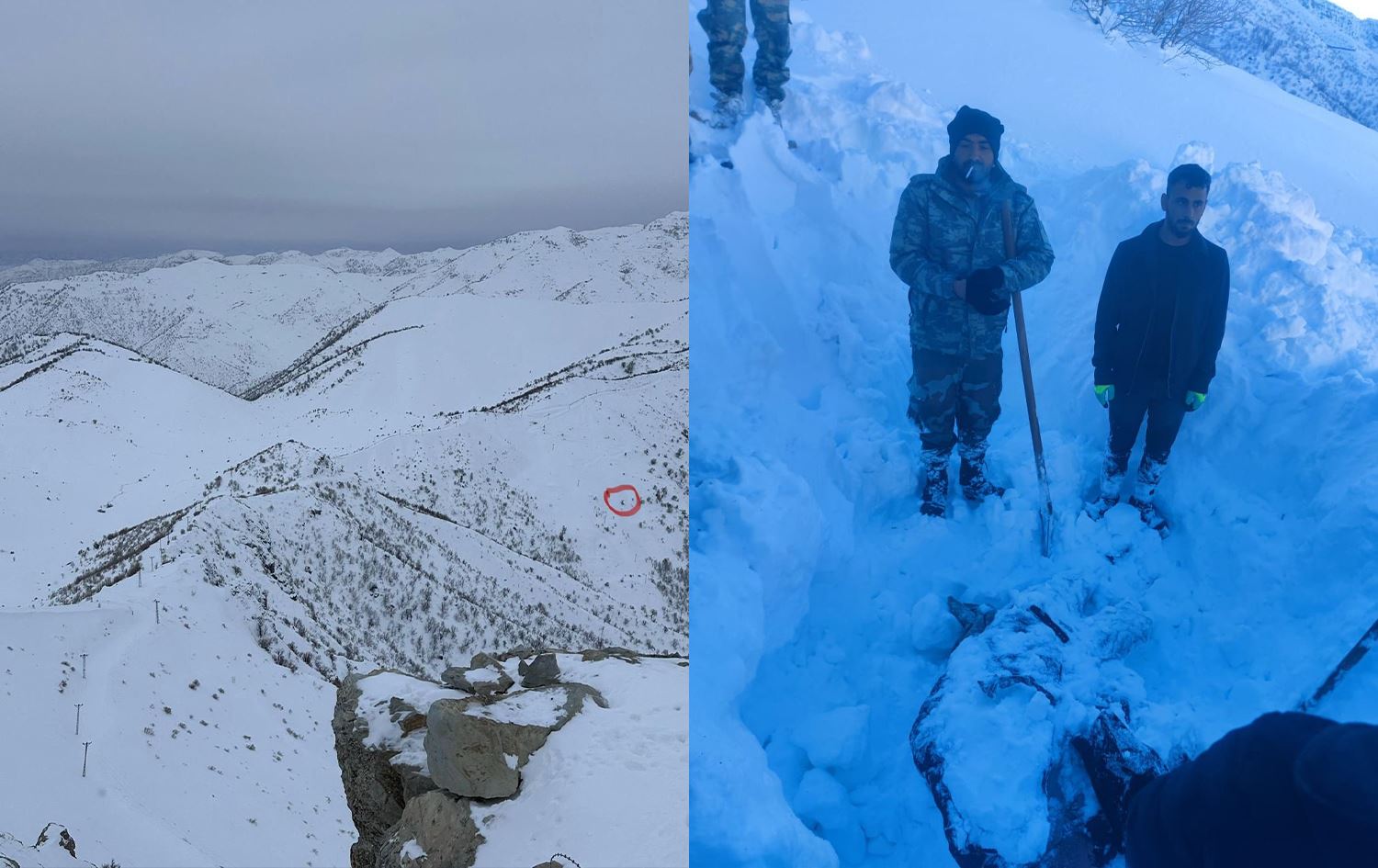
The body of a migrant from the Kurdistan Region’s Sulaimani province was found in Roboski village, the mountainous areas of Sirnak province in southeastern Turkey, on January 4, 2026. Photos: submitted.
ERBIL, Kurdistan Region - The body of a migrant from the Kurdistan Region’s Sulaimani province was found on Sunday in the mountainous areas of Sirnak province in southeastern Turkey after he froze to death while attempting to reach Europe, his family said.
The body was discovered in Roboski village, buried under more than a meter of snow, the family told Rudaw. Residents moved to clear the snow and recover the body as heavy snowfall continued to blanket large parts of the mountainous area.
Sabri Anju, the chieftain of Roboski village, told Rudaw on Thursday that the man had become stranded during severe weather while trying to cross the area on his way to Europe. He said the victim’s family contacted him after losing communication with their son, who had traveled to Turkey as part of his migration journey.
During his last phone call, the man said he was about five kilometers from Roboski village and trapped in deep snow between two security watchposts, Anju added.
“At the time, I immediately informed the local security forces,” Anju said, adding that nearly two meters of snow had accumulated in the area. Due to harsh weather conditions, security and emergency rescue teams were unable to retrieve the body earlier.
On Thursday, Ranj Pshdari, a Kurdish migrant activist based in Greece, identified the victim as Ali Younis Karim from the village of Tapazerin in the Said Sadiq district of Sulaimani province.
For decades, Turkey has served as a key transit route for migrants from the Kurdistan Region and Iran’s Kurdish areas seeking to reach Europe. In recent days, severe snowfall has paralyzed daily life across ten provinces in southeastern Turkey, blocking access roads to more than 3,450 villages, most of them in mountainous regions.
The Kurdistan Region has witnessed recurring waves of youth emigration over the past decade, largely driven by economic hardship, unemployment, and limited opportunities. Government officials and civil society organizations have repeatedly warned about the growing trend and the dangers associated with irregular migration.
According to the Association of Returned Refugees (ARR), approximately 6,500 people from the Kurdistan Region migrated abroad in 2025, with at least 11 losing their lives during perilous journeys.
“In 2025, around 6,500 people migrated from the Kurdistan Region, and 11 people lost their lives along the way,” Abubakar Ali, head of ARR, told Rudaw, noting that “migration is a human phenomenon that exists worldwide.”
The body was discovered in Roboski village, buried under more than a meter of snow, the family told Rudaw. Residents moved to clear the snow and recover the body as heavy snowfall continued to blanket large parts of the mountainous area.
Sabri Anju, the chieftain of Roboski village, told Rudaw on Thursday that the man had become stranded during severe weather while trying to cross the area on his way to Europe. He said the victim’s family contacted him after losing communication with their son, who had traveled to Turkey as part of his migration journey.
During his last phone call, the man said he was about five kilometers from Roboski village and trapped in deep snow between two security watchposts, Anju added.
“At the time, I immediately informed the local security forces,” Anju said, adding that nearly two meters of snow had accumulated in the area. Due to harsh weather conditions, security and emergency rescue teams were unable to retrieve the body earlier.
On Thursday, Ranj Pshdari, a Kurdish migrant activist based in Greece, identified the victim as Ali Younis Karim from the village of Tapazerin in the Said Sadiq district of Sulaimani province.
For decades, Turkey has served as a key transit route for migrants from the Kurdistan Region and Iran’s Kurdish areas seeking to reach Europe. In recent days, severe snowfall has paralyzed daily life across ten provinces in southeastern Turkey, blocking access roads to more than 3,450 villages, most of them in mountainous regions.
The Kurdistan Region has witnessed recurring waves of youth emigration over the past decade, largely driven by economic hardship, unemployment, and limited opportunities. Government officials and civil society organizations have repeatedly warned about the growing trend and the dangers associated with irregular migration.
According to the Association of Returned Refugees (ARR), approximately 6,500 people from the Kurdistan Region migrated abroad in 2025, with at least 11 losing their lives during perilous journeys.
“In 2025, around 6,500 people migrated from the Kurdistan Region, and 11 people lost their lives along the way,” Abubakar Ali, head of ARR, told Rudaw, noting that “migration is a human phenomenon that exists worldwide.”


Comments
Rudaw moderates all comments submitted on our website. We welcome comments which are relevant to the article and encourage further discussion about the issues that matter to you. We also welcome constructive criticism about Rudaw.
To be approved for publication, however, your comments must meet our community guidelines.
We will not tolerate the following: profanity, threats, personal attacks, vulgarity, abuse (such as sexism, racism, homophobia or xenophobia), or commercial or personal promotion.
Comments that do not meet our guidelines will be rejected. Comments are not edited – they are either approved or rejected.
Post a comment