



Error occured during this request! Please try again later.
Turkey

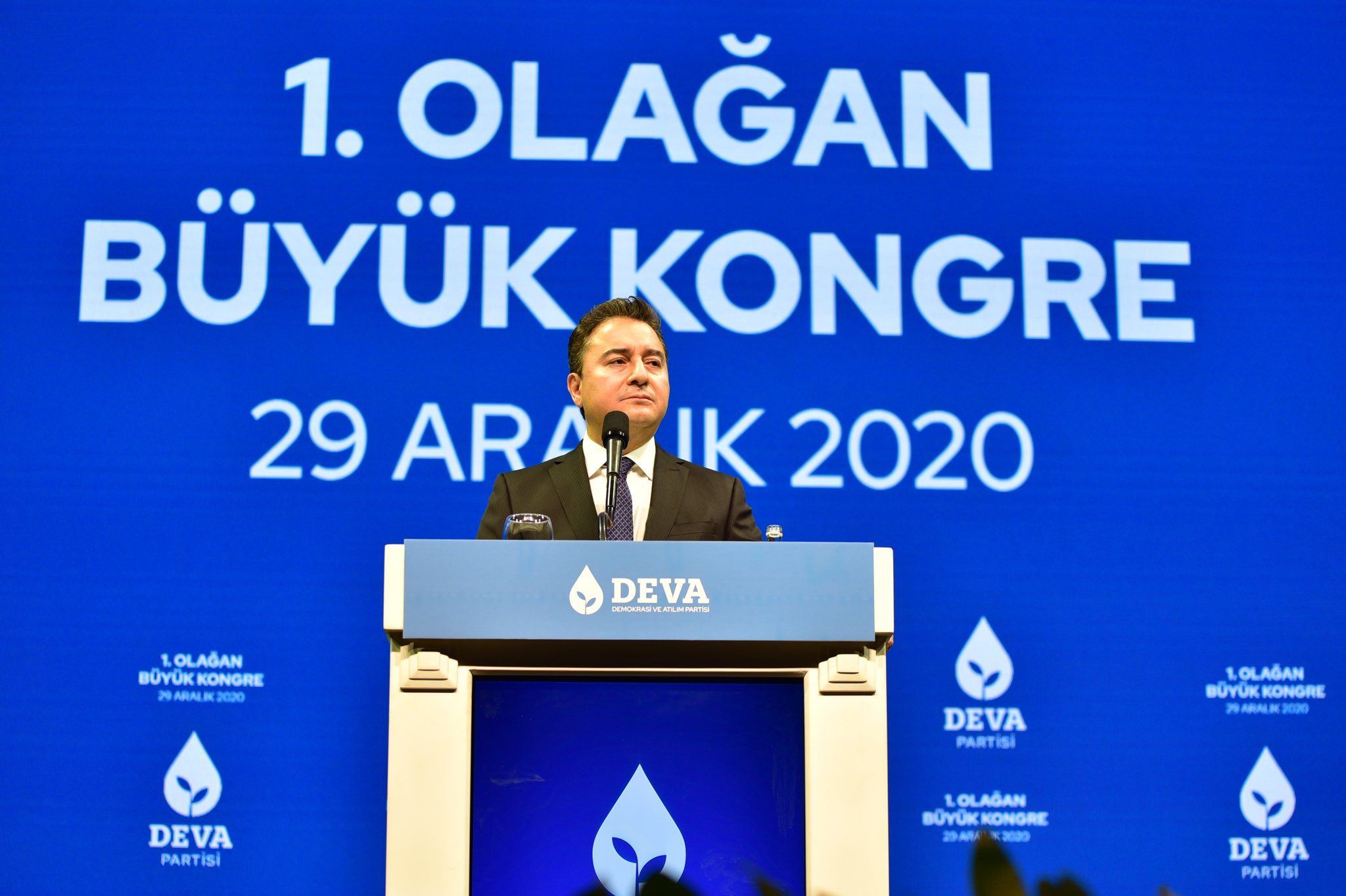
Ali Babacan speaking at DEVA's first congress in Ankara on December 29, 2020. Photo: Babacan's Twitter account
ERBIL, Kurdistan Region — Ali Babacan, a former ally of Turkish President Recep Tayyip Erdogan and an opposition leader, said late Tuesday that the situation for Kurds in Turkey is deteriorating, with the ethnic minority group’s rights continuing to be violated.
Babacan told Turkish Haberturk broadcaster that there is violation of people’s rights in Turkey, especially for certain segments of the population such as Kurds and Alevis.
“Actually, the Kurdish issue is getting bigger rapidly in Turkey again,” he said, adding that Kurds are also concerned with corruption and unemployment.
Babacan served as Erdogan’s deputy between 2009 and 2014. The politician, who later split from Erdogan’s Justice and Development Party (AKP) and formed his Democracy and Progress Party (DEVA) in March 2020. The newly-established party is seen by some as an alternative to AKP in some Kurdish areas.
Although it was founded after the previous elections and does not hold any legislative representation, DEVA has regularly opposed the Erdogan government. Moreover, Babacan has criticized the government’s policy on Kurds several times.
Babacan slammed Ankara in mid-November for its treatment of Kurds in the southeastern part of the country, calling for the prosecution of those behind instances of torture and killings in recent years.
“We are of the view that a solution [to the Kurdish issue] will be political and we will defend democracy persistently,” he said during his visit to Kurdish-majority Diyarbakir (Amed) province in October.
He added the removal of the mayors of the pro-Kurdish Peoples’ Democratic Party (HDP) by Turkish government would further deteriorate conditions for Kurds.
He also said that “There are also serious violations against the rights of our Alevi citizens.”
Alevis are the largest religious minority in Turkey, where they are consistently denied the right to their religious education, the right to build places of worship, and are marginalized in the government and public spheres.
Babacan told Turkish Haberturk broadcaster that there is violation of people’s rights in Turkey, especially for certain segments of the population such as Kurds and Alevis.
“Actually, the Kurdish issue is getting bigger rapidly in Turkey again,” he said, adding that Kurds are also concerned with corruption and unemployment.
Babacan served as Erdogan’s deputy between 2009 and 2014. The politician, who later split from Erdogan’s Justice and Development Party (AKP) and formed his Democracy and Progress Party (DEVA) in March 2020. The newly-established party is seen by some as an alternative to AKP in some Kurdish areas.
Although it was founded after the previous elections and does not hold any legislative representation, DEVA has regularly opposed the Erdogan government. Moreover, Babacan has criticized the government’s policy on Kurds several times.
Babacan slammed Ankara in mid-November for its treatment of Kurds in the southeastern part of the country, calling for the prosecution of those behind instances of torture and killings in recent years.
“We are of the view that a solution [to the Kurdish issue] will be political and we will defend democracy persistently,” he said during his visit to Kurdish-majority Diyarbakir (Amed) province in October.
He added the removal of the mayors of the pro-Kurdish Peoples’ Democratic Party (HDP) by Turkish government would further deteriorate conditions for Kurds.
He also said that “There are also serious violations against the rights of our Alevi citizens.”
Alevis are the largest religious minority in Turkey, where they are consistently denied the right to their religious education, the right to build places of worship, and are marginalized in the government and public spheres.


Comments
Rudaw moderates all comments submitted on our website. We welcome comments which are relevant to the article and encourage further discussion about the issues that matter to you. We also welcome constructive criticism about Rudaw.
To be approved for publication, however, your comments must meet our community guidelines.
We will not tolerate the following: profanity, threats, personal attacks, vulgarity, abuse (such as sexism, racism, homophobia or xenophobia), or commercial or personal promotion.
Comments that do not meet our guidelines will be rejected. Comments are not edited – they are either approved or rejected.
Post a comment