


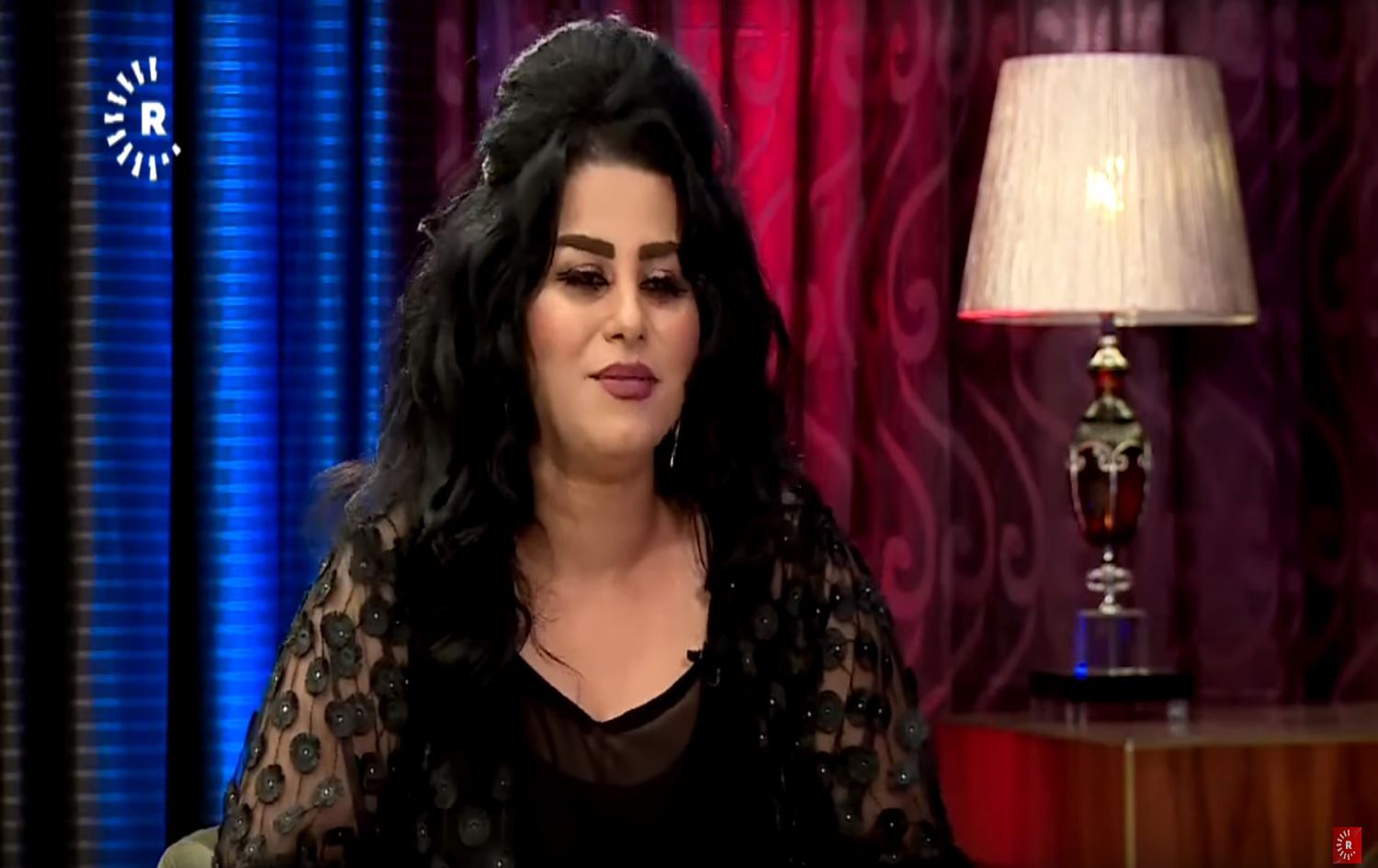
The specter of radical Islam came to hang over Southern (Iraqi) Kurdistan once again in late August, when a newly released music video by singer Marya Hawrami, Dlakam (My Heart), was premiered on Kurdmax TV’s YouTube channel.
The song is a melding of authentic Hawrami love songs, accompanied by traditional instruments such as the daff, zerb, shemshal and baleban, along with a keyboard. The singer, clad in a bright yellow Kurdish dress, is joined by a jubilant crowd in a public square. Digital devices, images, lyrics of love, the singer’s voice, contagious Kurdish dance, even an impressive rap performance together create a sense of musical euphoria.
In response to the video, a mullah, Halo Hama Rashid, unleashed his religious wrath in a venomous denouncement of Marya, characterizing her performance as lewd and likening her to a “harlot.”
The outrage and overwhelming condemnation of the mullah’s pious rage and scandalous attack forced him to apologize when the music video went viral, receiving close to 3 million hits (now close to 6 million). The threat of a lawsuit by the singer’s family made the mullah apologize. The mullah was forgiven, and his abominable act went unpunished. As expected, the matter was met with near Kurdish Regional Government silence; although the KRG does not stand for a state of religion, they have nothing against religion in the state.
Unfortunately, this is not the first time, nor will it be the last, that such radical and radicalizing Islamist ideologies attempt to metamorphose and obliterate Kurdish culture - be it directly, or indirectly through the confluence of the theocracies of the Islamic Republic and Turkish state, both of which are notorious for trampling the basic freedoms of women and religious and ethnic minorities. For Kurds, radical Islam in recent times is associated with the tearing apart of our land and its people. Our memories are still fresh when it comes to the Islamic State’s macabre massacres and how they turned their ruthless war of terror against us, subjecting Kurds in Southern Kurdistan and Western (Syrian) Kurdistan (known as Rojava) – particularly Yezidis - to their genocidal war.
Such a dark ideology is particularly at odds with women’s self-expression and freedoms both personal and artistic, through its invocation of blind faith on the one hand, and demonization of the Kurdish aesthetic and ethical values on the other. The fact of the matter is what led to the mullah’s lukewarm remorse was not a change in his belief, but unanimous popular support for and solidarity with Marya and her video co-producers against his infringement of civil rights and freedom.
A cursory viewing of official media in the Kurdistan Region shows how hypocritical these clergymen are. Turkish religious values are constantly subliminally embedded and conveyed in and through TV commercials. For instance, in one ad, a Kurdish woman portraying a housewife is seen covered in a Turkish Islamic headscarf as her hungry children eagerly call for an advertised rice dish. Ironically, the clergy never raise even an eyebrow against images of women in profitable Turkish made soap operas, with their trivial and sentimental representations of women, the romanticization of violence against them, or their reduction to sex objects.
Let us not forget that many Kurdish prominent leaders, ranging from Qazi Mohammad to Mullah Mustafa, from Ubeydullah to Haji Qadiri Koyi to Sheik Ezidin Husseini, were religious and spiritual leaders; however, they all advocated for the recognition of a distinct Kurdish national and cultural identify, rather than maintenance of religious norms or redemption, despite their ideological differences. Kurdish identity has historically been shaped by a mostly secular way of life. In a study that this author co-authored with Dr. Jaffer Sheyholslami (2016), it was found that diasporic Kurds in Southern California considered religion as the least important factor in their identity construction.
Unfortunately, in the face of the specter of radical Islam, the KRG seems too obsessed with party and factional interests and self-preservation to take any serious steps towards creating a civil society that stops the increasing transgressions of fundamentalist mullahs. It is essential for a diverse Kurdish society to confront the obscurantism of such mullahs who seek to restrict women’s rights, artistic freedoms, and the secular, religious, and civil rights of the general public with no implications.
As we harness new, multi-modal digital technologies to more creatively disseminate Kurdish culture, we should also turn the ubiquity of social media into a collective voice - as the fans of Marya Hawrami did to defend freedom of expression and Kurdish culture. Contrary to what Voltaire had said about the Enlightenment in Europe, “abominable monuments to fanaticism” have not ended, but have come back to haunt us.
The song is a melding of authentic Hawrami love songs, accompanied by traditional instruments such as the daff, zerb, shemshal and baleban, along with a keyboard. The singer, clad in a bright yellow Kurdish dress, is joined by a jubilant crowd in a public square. Digital devices, images, lyrics of love, the singer’s voice, contagious Kurdish dance, even an impressive rap performance together create a sense of musical euphoria.
In response to the video, a mullah, Halo Hama Rashid, unleashed his religious wrath in a venomous denouncement of Marya, characterizing her performance as lewd and likening her to a “harlot.”
The outrage and overwhelming condemnation of the mullah’s pious rage and scandalous attack forced him to apologize when the music video went viral, receiving close to 3 million hits (now close to 6 million). The threat of a lawsuit by the singer’s family made the mullah apologize. The mullah was forgiven, and his abominable act went unpunished. As expected, the matter was met with near Kurdish Regional Government silence; although the KRG does not stand for a state of religion, they have nothing against religion in the state.
Unfortunately, this is not the first time, nor will it be the last, that such radical and radicalizing Islamist ideologies attempt to metamorphose and obliterate Kurdish culture - be it directly, or indirectly through the confluence of the theocracies of the Islamic Republic and Turkish state, both of which are notorious for trampling the basic freedoms of women and religious and ethnic minorities. For Kurds, radical Islam in recent times is associated with the tearing apart of our land and its people. Our memories are still fresh when it comes to the Islamic State’s macabre massacres and how they turned their ruthless war of terror against us, subjecting Kurds in Southern Kurdistan and Western (Syrian) Kurdistan (known as Rojava) – particularly Yezidis - to their genocidal war.
Such a dark ideology is particularly at odds with women’s self-expression and freedoms both personal and artistic, through its invocation of blind faith on the one hand, and demonization of the Kurdish aesthetic and ethical values on the other. The fact of the matter is what led to the mullah’s lukewarm remorse was not a change in his belief, but unanimous popular support for and solidarity with Marya and her video co-producers against his infringement of civil rights and freedom.
A cursory viewing of official media in the Kurdistan Region shows how hypocritical these clergymen are. Turkish religious values are constantly subliminally embedded and conveyed in and through TV commercials. For instance, in one ad, a Kurdish woman portraying a housewife is seen covered in a Turkish Islamic headscarf as her hungry children eagerly call for an advertised rice dish. Ironically, the clergy never raise even an eyebrow against images of women in profitable Turkish made soap operas, with their trivial and sentimental representations of women, the romanticization of violence against them, or their reduction to sex objects.
Let us not forget that many Kurdish prominent leaders, ranging from Qazi Mohammad to Mullah Mustafa, from Ubeydullah to Haji Qadiri Koyi to Sheik Ezidin Husseini, were religious and spiritual leaders; however, they all advocated for the recognition of a distinct Kurdish national and cultural identify, rather than maintenance of religious norms or redemption, despite their ideological differences. Kurdish identity has historically been shaped by a mostly secular way of life. In a study that this author co-authored with Dr. Jaffer Sheyholslami (2016), it was found that diasporic Kurds in Southern California considered religion as the least important factor in their identity construction.
Unfortunately, in the face of the specter of radical Islam, the KRG seems too obsessed with party and factional interests and self-preservation to take any serious steps towards creating a civil society that stops the increasing transgressions of fundamentalist mullahs. It is essential for a diverse Kurdish society to confront the obscurantism of such mullahs who seek to restrict women’s rights, artistic freedoms, and the secular, religious, and civil rights of the general public with no implications.
As we harness new, multi-modal digital technologies to more creatively disseminate Kurdish culture, we should also turn the ubiquity of social media into a collective voice - as the fans of Marya Hawrami did to defend freedom of expression and Kurdish culture. Contrary to what Voltaire had said about the Enlightenment in Europe, “abominable monuments to fanaticism” have not ended, but have come back to haunt us.


Comments
Rudaw moderates all comments submitted on our website. We welcome comments which are relevant to the article and encourage further discussion about the issues that matter to you. We also welcome constructive criticism about Rudaw.
To be approved for publication, however, your comments must meet our community guidelines.
We will not tolerate the following: profanity, threats, personal attacks, vulgarity, abuse (such as sexism, racism, homophobia or xenophobia), or commercial or personal promotion.
Comments that do not meet our guidelines will be rejected. Comments are not edited – they are either approved or rejected.
Post a comment