



Error occured during this request! Please try again later.
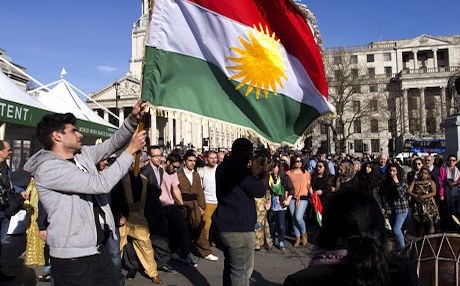
The current All-Party Parliamentary Group (APPG) on the Kurdistan Region in Iraq was founded in November 2007 and has to renew itself each year according to British parliamentary rules.
We have just held our annual meeting, where MPs agreed a new officer board of four parliamentarians. The new Chair is Labour MP Mary Glindon ,and the Co-Chair is the Conservative Peer, Fiona Hodgson. The Vice-Chairs are Conservative MP Henry Smith and Liberal Democrat Peer Tim Clement-Jones. The Chairman for the past three years, Jack Lopresti, was thanked for his long and good service and is one of many other officers and members of the group.
The new officer board symbolises support from the main parties and from both Houses of Parliament. Ten parliamentarians attended the meeting and others sent their apologies. Parliamentarians have many other commitments, and it also turned out to be a light day in parliament, which means they can leave early or go to meetings outside the Commons – something that could not have been known when we organised the meeting some weeks in advance.
The new Chair, Mary Glindon, said: “I have yet to visit the Kurdistan Region but look forward to doing so as soon as possible. I have been attending meetings of the APPG and have often heard updates from the KRG’s High Representative, Karwan Jamal Tahir and his colleagues. I have formed a very favourable impression of Kurdistan and, as a Christian, I am pleased to hear about its deep and unforced respect for different religions and peoples. I think this is a precious asset in the Middle East. I am also impressed by its heroic resistance to extremism and Daesh [ISIS].”
“The Kurds of Iraq have often found a place in the hearts of many British people who know of their suffering, dignity and determination. It is a privilege to chair the APPG and to help do my bit to build better and deeper relations between our peoples.”
The meeting also heard reports from the four people who formed the recent delegation to Kurdistan. We agreed to see various ministers to advance key issues, but we won’t know for a while who the ministers in relevant departments will be under the new Prime Minister. We also plan to send our 17th delegation to Kurdistan in late autumn.
APPGs are more common in our parliament than in others, and I have come across many misconceptions of their role in the last 12 years. They are informal bodies which have no statutory authority and must not be confused with either formal committees in parliament or the government.
APPGs come in two forms – country groups and subject groups. There are hundreds of them, rising and falling depending on the interest of parliamentarians and the salience of specific issues. Many of these groups are sustained by one MP and sometimes attract wider support. I have seen APPG meetings attended by a single MP, but with a wider audience of experts and whose reports are signed by a number of MPs and taken seriously by ministers. So much depends on the breadth of their support and the persistence of their advocacy.
As it happens, we have been taken seriously by the Foreign Affairs Committee, and contributed considerably to their two reports in the last four years on Kurdish issues. We have met all Middle East ministers for over a decade and MPs have regularly asked questions and tabled motions.
On our last delegation, for instance, we visited an IDP camp. This experience prompted Labour MP Steve Reed, who represents part of Croydon in south London where there is a community of Iraqi Kurds, to suggest a local humanitarian organisation to meet the High Representation and myself to explore what the group can do to help in the IDP camps.
MPs who have visited Kurdistan have also talked with their peers about their positive experiences, helping to increase interest in participation in future delegations. Word of mouth is always the best form of advertising and helps overcome the fact that it is difficult even at the best of times to persuade busy parliamentarians to make Kurdistan as a bigger priority. This has been made all the more difficult in the profound political flux of the last few years, whose results are utterly impossible to predict.
The new officer board symbolises support from the main parties and from both Houses of Parliament. Ten parliamentarians attended the meeting and others sent their apologies. Parliamentarians have many other commitments, and it also turned out to be a light day in parliament, which means they can leave early or go to meetings outside the Commons – something that could not have been known when we organised the meeting some weeks in advance.
The new Chair, Mary Glindon, said: “I have yet to visit the Kurdistan Region but look forward to doing so as soon as possible. I have been attending meetings of the APPG and have often heard updates from the KRG’s High Representative, Karwan Jamal Tahir and his colleagues. I have formed a very favourable impression of Kurdistan and, as a Christian, I am pleased to hear about its deep and unforced respect for different religions and peoples. I think this is a precious asset in the Middle East. I am also impressed by its heroic resistance to extremism and Daesh [ISIS].”
“The Kurds of Iraq have often found a place in the hearts of many British people who know of their suffering, dignity and determination. It is a privilege to chair the APPG and to help do my bit to build better and deeper relations between our peoples.”
The meeting also heard reports from the four people who formed the recent delegation to Kurdistan. We agreed to see various ministers to advance key issues, but we won’t know for a while who the ministers in relevant departments will be under the new Prime Minister. We also plan to send our 17th delegation to Kurdistan in late autumn.
APPGs are more common in our parliament than in others, and I have come across many misconceptions of their role in the last 12 years. They are informal bodies which have no statutory authority and must not be confused with either formal committees in parliament or the government.
APPGs come in two forms – country groups and subject groups. There are hundreds of them, rising and falling depending on the interest of parliamentarians and the salience of specific issues. Many of these groups are sustained by one MP and sometimes attract wider support. I have seen APPG meetings attended by a single MP, but with a wider audience of experts and whose reports are signed by a number of MPs and taken seriously by ministers. So much depends on the breadth of their support and the persistence of their advocacy.
As it happens, we have been taken seriously by the Foreign Affairs Committee, and contributed considerably to their two reports in the last four years on Kurdish issues. We have met all Middle East ministers for over a decade and MPs have regularly asked questions and tabled motions.
Some MPs refuse to go on foreign trips, while others cannot go because it falls outside their responsibilities as ministers or shadow ministers. But many know that foreign travel broadens the mind, equips MPs to play their part in forming and judging foreign policy, and sometimes in promoting constituency and national interests. MPs are invited on many overseas delegations, of which Kurdistan is just one possibility. Those who go quickly shed their preconceptions, and many make firm friendships or spot opportunities to advance relations.
On our last delegation, for instance, we visited an IDP camp. This experience prompted Labour MP Steve Reed, who represents part of Croydon in south London where there is a community of Iraqi Kurds, to suggest a local humanitarian organisation to meet the High Representation and myself to explore what the group can do to help in the IDP camps.
MPs who have visited Kurdistan have also talked with their peers about their positive experiences, helping to increase interest in participation in future delegations. Word of mouth is always the best form of advertising and helps overcome the fact that it is difficult even at the best of times to persuade busy parliamentarians to make Kurdistan as a bigger priority. This has been made all the more difficult in the profound political flux of the last few years, whose results are utterly impossible to predict.
This Tuesday, we will know who will be the new Prime Minister. Most assume it will be Boris Johnson, who will have to make some fundamental decisions in short order. Johnson says he is determined to leave the EU by 31 October, with or without a deal.
MPs seem determined to stop a no-deal Brexit but may not have the power to stop it. Some talk about an imminent general election while Labour is saddled with a civil war over anti-Semitism and other issues. Others suggest that an election should not be called before Brexit because many voters will defect to the hardline Brexit Party. And others suggest that an election should take place after Brexit, and when the new Prime Minister has had the time to set out his stall.
British politics is consumed by Brexit, and some huge and neglected domestic conflicts that overwhelm and overshadow most foreign issues. This shapes a much more difficult working environment for the APPG, but watch this space for news of plans to help advance Anglo-Kurdistan relations.


Comments
Rudaw moderates all comments submitted on our website. We welcome comments which are relevant to the article and encourage further discussion about the issues that matter to you. We also welcome constructive criticism about Rudaw.
To be approved for publication, however, your comments must meet our community guidelines.
We will not tolerate the following: profanity, threats, personal attacks, vulgarity, abuse (such as sexism, racism, homophobia or xenophobia), or commercial or personal promotion.
Comments that do not meet our guidelines will be rejected. Comments are not edited – they are either approved or rejected.
Post a comment