


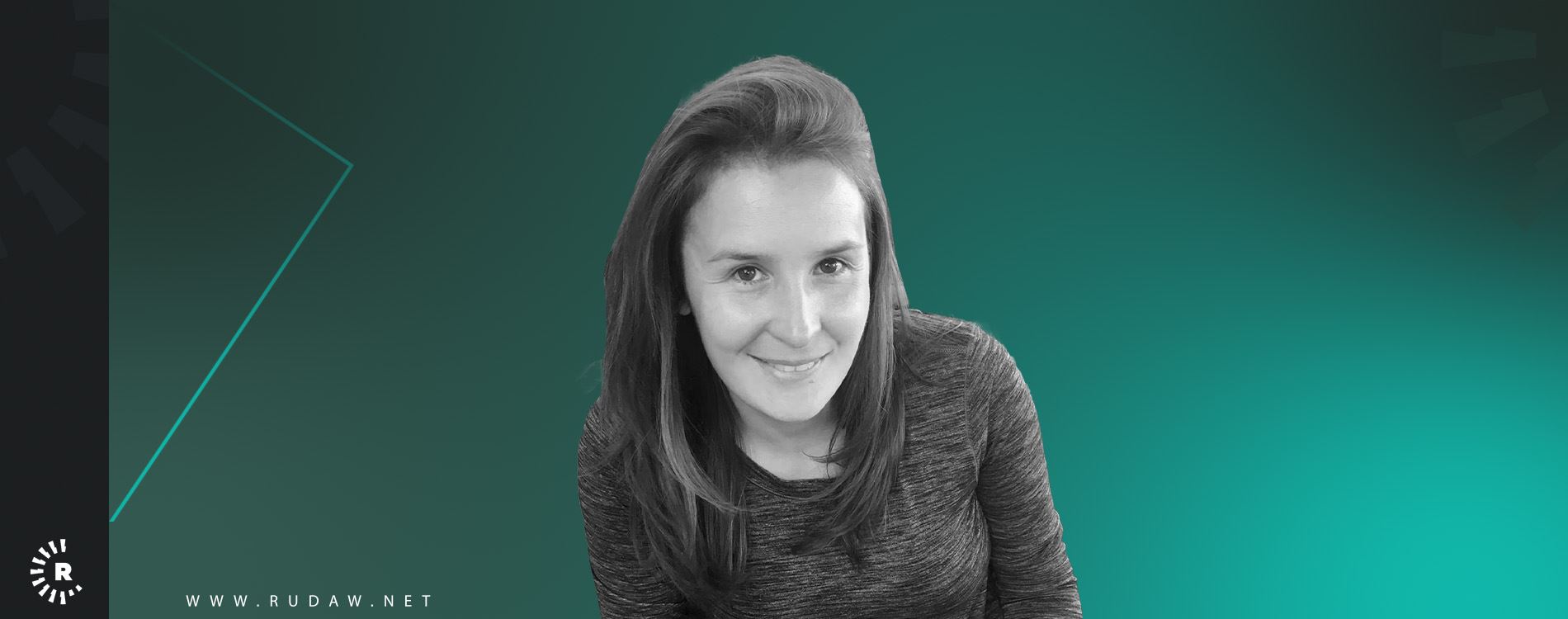
It's been my honor to call Sulaimani home since 2011. My first day of teaching at the American University of Iraq, Sulaimani (AUIS) feels like yesterday, but fifteen years have passed. My first students are deep into incredible careers of their own, some work as my colleagues, some are married, some have beautiful children. In my initial interview to join the faculty, a staff member mentioned Sulaimani had named its streets after poets. I thought, “That’s all I need to know. That’s where I need to be.” The city lived up to and exceeded every expectation I could have had.
In my first weeks, I met Sherko Bekas in his office at Sardam Publishing. In his white dinner jacket and red scarf, lighting one cigarette with the last, he cracked sly joke after sly joke — all of them somehow serious. The Kurdish way: to joke and to speak with complete gravity at the same time. When we hosted him for a reading at the university a few weeks later, he recited his poems as if he were a lion: growling and pacing, throwing the pages from the podium as he finished each poem. I had always dreamed of such a fierce passion for literature. To see it in person stunned and delighted me.
A few weeks after Sherko’s performance, I attended Abdulla Pashew’s reading at the University of Sulaimani. The boys sat three to a chair: one seated in the chair itself and two friends on each knee. The girls sat in little tangles, like rock roses, blooming brambles. In a hall meant for a few hundred, there were at least a thousand. The crowd knew by heart every poem Pashew recited. At one point, teasing a young man in front, Abdulla said, “Come on up here, my friend. I’ll give you my beard, you can perform, and I’ll take a rest!” The fellow feeling, the sense of pride and ownership the audience felt with the poet was something I had only dreamed of as an American poet.
In my birth country, poetry has become rarified. It belongs to a select few and readers often feel too intimidated to even approach the text. Respect for an intricate art form has per mutated into something sad: fear. Who do American poets speak to? It’s no longer clear. Who do Kurdish poets speak to? It’s beautifully clear. The Kurdish public. And the Kurdish public is listening.
That is a magical statement; this is a city where readers hunger for their poets’ words. This is a city where poets know to whom they speak, where poets trust that their readers are waiting, already listening, even to their silence. How precious and, as Abdulla himself has told me, how fragile.
If Kurdistan has taught me anything, it is that where we see fragility, with a quarter turn in perspective, we can see resilience.
To work responsibly with literature in Kurdistan, one must work with preservation. At Kashkul, the center for arts and culture at AUIS, we say, “Creation without preservation is forgetting; preservation without creation is mummification.” Kashkul believes we exist to collaborate with and amplify the efforts of the region’s dedication preservationists, people like Rafiq and Sadiq Salih, two of the founders of Zheen Archive, and Sheikh Mohammed Ali Qaradaghi.
Over the last fifteen years, these individuals have taken the time to be my teachers. Sheikh Mohammed Ali Qaradaghi taught me the word, the history, “Kashkul.” It is from him and his invaluable research and writing that we drew inspiration for our organization’s name.
The physical kashkul could sustain the humble person. The metaphorical kashkul, the notebooks of scholars, could gather all the humble people needed for their imagination to thrive. As the Persian and Ottoman empires of the nineteenth century sent Kurdish people into exile within their own ancestral lands, and existence, as Nali writes, became non-existence, intellectuals and artists made “home” within their kashkul. No one could take it from them. No one could violate it. It could be created, recreated, and shared infinitely. It was a sense of home that could exist even within exile, even alongside heartbreak and despair.
Despair was a defining feature of Kurdish life in the nineteenth century. In Exile Is Arrival, the anthology of nineteenth-century Sorani poetry that I’ve edited with my dear colleague Shene Mohammed, Kurdi writes, “It is solstice or just moonless tonight? / My eyes have no light.” He laments that he “lives between the prison and the gristmill.” Nali mourns with him, “It’s all burned … Nothing is left except at the corner of prayer and patience.” But, of course, and thanks to Sufism’s vast influence on Kurdish literature, Kurdish poets transform even despair. Living in yearning, in the infinite “if,” poets allow us all to live in union and clarity. Salim writes of his beloved, who could be corporeal or divine, an idea or a nation, “As long as I live, I seed thistles in my heart, hoping / When I die, if you visit my grave, they will catch your hem.” Kurdish life is one of extremes and contradictions and the Kurdish ability to hold those within the body, which is finite, can show us all the way forward.
Ability? Or it is a choice? A choice that people in the fields of creation and preservation make every day, sometimes many times each day?
Zheen Archive, in downtown Sulaimani, now commands an entire city block, but for two of the archive’s founders, Rafiq and Sadiq Salih, it is not their first, but their third library. For the past ten years, as I’ve worked with preservationists all over Iraq, I’ve conducted interviews with them, all soon available to readers in my upcoming book Preservation Under Fire. As I’ve interviewed Rafiq, Sadiq, and the leadership at Zheen, I’ve heard how as they built each library, fear was their constant companion. The Ba’athist regime worked hard to erase various minorities — including, of course, Kurds — from the records, from the landscape itself. Daring to remember the Kurds was its own rebellion. Rafiq says, “Carrying a weapon is not the only way to serve a nation.” As Rafiq and Sadiq told me the stories of their first and second libraries burning, they openly carried their sorrow and just as openly refused despair. They know an innate part of our work is having the courage to consistently begin again.
These Kurdish stories only clarify the global human story.
There are moments in time when we, as Kurdi writes, cannot explain our own state, when as Kurdi rails against and celebrates, love presses us too roughly into service. In these moments, we can only accept Kurdi’s invitation to throw our “eyes and ears open, seeking paths / To the barking of dogs or the glittering of a fire.” We can only, as Nali tells us, “continue to walk survival’s dark path,” making ourselves “students of meaning.”
Please take this as my invitation, as Kashkul’s warm invitation, to join us as students of meaning at the inaugural Kurdish Studies Forum, September 25-27, at the American University of Iraq, Sulaimani.
Alana Marie Levinson-LaBrosse is a poet and teaches at the American University of Iraq, Sulaimani (AUIS)
The views expressed in this article are those of the author and do not necessarily reflect the position of Rudaw.


Comments
Rudaw moderates all comments submitted on our website. We welcome comments which are relevant to the article and encourage further discussion about the issues that matter to you. We also welcome constructive criticism about Rudaw.
To be approved for publication, however, your comments must meet our community guidelines.
We will not tolerate the following: profanity, threats, personal attacks, vulgarity, abuse (such as sexism, racism, homophobia or xenophobia), or commercial or personal promotion.
Comments that do not meet our guidelines will be rejected. Comments are not edited – they are either approved or rejected.
Post a comment