


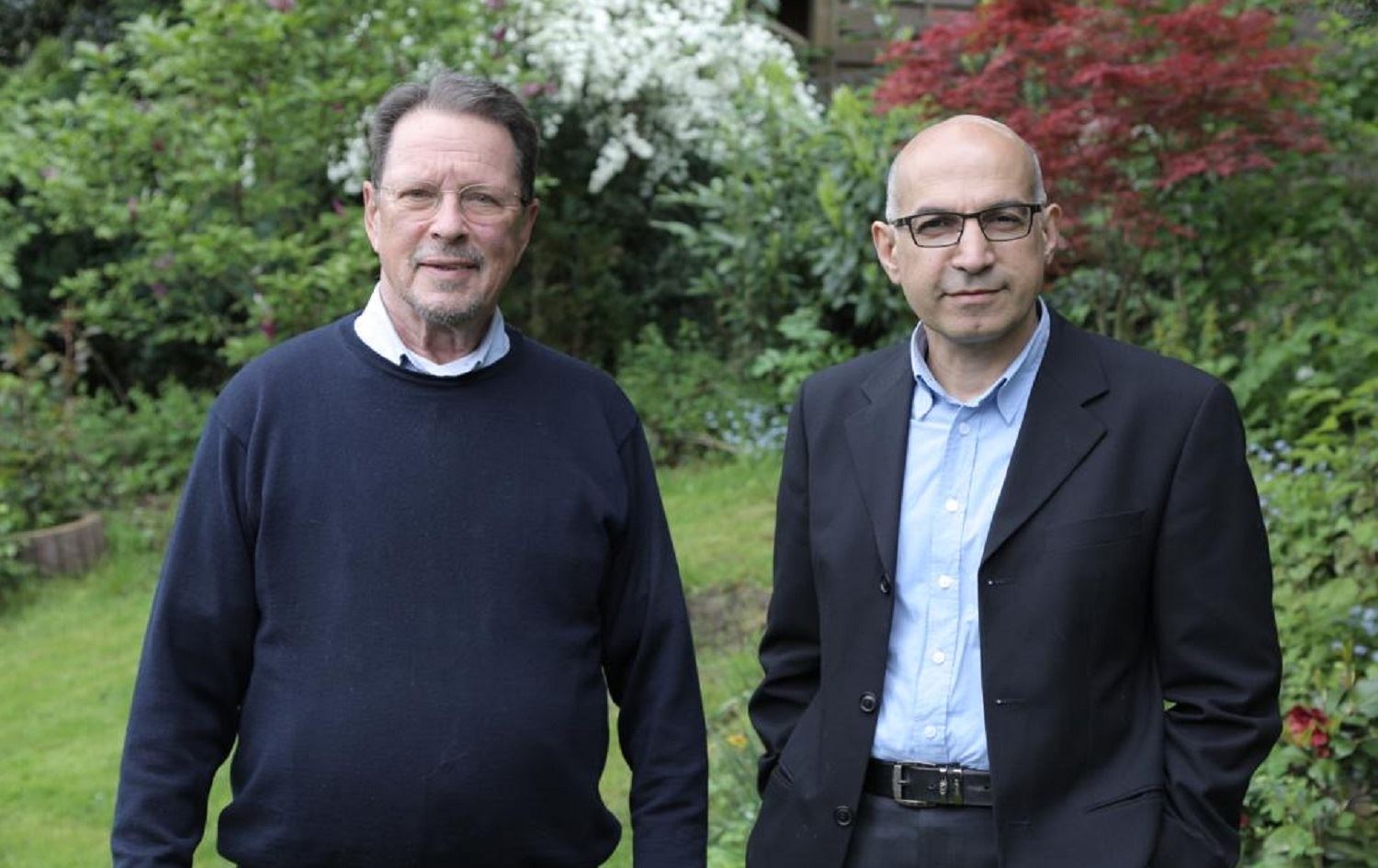
Kak Jurgen
He asked us to call him Kak [Mister] Jurgen.
Kak Jurgen was a merciful and great friend who worked as a broadcast journalist until his retirement. He was one of those people who wanted to learn, known about, familiarize with other cultures, languages, mindsets.
He was born in 1938, a year before the world was engulfed in a war that laid destruction to most of Europe and brought the world to the edge of abyss. Germany was destroyed, and poverty was rampant.
“We were always on the run from one place to another and we hid ourselves. The worst thing was when the suffering reached the point - a point most saddening and heart-breaking - where my parents were no longer able to feed us. So we had to work as servants in farms and the houses of farmers to survive,” he had said on his childhood.
This was the worst stage of their life. Compelling children to work is a crime, one Jurgen spent his childhood subjected to.
With the support of his uncle, Jurgen was able to resume his studies in Osnabruck when the war ended. He completed high school in Mannheim, then university in Heidelberg. He worked at Mannheimer Newspaper, followed by 20 years working at SDR [South German Broadcasting Corporation].
Learning of the bitter Kurdish fate
Jurgen moved to the city of Dortmund in 1985, where he established and headed a new project – a multilingual radio station.
After conducting research, he learned that many refugees and foreigners lived in that region of Germany, and needed to be provided with news in their own languages.
Working in collaboration with friends of his, Hoppe provided an eight-language service.
In a chat I had with Kak Jurgen at his home back in the spring of 2012, he spoke of his time in Dortmund as one in which he became familiar with Kurdish issue, and the hatred Turkish nationalists held against Kurds.
“Through the interactions I had, I concluded that there is a great Kurdish population in Turkey who speak and think in Kurdish,” he said.
“After talking about Kurds and Kurdistan in a meeting [in 1985], I said with good intentions: ‘So we must have programs in Kurdish language as well.’ This caused chaos. All the Turks in attendance, including journalists and intellectuals, stood up and came towards me saying: ‘So, you want to be an enemy of Turks. You want to divide our country and offer programs in a language that does not exist.’”
That day, Hoppe returned home and saw his house surrounded by police. His wife asked: “What has happened? What have you done to make our doorbell ring constantly? We’re receiving abuse on the phone and being threatened to death.”
“After that day, I well understood the suffering and bitter fate of Kurds,” he recounted.
In an interview, Kak Jurgen talked in detail about an incident where security forces in Dortmund thwarted an attack by extremist Turks against him and his family.
However, the attacks and threats did not stop him from establishing a Kurdish service at German radio station WDR in 1987 - which continues to date.
He became treasured by Kurds and despised by Turks. Kurds and lovers of freedom saw him as a voice between East and West – one of love, understanding, coexistence of humans and cultures. Turkish extremists and nationalists saw him as a troublemaker and enemy.
His first visit to the Kurdistan Region in 1996 was followed by 16 more. He met with Kurdish leaders, and attended the opening ceremony of Kurdistan’s united parliament in 2002. He also worked as a brave protector of Kurdish rights, advocating for them at important German institutions.
Dear Hoppe, we are saddened by your death. Farewell to a lovely and merciful man.
Dear Hoppe, happy is the person who lives as bravely and purely as you did. All your friends and lovers from Germany to Kurdistan are saddened by your death.
You are in our hearts and we will not forget you, Kak Jurgen.
Jurgen Hoppe died on November 18 at the age of 81
By Sirwan Rehim
He asked us to call him Kak [Mister] Jurgen.
Kak Jurgen was a merciful and great friend who worked as a broadcast journalist until his retirement. He was one of those people who wanted to learn, known about, familiarize with other cultures, languages, mindsets.
He was born in 1938, a year before the world was engulfed in a war that laid destruction to most of Europe and brought the world to the edge of abyss. Germany was destroyed, and poverty was rampant.
“We were always on the run from one place to another and we hid ourselves. The worst thing was when the suffering reached the point - a point most saddening and heart-breaking - where my parents were no longer able to feed us. So we had to work as servants in farms and the houses of farmers to survive,” he had said on his childhood.
This was the worst stage of their life. Compelling children to work is a crime, one Jurgen spent his childhood subjected to.
With the support of his uncle, Jurgen was able to resume his studies in Osnabruck when the war ended. He completed high school in Mannheim, then university in Heidelberg. He worked at Mannheimer Newspaper, followed by 20 years working at SDR [South German Broadcasting Corporation].
Learning of the bitter Kurdish fate
Jurgen moved to the city of Dortmund in 1985, where he established and headed a new project – a multilingual radio station.
After conducting research, he learned that many refugees and foreigners lived in that region of Germany, and needed to be provided with news in their own languages.
Working in collaboration with friends of his, Hoppe provided an eight-language service.
In a chat I had with Kak Jurgen at his home back in the spring of 2012, he spoke of his time in Dortmund as one in which he became familiar with Kurdish issue, and the hatred Turkish nationalists held against Kurds.
“Through the interactions I had, I concluded that there is a great Kurdish population in Turkey who speak and think in Kurdish,” he said.
“After talking about Kurds and Kurdistan in a meeting [in 1985], I said with good intentions: ‘So we must have programs in Kurdish language as well.’ This caused chaos. All the Turks in attendance, including journalists and intellectuals, stood up and came towards me saying: ‘So, you want to be an enemy of Turks. You want to divide our country and offer programs in a language that does not exist.’”
That day, Hoppe returned home and saw his house surrounded by police. His wife asked: “What has happened? What have you done to make our doorbell ring constantly? We’re receiving abuse on the phone and being threatened to death.”
“After that day, I well understood the suffering and bitter fate of Kurds,” he recounted.
In an interview, Kak Jurgen talked in detail about an incident where security forces in Dortmund thwarted an attack by extremist Turks against him and his family.
However, the attacks and threats did not stop him from establishing a Kurdish service at German radio station WDR in 1987 - which continues to date.
He became treasured by Kurds and despised by Turks. Kurds and lovers of freedom saw him as a voice between East and West – one of love, understanding, coexistence of humans and cultures. Turkish extremists and nationalists saw him as a troublemaker and enemy.
His first visit to the Kurdistan Region in 1996 was followed by 16 more. He met with Kurdish leaders, and attended the opening ceremony of Kurdistan’s united parliament in 2002. He also worked as a brave protector of Kurdish rights, advocating for them at important German institutions.
Dear Hoppe, we are saddened by your death. Farewell to a lovely and merciful man.
Dear Hoppe, happy is the person who lives as bravely and purely as you did. All your friends and lovers from Germany to Kurdistan are saddened by your death.
You are in our hearts and we will not forget you, Kak Jurgen.
Jurgen Hoppe died on November 18 at the age of 81
By Sirwan Rehim


Comments
Rudaw moderates all comments submitted on our website. We welcome comments which are relevant to the article and encourage further discussion about the issues that matter to you. We also welcome constructive criticism about Rudaw.
To be approved for publication, however, your comments must meet our community guidelines.
We will not tolerate the following: profanity, threats, personal attacks, vulgarity, abuse (such as sexism, racism, homophobia or xenophobia), or commercial or personal promotion.
Comments that do not meet our guidelines will be rejected. Comments are not edited – they are either approved or rejected.
Post a comment