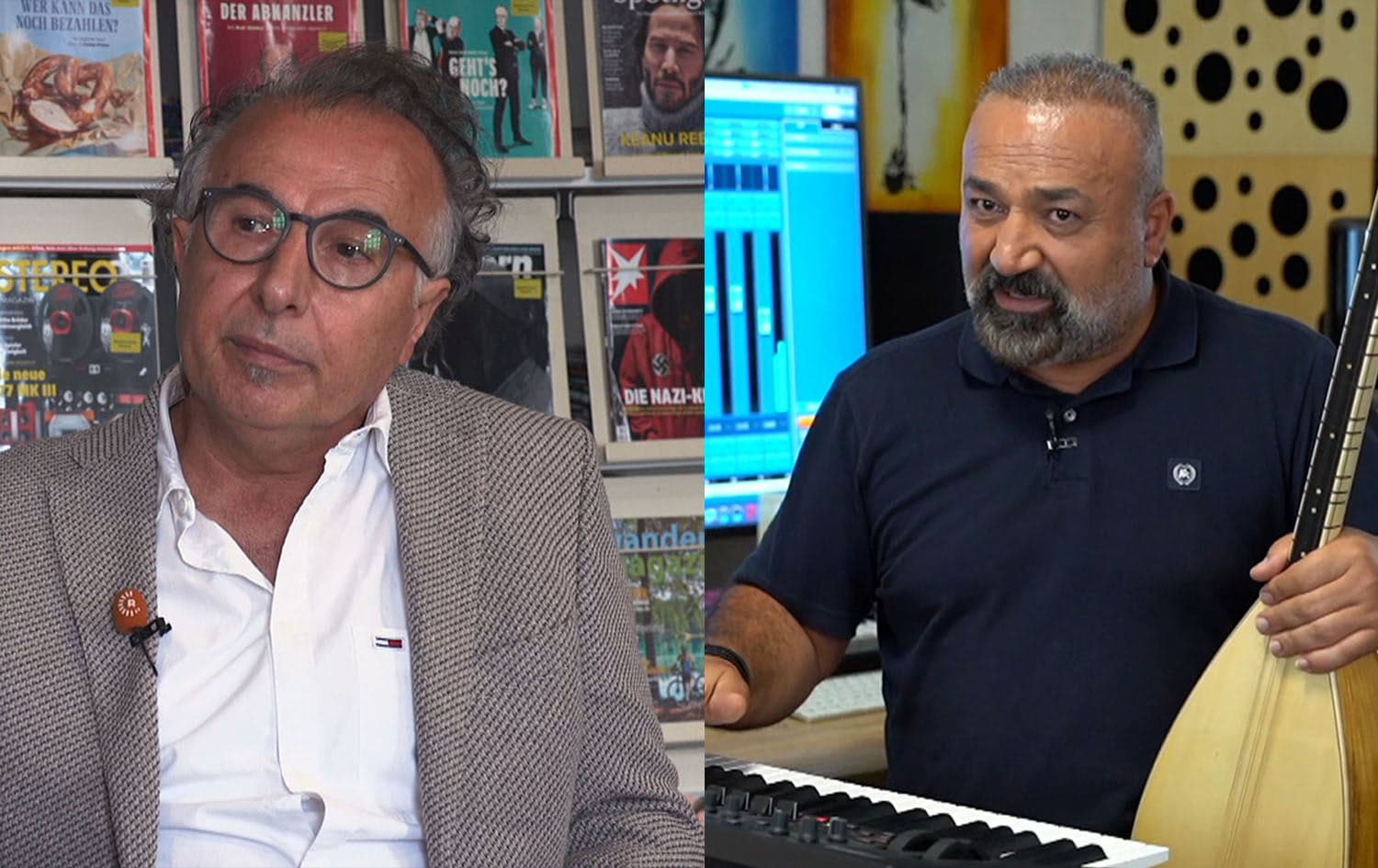

ERBIL, Kurdistan Region - Two Yazidi artists from southeast Turkey have turned exile into expression - writing and singing to promote a culture often forced into silence.
Nawaf Miro, a poet, novelist, storyteller and translator was born to Yazidi parents. Living in Germany since 1987, he has published five poetry collections that are widely read and recited among Kurdish readers, particularly those fluent in Kurmanji.
“If our Kurdishness and Yazidiness weren’t so fundamental, we would have certainly abandoned it, and that language and love wouldn’t exist. For me, the great duty of a writer is to be with the weak, to be for his community, to be with those people who need protection, those who must be protected,” Miro told Rudaw’s Diaspora program.
He has also written eight novels and, as the father of three, several children’s books.
“In the world, I see myself as a Kurd, that’s why I write in Kurdish. Within Kurdistan and Yazidikhan, I am only Yazidi. I don’t want to be called a Kurdish Yazidi, I am only Yazidi,” he said, adding that the Kurdish language holds special importance for Yazidis.
“Language is important for everyone, but for Yazidis it’s twice as important, because all our prayers, verses, knowledge, stories, tales and lullabies are in this language,” he said. “I can say I have worshipped this language in my own way.”
Another Yazidi artist built his reputation performing Kurdish songs and is recognized across the diaspora in Europe. Bedil Brahim, originally from southeast Turkey, settled in Germany where he continued his music career and rose to fame as a contestant on the German X Factor singing competition.
“Early one morning, I got a phone call. They said we’re from X Factor and we’ve seen your work on the internet and we want you to participate,” he said. He joined the show to introduce Kurdish culture to European audiences.
Brahim advanced through five stages of the competition performing Kurdish songs, drawing applause from viewers and the jury.
“When I sang in Kurdish, German viewers would stand up and applaud,” he said. But when asked to switch to English in the later rounds, he withdrew, saying he was not confident in the English language.
When the Islamic State (ISIS) attacked Shingal in 2014, Brahim and fellow musical artist Dashni Murad launched a campaign to collect aid for displaced Yazidis. Brahim personally delivered supplies to the Kurdistan Region and insisted on visiting Mount Shingal, which was under siege at the time.
“They told me it’s very dangerous, but I said, I’m also a son of those Yazidis and I want to go to them. I’m not better than them,” he said.
He traveled to the mountain by helicopter, documented the humanitarian crisis and helped evacuate the wounded.
Brahim has released six albums and several singles. He continues to perform and record. His daughter appears alongside him in one of his videos, and his son, Hozan Haso, is also active in the arts.
Shingal is part of the disputed areas between Baghdad and Erbil. The areas stretch across several provinces, including Nineveh, Diyala, Salahaddin, and Kirkuk. Article 140 of the Iraqi constitution, which remains unimplemented, provides a process for the KRG and the federal government to settle their disputes.
The region was liberated from ISIS in late 2015, but lack of reconstruction, political disputes, and ongoing insecurity have prevented most families from returning to their homes.