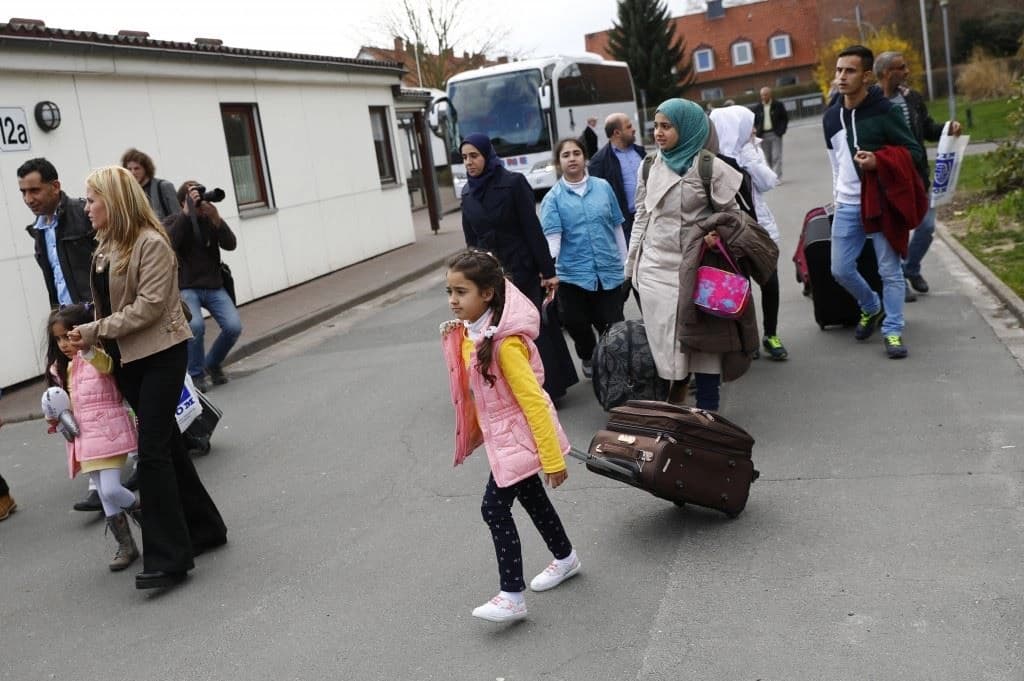
ERBIL, Kurdistan Region - Germany deported more than 500 Iraqi nationals in the first 11 months of last year.
Between January and November 2023, Germany deported 529 Iraqis, including those of the Kurdistan Region, according to data Rudaw’s Zinar Shino obtained from the German interior ministry. Of this number, only 210 were repatriated to Iraq and others were sent to third countries.
The ministry denied the existence of any agreements between Berlin and Baghdad pertaining to the deportation of asylum seekers and said that its deportation process adheres to international procedures.
Germany is a favoured destination country for Kurds and Iraqis wanting to migrate to Europe.
Last October, Siegfried Lorek, justice minister for Germany’s Baden-Wurttemberg state, told Rudaw that 471 Iraqis had been deported, 77 of them returned to the countries from which they had initially entered into Germany.
“Some of the Iraqis are granted the right to stay. The ratio of the Iraqis who are granted the right to stay ranges from 20 percent to 25 percent, this means 75 percent must return,” Lorek said.
In January 2023, German Chancellor Olaf Scholz sought Iraqi Prime Minister Mohammed Shia’ al-Sudani’s help to return Iraqi nationals from Germany.
In an interview with Rudaw in August, Gonul Eglence, a member of the regional parliament of North Rhine-Westphalia, said that Iraqi asylum seekers must not be deported to Iraq because it is an unsafe country. She explained that many individuals cannot be deported because they could face political persecution or their lives would be at risk due to their religious beliefs.
"Those people will not be deported. Instead, they receive Duldung. That means they can stay temporarily," Eglence said.
Each year, tens of thousands of predominantly young individuals depart Iraq and the Kurdistan Region, seeking improved prospects in Europe. In pursuit of a better life, they navigate perilous smuggling routes, risk their lives in harsh and freezing travel conditions, and undertake treacherous sea crossings to reach mainland Europe or the United Kingdom.
Between January and November 2023, Germany deported 529 Iraqis, including those of the Kurdistan Region, according to data Rudaw’s Zinar Shino obtained from the German interior ministry. Of this number, only 210 were repatriated to Iraq and others were sent to third countries.
The ministry denied the existence of any agreements between Berlin and Baghdad pertaining to the deportation of asylum seekers and said that its deportation process adheres to international procedures.
Germany is a favoured destination country for Kurds and Iraqis wanting to migrate to Europe.
Last October, Siegfried Lorek, justice minister for Germany’s Baden-Wurttemberg state, told Rudaw that 471 Iraqis had been deported, 77 of them returned to the countries from which they had initially entered into Germany.
“Some of the Iraqis are granted the right to stay. The ratio of the Iraqis who are granted the right to stay ranges from 20 percent to 25 percent, this means 75 percent must return,” Lorek said.
In January 2023, German Chancellor Olaf Scholz sought Iraqi Prime Minister Mohammed Shia’ al-Sudani’s help to return Iraqi nationals from Germany.
In an interview with Rudaw in August, Gonul Eglence, a member of the regional parliament of North Rhine-Westphalia, said that Iraqi asylum seekers must not be deported to Iraq because it is an unsafe country. She explained that many individuals cannot be deported because they could face political persecution or their lives would be at risk due to their religious beliefs.
"Those people will not be deported. Instead, they receive Duldung. That means they can stay temporarily," Eglence said.
Each year, tens of thousands of predominantly young individuals depart Iraq and the Kurdistan Region, seeking improved prospects in Europe. In pursuit of a better life, they navigate perilous smuggling routes, risk their lives in harsh and freezing travel conditions, and undertake treacherous sea crossings to reach mainland Europe or the United Kingdom.

Comments
Rudaw moderates all comments submitted on our website. We welcome comments which are relevant to the article and encourage further discussion about the issues that matter to you. We also welcome constructive criticism about Rudaw.
To be approved for publication, however, your comments must meet our community guidelines.
We will not tolerate the following: profanity, threats, personal attacks, vulgarity, abuse (such as sexism, racism, homophobia or xenophobia), or commercial or personal promotion.
Comments that do not meet our guidelines will be rejected. Comments are not edited – they are either approved or rejected.
Post a comment