
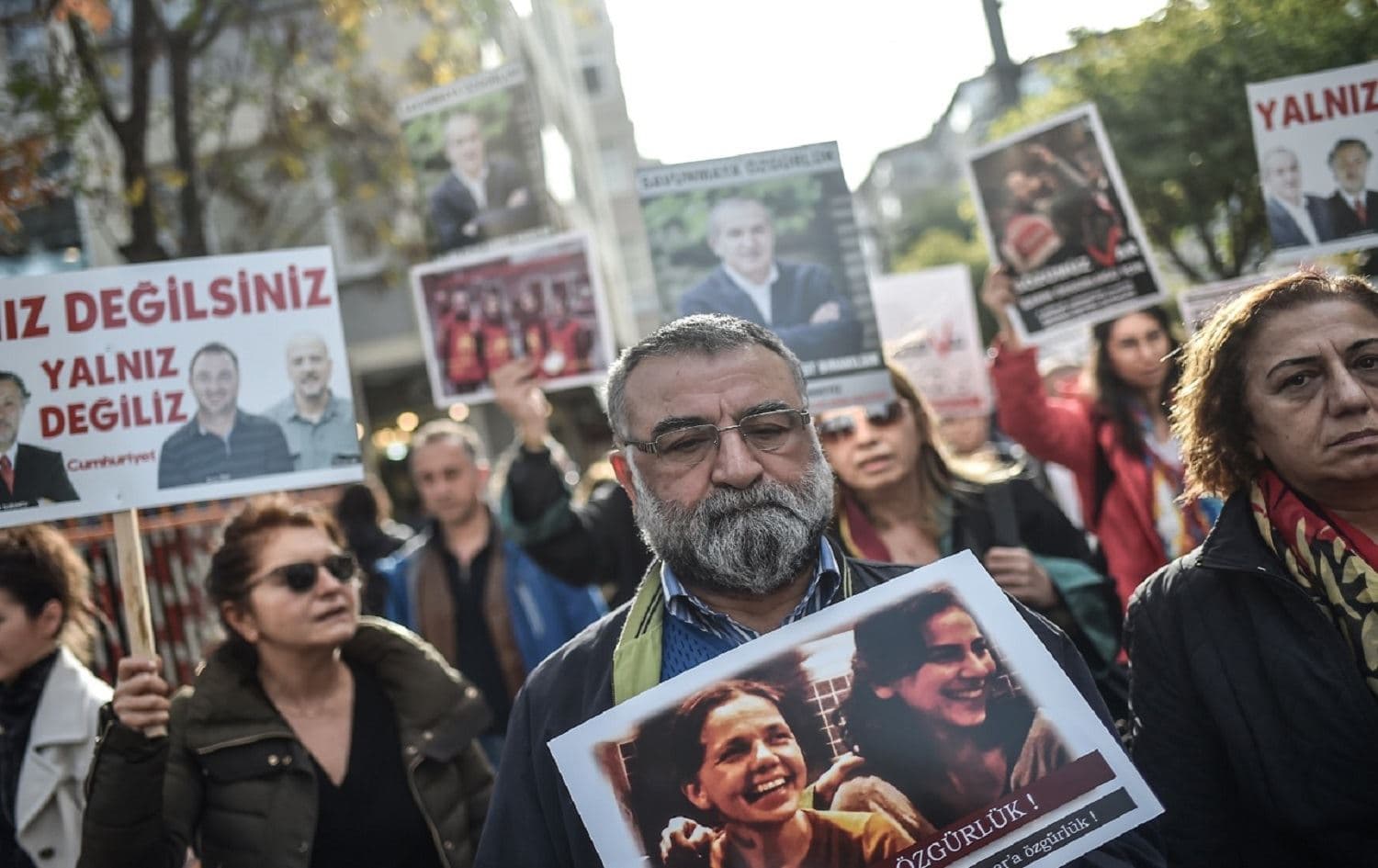

ERBIL, Kurdistan Region - Turkey and Iran are among the top jailers of journalists worldwide, the Committee to Protect Journalists (CPJ) said in a special report published on Tuesday.
At least 250 journalists are in prisons across the globe, the organization reported, with China and Turkey emerging as top jailers.
The US-based nonprofit organization monitors the protection of journalists worldwide.
48 were jailed this year in China and 47 in Turkey, down from 68 in 2018.
"The reduced number of prisoners does not signal an improved situation for the Turkish media," the CPJ reported, adding that the fall reflects “successful efforts” to “stamp out independent reporting and criticism in the country.”
"Dozens of journalists not currently jailed in Turkey are still facing trial or appeal and could yet be sentenced to prison, while others have been sentenced in absentia and face arrest if they return to the country," the journalists rights organization added.
Turkey used the failed military coup of 2016 to implement a state of emergency that was renewed every 90 days until July 2018, clamping down on journalistic freedoms. Despite its expiration, Ankara continues to target dissent among journalists, newspapers, and media outlets through anti-terror legislation.
Ankara regularly detains or arrests journalists, artists, and politicians on alleged ties to the Kurdistan Workers Party (PKK) or the Gulen Movement. Attending funerals of PKK fighters and speaking against Turkey's assault on Afrin has been enough to land dozens of its citizens in jail.
In a 2019 statement, Human Rights Watch (HRW) condemned the Turkish government’s persecution of its critics which intensified in the wake of the failed 2016 coup. At least 180 media outlets were closed down during the state of emergency which followed, leaving more than 2,500 journalists jobless, further limiting press freedoms across the country.
Turkey regularly dismisses international reports by Human Rights Watch, Amnesty International, CPJ and others, arguing that they use questionable means to gather their information and are inherently trying to undermine the Republic of Turkey.
Limits on freedom of speech and the press grew during Operation Peace Spring, with journalists and activists arrested and suspended from Twitter for criticizing Turkey’s operation in Kurdish areas of Northern Syria.
Although there was no mention of Iraq in the report, the CPJ referenced the growing protest movement as a cause of the press crackdown across the Middle East.
"Authoritarianism, instability, and protests in the Middle East led to a rise in the number of journalists locked up in the region," according to the report.
Iran placed seventh in the lineup, imprisoning 11 journalists in 2019.
Iran has not remained immune to the crackdown on Middle Eastern journalists, particularly following the outbreak of demonstrations across several cities.
Protests erupted in mid-November following a government decision to raise petrol prices by as much as 300 percent.
Reporters without Borders (RSF) announced in February that the country has imprisoned, prosecuted and executed at least 860 journalists since the founding of the Islamic Republic in 1979.
RSF Secretary-General Christophe Deloire described Tehran as “relentless” in its persecution of journalists “for their opinions or reporting” after obtaining the data, which detailed court files of journalists up until 2009.
The organization released a statement on December 10 stating alarm over the freedom of journalists amid Iraq's protests, which have rocked the country since October 1.
Three journalists have been killed since protests began.
"Rarely have Iraqi journalists been so exposed to danger and so vulnerable," said Sabrina Bennoui, head of RSF's Middle East Desk.


