

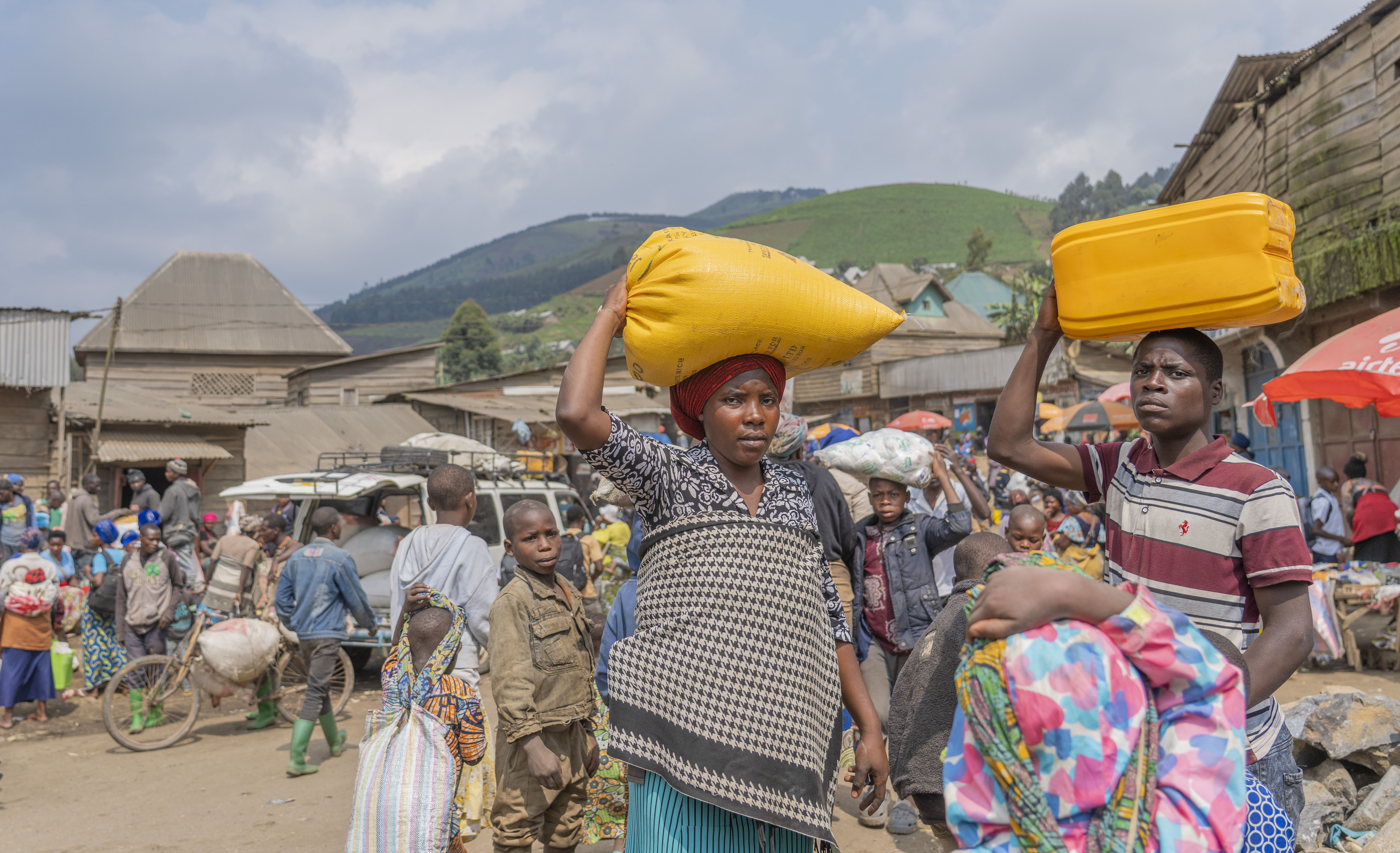
NEW YORK – The World Food Programme (WFP) warned on Wednesday that approximately 14 million people could fall deeper into poverty and hunger this year as a result of global aid collapses driven largely by sweeping funding cuts from the United States under the Trump administration.
“As major donors scale back their commitments, the ripple effects are being felt across the humanitarian system — threatening the ability of organizations like the World Food Programme (WFP) and its partners to deliver life-saving assistance to millions,” read a new WFP report, Lifeline at Risk.
“WFP estimates that its funding shortfalls could push 10.5–13.7 million people currently experiencing Crisis (IPC Phase 3) levels of acute food insecurity into Emergency (IPC Phase 4),” added the report.
WFP expects its budget to decline 40 percent this year compared to last year. While in 2024, the UN agency received nearly $10 billion, its 2025 budget is estimated to be $6.4 billion.
Historically WFP’s largest donor, the US has provided about $1.5 billion so far in 2025, compared with nearly $4.5 billion in 2024. While other nations have also trimmed their contributions, the US reduction accounts for roughly 83 percent of WFP’s total funding loss, according to the organization’s data.
The scale of the cuts has forced WFP to slash food rations, close field offices, and suspend life-saving programs across Africa, the Middle East, and the Caribbean.
“So it’s not just the U.S. partner,” Ross Smith, WFP’s Director of Emergency Preparedness and Response, told Rudaw Wednesday at a United Nations press conference. “We understand the global context of funding right now, but we’re certainly doing all efforts we can to ensure that investments our partners are making with us go as much as possible to people in need.”
‘Death sentence’
The agency estimates that 10.5 to 13.7 million people currently receiving aid will fall from crisis-level hunger into emergency conditions — one step below famine. In some places, the impact is already devastating: in Uganda, more than a million refugees have been cut off from food aid; in Afghanistan, hundreds of nutrition centers have closed and child malnutrition is rising.
WFP officials have called the global aid collapse “a death sentence for millions.”
Citing Lancet estimates, the report says 14 million additional deaths, associated with disease, nutritional deficiencies, and maternal and perinatal conditions, could occur globally by 2030 as a result of “cuts to US assistance alone.”
But US officials have repeatedly pushed back on such claims. Secretary of State Marco Rubio said in a May congressional hearing that assertions the cuts were causing deaths were “a lie.” A State Department spokesperson, Tammy Bruce, previously told reporters that some funding terminations were made by mistake and later reversed.
The administration has characterized the broader aid overhaul as a restructuring effort designed to make assistance more efficient and reduce what it calls “bureaucratic dependency.” Officials argue that US taxpayers should not indefinitely bankroll multilateral programs without stronger accountability or evidence of effectiveness.
A global system under strain
For decades, the United States has provided nearly half of WFP’s global funding. The sudden contraction has triggered ripple effects across the humanitarian system. WFP has closed its Southern Africa bureau and warned that further shutdowns could come before year’s end.
Even after limited reversals of earlier suspensions, US funding to Afghanistan and Yemen — two of the world’s most food-insecure countries — remains frozen.
The administration’s defenders argue that global partners also share responsibility: European and Gulf donors have likewise reduced their contributions amid competing domestic pressures.
The funding crisis is rippling far beyond hunger. In fragile economies such as South Sudan, Niger, and Haiti, where aid once made up as much as a quarter of GDP, the withdrawal has fueled inflation, unemployment, and social unrest.
WFP data show that each one percent increase in food insecurity leads to a 1.9 percent rise in refugee outflows, compounding global migration pressures.
Humanitarian researchers warn that the crisis could become self-reinforcing: hunger drives instability, instability drives migration, and migration drives further political backlash in donor countries.
For the millions already on the edge of starvation, the politics in Washington may matter little, but for WFP the math is clear: when the US pulls back, much of the world goes hungry.
“We are watching the lifeline for millions of people disintegrate before our eyes,” said WFP’s Executive Director Cindy McCain.


Comments
Rudaw moderates all comments submitted on our website. We welcome comments which are relevant to the article and encourage further discussion about the issues that matter to you. We also welcome constructive criticism about Rudaw.
To be approved for publication, however, your comments must meet our community guidelines.
We will not tolerate the following: profanity, threats, personal attacks, vulgarity, abuse (such as sexism, racism, homophobia or xenophobia), or commercial or personal promotion.
Comments that do not meet our guidelines will be rejected. Comments are not edited – they are either approved or rejected.
Post a comment