


ERBIL, Kurdistan Region - A German lawmaker said on Wednesday that his country wants to send a message to Iran by extending its military mandate in Iraq, accusing Tehran of having a negative impact on Baghdad.
The German government on Wednesday decided to extend the country’s military mandate in Iraq and the Kurdistan Region by an additional year, continuing Berlin’s assistance in training and advising Iraqi army and Peshmerga forces in the fight against the Islamic State (ISIS).
The motion still requires the approval of the German Bundestag (parliament), and the additional operational expenses will amount to around €91.6 million (approx. $98.4 million), according to a statement by the German government.
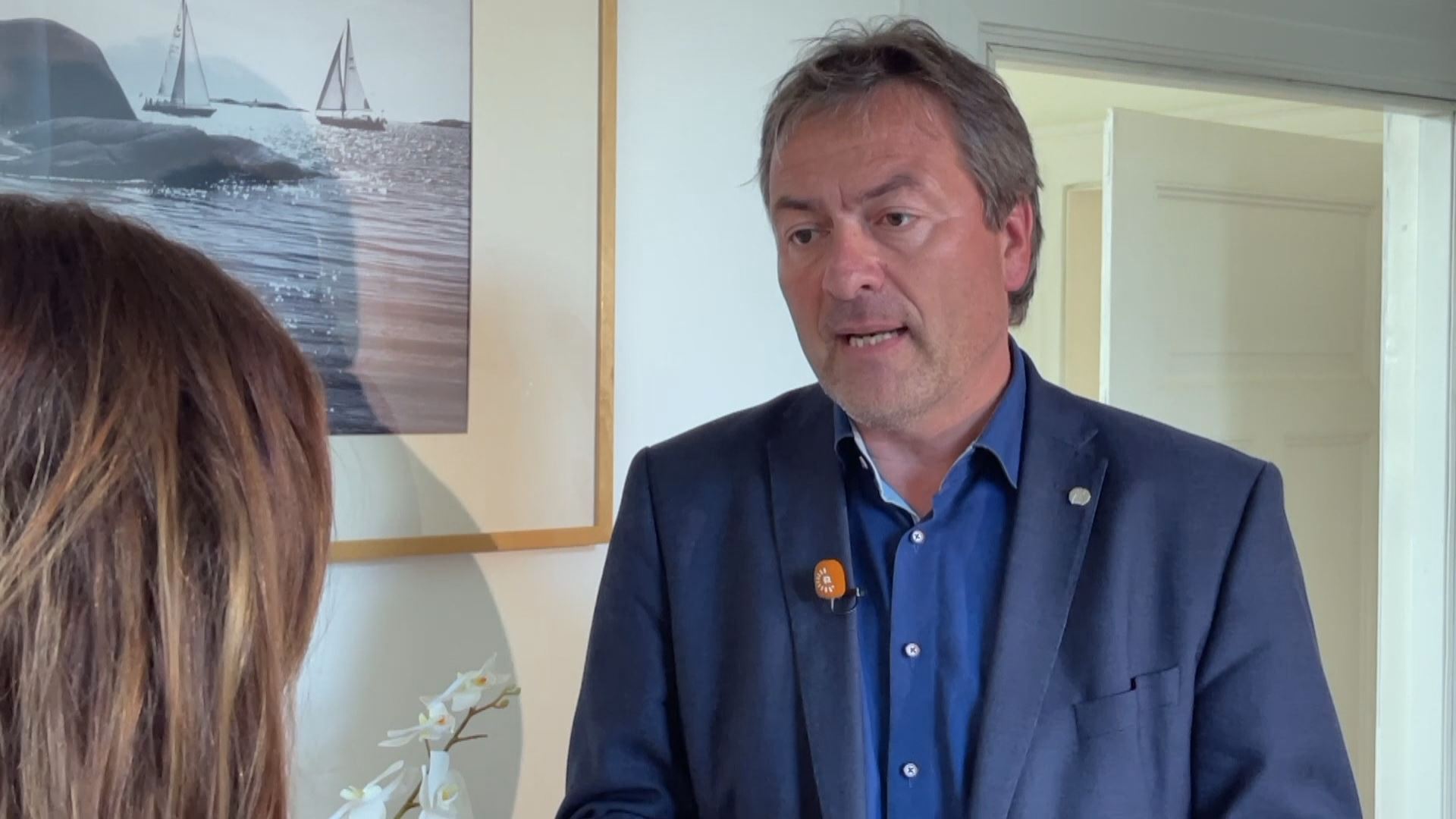
Peter Heidt, a lawmaker on the ticket of the Free Democratic Party (FDP), told Rudaw’s Alla Shally in Berlin on Wednesday that the parliament will approve the bill within the next two weeks, adding that the extension is a message for Tehran.
“It is very important [to extend the mandate] and we want to send a message that as usual we have a great interest in the development of Iraq amicably and that we want to support Iraq and make sure that the security is maintained,” said the FDP lawmaker whose party is a junior partner in Germany’s three-party coalition which has formed the current German cabinet.
“It [the extension] is also a message for Iran that we always care about the stability of Iraq. We feel like Iran sometimes has a bad impact on Iraq,” added the liberal lawmaker.
Some Western countries have repeatedly accused Iran of meddling in Iraq’s internal affairs and using Shiite militia groups to execute its plans. Tehran has consistently denied any involvement in its neighbouring country’s affairs.
Heidt expected the German parliament to approve the bill due to the significance of the mission.
“Training Peshmerga has always been considered to be an important thing and we have been working for this… I believe we want to convey a message through this [support] that the security [of Iraq], especially those of northern Iraq, is important for us,” said the lawmaker, referring to the Kurdistan Region.
Heidt is the chairman of the Human Rights and Humanitarian Aid Committee and a member of the Committee for Education, Research and Technology Assessment in the German parliament.
Germany has been an essential member of the global coalition against the Islamic State (ISIS). The Coalition was formally established in October 2014, after ISIS took control of vast swathes of territories in Iraq and Syria. Consisting of 84 nations, the US-led Coalition’s mission has been “degrading and ensuring Daesh’s enduring defeat,” it says on its website, using Arabic acronym for the extremist group.
ISIS swept through large parts of Iraq in 2014, seizing vast swathes of land and committing countless atrocities, including genocide. The group was territorially defeated in 2017 but it continues to pose serious security risks in the country through hit-and-run attacks, bombings, and abductions, particularly in the disputed areas between Baghdad and Erbil.
Weapons provided by Germany, especially the guided anti-tank MILAN missiles, were very essential in Peshmerga forces’ fight against the terror group.
The combat mission of the US-led Coalition ended in Iraq at the end of 2021 and the German army has mostly been based in the Kurdistan Region.
Concerns of deportations
Concerns have recently emerged of Germany deporting asylum seekers after instances were reported involving Yazidis.
In August, John Saad Slo, a young Yazidi man from Sharya in Duhok Province, was deported back from Germany without his parents' knowledge and died in Erbil. The news of his deportation and death shocked Slo’s family who blamed the German government for deporting John without informing them. Heidt reassured that deportations of Yazidis are not permitted.
“It is not allowed to deport ordinary Yazidis, even if they do not have a permanent residence permit,” Heidt said, adding that only those are being deported who are convicted of committing a serious crime, which is “a very low number of people”.
Heidt, who is also a member of the human rights committee in the Bundestag, encouraged asylum seekers in Germany who need assistance to seek help.
“Maybe they are those people who committed a crime in Germany, we want the people who come to Germany to accept the principles of freedom and democracy,” said Heidt, further elaborating that the crimes in question are serious crimes convicted by the court, not simple infringements such as “crossing the red traffic light”.
“We think that the Yazidis should be given the opportunity to reside safely in their homes,” he said.
Earlier this year, Germany’s parliament voted to recognize the 2014 crimes against the Yazidis in their hometown of Shingal by the Islamic State (ISIS) as “genocide”.
More than 6,000 Yazidis were kidnapped when ISIS attacked their heartland of Shingal in Nineveh province, according to the Kurdistan Regional Government (KRG) Office for Rescuing Kidnapped Yazidis. Over 2,000 remain missing.
Updated on September 17, 2023 at 1:29pm with the section on Yazidis


Comments
Rudaw moderates all comments submitted on our website. We welcome comments which are relevant to the article and encourage further discussion about the issues that matter to you. We also welcome constructive criticism about Rudaw.
To be approved for publication, however, your comments must meet our community guidelines.
We will not tolerate the following: profanity, threats, personal attacks, vulgarity, abuse (such as sexism, racism, homophobia or xenophobia), or commercial or personal promotion.
Comments that do not meet our guidelines will be rejected. Comments are not edited – they are either approved or rejected.
Post a comment