


World

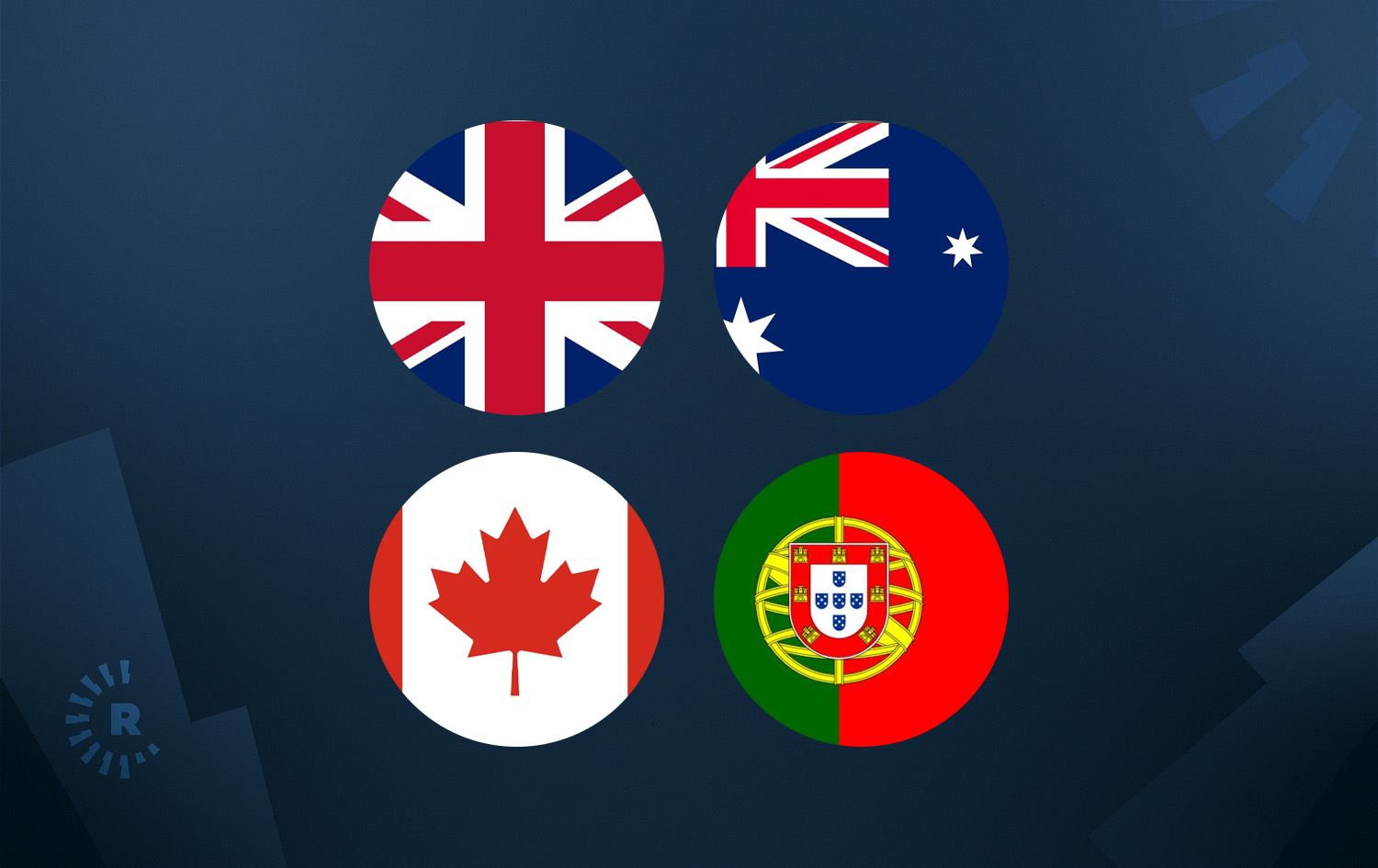
Flag of the United Kingdom (upper left), Australia (upper right), Canada (lower left) and Portugal (lower right). Graphic: Rudaw
ERBIL, Kurdistan Region - Australia, Canada, Portugal and the United Kingdom on Sunday officially recognized a Palestinian state with France, Belgium and other countries expected to follow suit during a United Nations meeting in New York on Monday. The diplomatic shift comes after nearly two years of war in the Gaza Strip and amid staunch opposition from Israel.
British Prime Minister Keir Starmer announced the UK’s recognition in a video message on X, stating, "In the face of the growing horror in the Middle East we are acting to keep alive the possibility of peace and a two-state solution” between the Israelis and the Palestinians.
Canadian Prime Minister Mark Carney echoed the sentiment, writing on X, “Canada recognises the state of Palestine and offers our partnership in building the promise of a peaceful future.”
Portugal’s foreign ministry released a statement noting that Lisbon “advocates for the two-State solution as the only path to a just and lasting peace” in the Middle East.
Similarly, Australian Prime Minister Anthony Albanese declared that Canberra recognizes “the legitimate and long-held aspirations of the people of Palestine to a state of their own.” He added that an embassy and active diplomatic relations will be established once the Palestinian Authority implements reforms sought by the international community.
The recognition comes ahead of a key United Nations General Assembly (UNGA) meeting on Monday, where the leaders from 140 countries are expected to gather for a world summit.
The historic meeting - sponsored by France and Saudi Arabia - aims to “revive the long-stalled two-state solution: one Israeli, one Palestinian, coexisting within secure and recognized borders,” the UN said in a statement on its official website.
The two-state solution is an internationally-recognized framework for resolving the Israeli-Palestinian conflict.
It envisions the establishment of an independent and sovereign Palestinian state in the West Bank, Gaza Strip and East Jerusalem with the borders largely based on the armistice lines that existed before the 1967 Six-Day War. The plan calls for both states to recognize each other's right to exist, establish security arrangements and negotiate a solution for Palestinian refugees.
In addition to efforts to advance a resolution to the Israeli-Palestinian conflict, Monday’s summit will also seek to establish a ceasefire to the ongoing war in Gaza and facilitate the release of Israeli hostages held by the Palestinian movement Hamas since October 7, 2023.
On that day, Hamas launched a surprise incursion into southern Israel, killing around 1,200 people and taking approximately 251 hostages into Gaza, according to Israeli figures.
While a ceasefire was reached in mid-January, Israel resumed its military operations in late March, citing the objective of rescuing the remaining 48 hostages believed to still be held in Gaza.
As of last week, the Gaza health ministry reported that the Palestinian death toll from the Israeli military operations has exceeded 64,900.
For their part, Israeli officials on Sunday vehemently rejected the latest recognition of a Palestinian state by some European countries.
In a post on X, Israeli Prime Minister Benjamin Netanyahu stated, "I have a clear message to those leaders who are recognizing a Palestinian state after the horrendous October 7 massacre: You are rewarding terror with an enormous prize.”
Israeli Foreign Minister Gideon Sa’ar described the recognition as an “an immoral, outrageous, and especially ugly action,” adding, “This is a prize for Hamas and a reward for terrorism.”
Stressing that a Palestinian state “will not be established,” Sa’ar noted that Tel Aviv “will continue to fight resolutely on the diplomatic front against moves that would endanger Israel and its future.
“Our friends in the world will also stand by our side and chief among them - the United States of America,” the Israeli foreign minister added.


Comments
Rudaw moderates all comments submitted on our website. We welcome comments which are relevant to the article and encourage further discussion about the issues that matter to you. We also welcome constructive criticism about Rudaw.
To be approved for publication, however, your comments must meet our community guidelines.
We will not tolerate the following: profanity, threats, personal attacks, vulgarity, abuse (such as sexism, racism, homophobia or xenophobia), or commercial or personal promotion.
Comments that do not meet our guidelines will be rejected. Comments are not edited – they are either approved or rejected.
Post a comment