


World

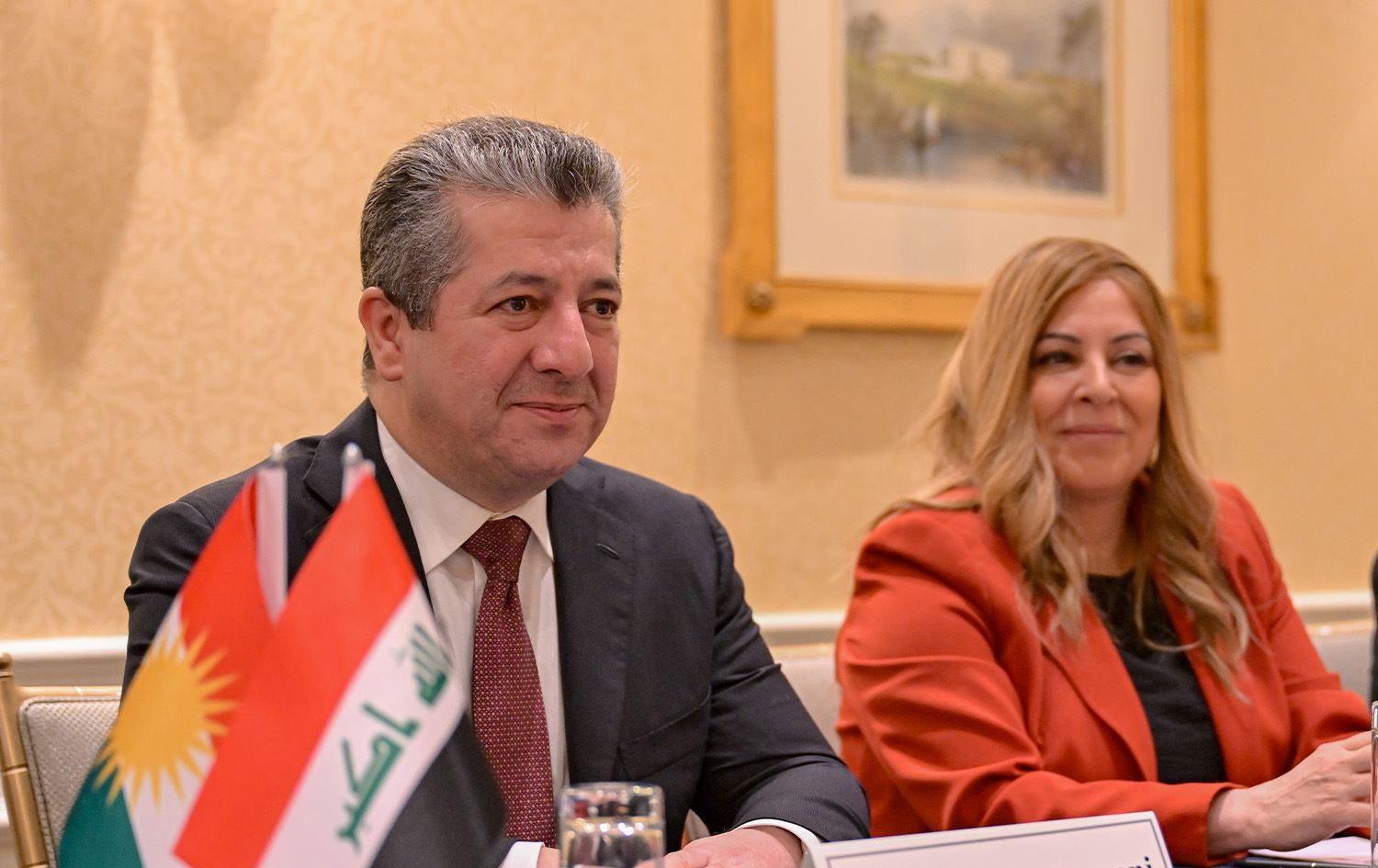
Kurdistan Region Prime Minister Masrour Barzani meeting with US Energy Secretary Chris Wright in Washington on May 22, 2025. Photo: KRG
ERBIL, Kurdistan Region - Kurdistan Region Prime Minister Masrour Barzani said on Thursday that President Donald Trump’s administration is ready to support the Kurdish government’s latest gas contracts with two American firms. The US secretary of energy confirmed Barzani’s remarks, adding that Erbil’s plans to develop gas production align with Trump’s agenda.
Barzani, who arrived in Washington on Saturday, has held meetings with several American congressmen in recent days. On Thursday, he met with the US Energy Secretary Chris Wright.
Barzani and Wright told Rudaw’s Diyar Kurda that they had a “very good” meeting.
“We listened to the support of President Trump’s administration. They are ready to support these [recent gas] contracts [with American firms] and prolong such relations on all levels,” Barzani added.
Two major energy agreements were signed in Washington between the Kurdistan Regional Government and US-based HKN Energy and WesternZagros on Tuesday. They were valued at a combined $110 billion over their lifespans.
US officials have expressed support for the major deals despite Baghdad’s criticism and claim that they are illegal.
Speaking during an interview arranged by Al-Monitor Global Institute in Washington, in attendance of Barzani, Wright reiterated his government’s support for KRG’s latest gas contracts with the American firms.
“Energy is the lifeblood of civilization. You know, our economies, our quality of life, what our opportunities are. And President Trump's agenda is relatively simple. It's prosperity at home and peace abroad. And when companies develop commerce together and develop resources together, you have more peaceful relations. And that is our goal, to spread those commercial relations around, bring commerce, not conflict,” said Wright.
“I think Kurdistan has tremendous natural resources. I see great opportunity for American cooperation there, as evidenced by the signing of these two deals. And we would love to see that commercial relationship grow and flourish, continue the oil production in the region, grow the oil production in the region, and very exciting projects in natural gas that can help electricity generation in the Kurdish region of Iraq, exports around neighboring places, and industrial development, build materials for rebuilding an industry in the area. [I am] very excited about these corporations,” he added.
The American secretary also said that natural gas is “the fastest growing energy source” and “it is changing the game.”
He added that KRG’s plan to develop gas production aligns with Trump’s agenda for the region.
“The development of gas in Kurdistan and the existing power infrastructure to grow electricity production and electricity delivered to the people of northern Iraq to the Kurdish region and to their neighbors, this is fantastic. This is very aligned with President Trump's agenda, you know, to unleash energy dominance in the United States and to our allies abroad. So very excited to see these commercial developments and to develop resources,” he said.
24-hour power
The contracts coincide with the KRG’s initiative, dubbed Runaki or “light” in Kurdish, which aims to provide round-the-clock power across the Kurdistan Region by the end of 2026. The initiative has already been rolled out in several neighborhoods in several cities and neighborhoods.
Electricity shortages are a persistent issue in the Kurdistan Region due to high demand, limited fuel supplies, and financial constraints that prevent power stations from operating at full capacity. As a result, residents often rely on private diesel generators, which are expensive and polluting.
Speaking at the same event organized by Al-Monitor Global Institute in Washington, Barzani praised the Runaki project.
“We recently have started some reforms, one of which was to provide this project of Runaki, which means to provide 24-hour electricity to all of Kurdistan. And I'm very glad that it's actually working very well. It's going and moving forward. Now we are providing [power] to the main cities. I can tell the audience that by the end of this year, we will have all our major cities covered with the four 24-hour electricity. And by the end of next year, our hope is that all of Kurdistan will have 24-hour electricity,” he said.
He added that the project will provide electricity to people at an 80 percent cheaper price.
“Our goal is not only to provide electricity for our region, but we know that the entire country, all of Iraq and the region, is in shortage of electricity. We have the capacity to produce more resources, more gas, so that we could have more electricity, not only for Kurdistan, but for the rest of Iraq, and for the neighborhood if we could,” he added.
Kamal Mohammed, the KRG’s acting natural resources minister, said on Tuesday that the Kurdish government has the capacity to produce 8,000 MW of electricity but due to lack of gas it can only produce 4,500 MW.
He said during the same event in Washington on Thursday that 64 percent of the power is produced by American firms.
Barzani said that the two new gas deals will “help produce more gas, which essentially is going to produce more electricity for everyone. And I think this is exactly what we should be doing, look at our people and try to provide more services for the people.”
Iraq suffers from chronic electricity shortages, especially felt when summer temperatures reach scorching levels of over 50 degrees Celsius. The high temperatures subsequently lead citizens to consume very high amounts of power.
In March, the US rescinded a waiver that permitted Iraq to purchase electricity from Iran as part of President Trump’s maximum pressure campaign against Iran, which also aims to drive Tehran’s oil exports down to zero.
Iraq relies heavily on Iranian gas imports to operate its power plants. Baghdad now is seeking to export electricity from Turkey and Gulf countries. It already buys electricity from the Kurdistan Region.
However, the Iraqi oil ministry has strongly opposed the KRG’s new gas deals with American companies.
The ministry emphasized that “oil resources are considered the property of all Iraqi people, and any investment procedures involving these resources must go through the Federal Government in Baghdad.” It further declared that it “confirms the nullity of these contracts based on the Iraqi Constitution and rulings by the Federal Supreme Court.”
In response, the KRG’s natural resources ministry promptly issued a statement defending the deals and emphasizing Erbil’s “constitutional rights and authorities as a federal entity under the permanent Constitution of Iraq.”
The Kurdish ministry stressed that these contracts had already been upheld by Iraqi courts as legal and valid, and that “no legal dispute exists regarding them.” The recent changes, it explained, were limited to the operating companies, in accordance with the legal and contractual terms of the original agreements.
Prime Minister Barzani said that Baghdad was quick to react to the contracts.
“I think they should have waited to know what this deal means. This is a deal that would really serve the entire country. It will serve and would be beneficial to the Iraqi people as a whole. It's not just Kurdish people in Kurdistan. So, this is a deal that everybody is looking for because it will produce more electricity to people. Why stand against it?” said Barzani.
He defended the contracts’ legality “because these two companies have been operating in Kurdistan in different fields. And their contracts have been taken to the court and three times the court in Baghdad decided in favor of the contracts of the KRGs and OICs [international oil companies]. So, the extension of their fields and their operations in Kurdistan is absolutely legal.”


Comments
Rudaw moderates all comments submitted on our website. We welcome comments which are relevant to the article and encourage further discussion about the issues that matter to you. We also welcome constructive criticism about Rudaw.
To be approved for publication, however, your comments must meet our community guidelines.
We will not tolerate the following: profanity, threats, personal attacks, vulgarity, abuse (such as sexism, racism, homophobia or xenophobia), or commercial or personal promotion.
Comments that do not meet our guidelines will be rejected. Comments are not edited – they are either approved or rejected.
Post a comment