


World

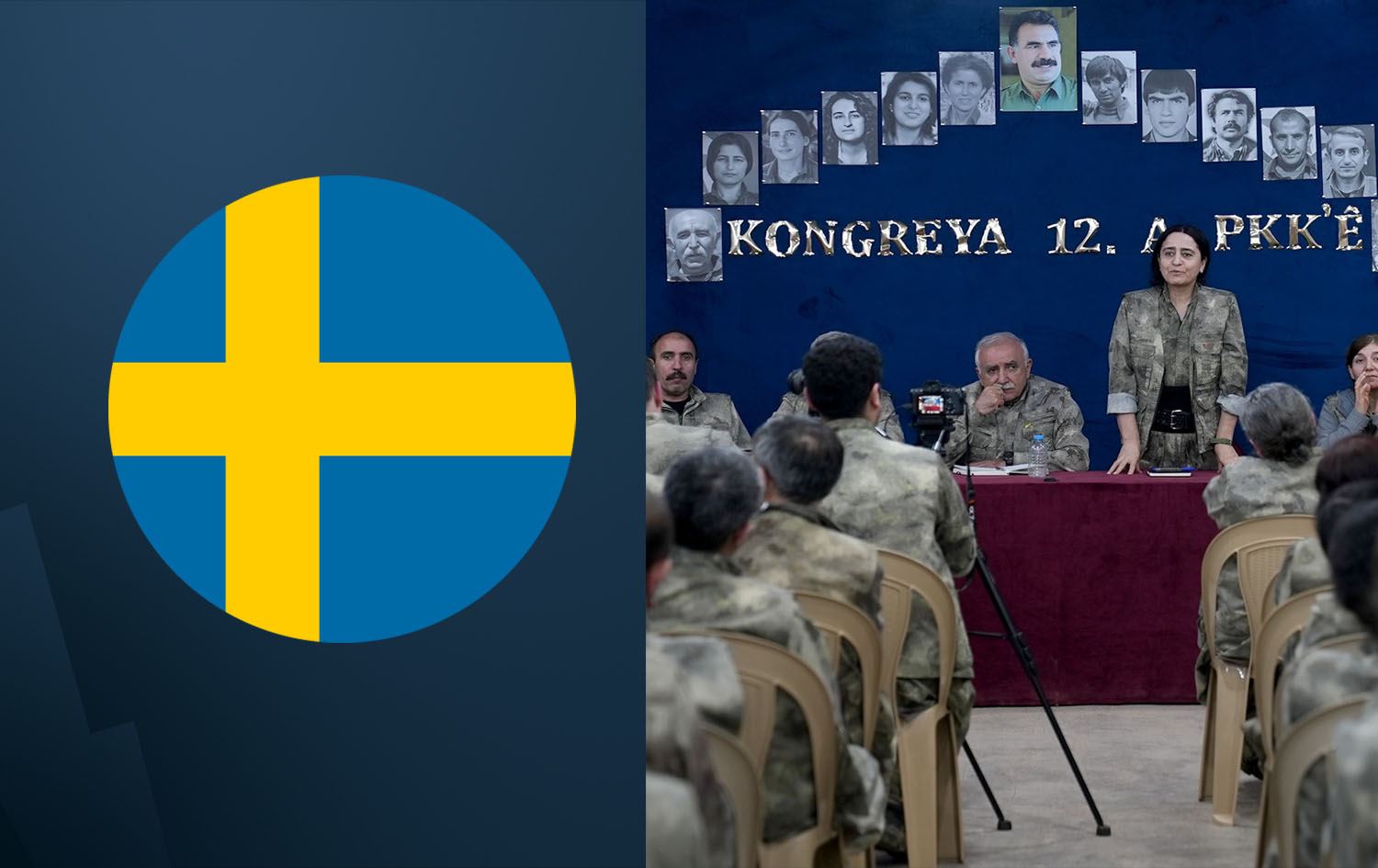
Swedish flag and a picture of the Kurdistan Workers' Party (PKK) Congress in May, 2025. Graphic: Rudaw
ERBIL, Kurdistan Region - Sweden’s foreign ministry said on Tuesday that Stockholm welcomes the recent decision by the Kurdistan Workers’ Party (PKK) to dissolve itself, viewing it as a “positive” move.
"PKK is classified as a terrorist organization by Sweden and the EU. The Government condemns all forms of terrorism. It is, of course, positive that the PKK has declared that the organization will be dissolved, but it is important that all terrorist acts cease as a result," the ministry said in a statement to Rudaw.
The PKK declared its dissolution and an end to its armed struggle against Turkey earlier on May 12, marking a huge step toward a peaceful resolution to the decades-long conflict with Ankara. This came after the group held a congress in Kurdistan Region’s mountainous areas from May 5 to May 7 to consider a call from its leader Abdullah Ocalan on February 27 to lay down arms, dissolve the party, and pursue a political struggle.
The PKK was founded in 1978 in response to the oppression of the Kurdish population in Turkey. It initially struggled for an independent Kurdistan but now calls for greater political and cultural rights within Turkey. Ankara and its Western allies consider the group a terrorist organization.
Sweden and Finland reversed their decades-long tradition of military non-alignment and applied to join NATO following Russia’s invasion of Ukraine in February 2022. Unanimous approval by alliance members is required in order for new countries to join NATO and Turkey used this as leverage to pressure Stockholm and Helsinki to take action against Kurdish groups it considers “terrorists.”
The Scandinavian countries’ bids were withheld until they met Turkish demands, which included crackdown on Kurdish dissidents and alleged PKK members.
Sweden has a large and politically active Kurdish population, with unofficial estimates putting the number at at least 100,000.
Niyaz Mustafa contributed to this article.


Comments
Rudaw moderates all comments submitted on our website. We welcome comments which are relevant to the article and encourage further discussion about the issues that matter to you. We also welcome constructive criticism about Rudaw.
To be approved for publication, however, your comments must meet our community guidelines.
We will not tolerate the following: profanity, threats, personal attacks, vulgarity, abuse (such as sexism, racism, homophobia or xenophobia), or commercial or personal promotion.
Comments that do not meet our guidelines will be rejected. Comments are not edited – they are either approved or rejected.
Post a comment