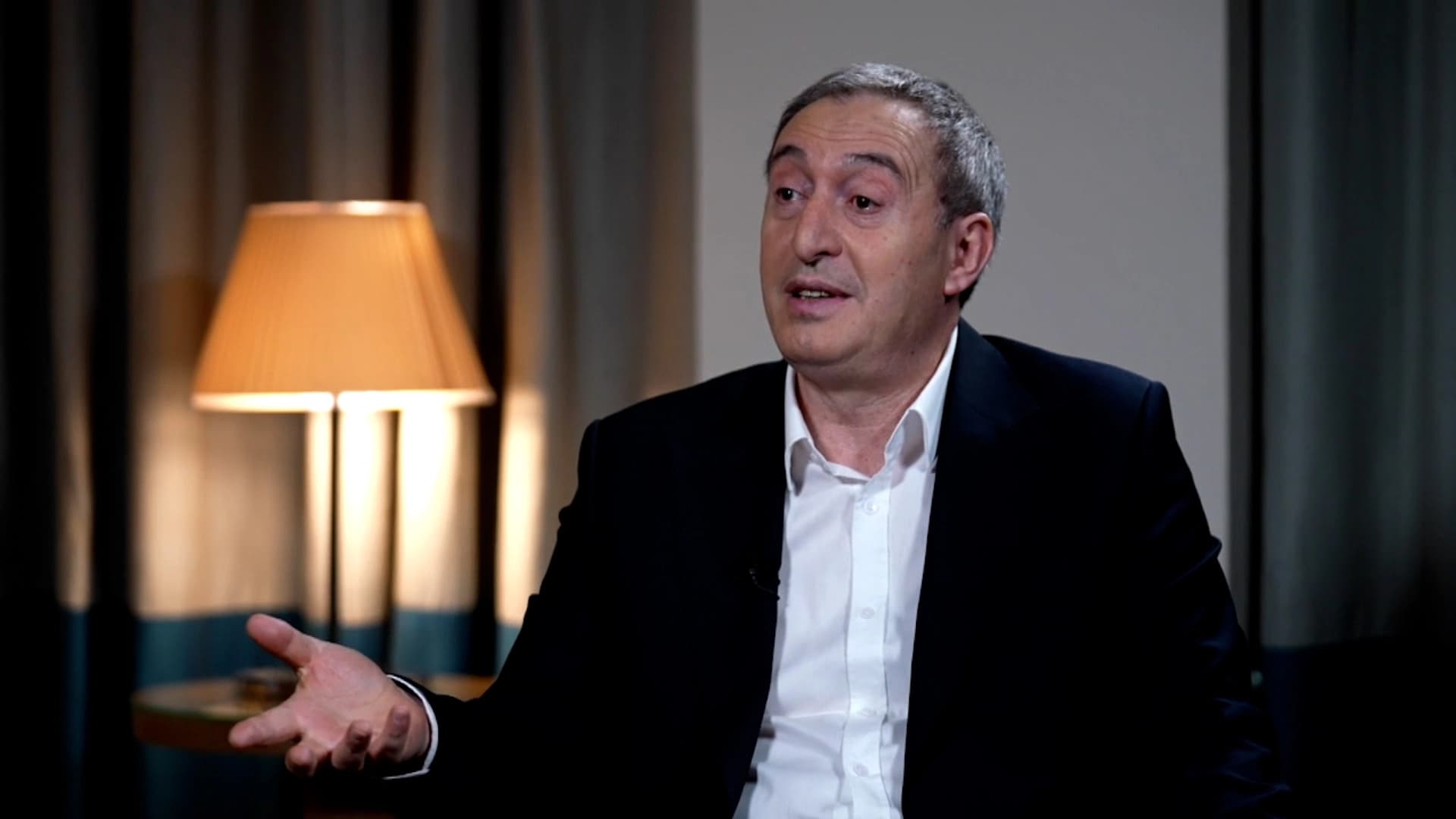
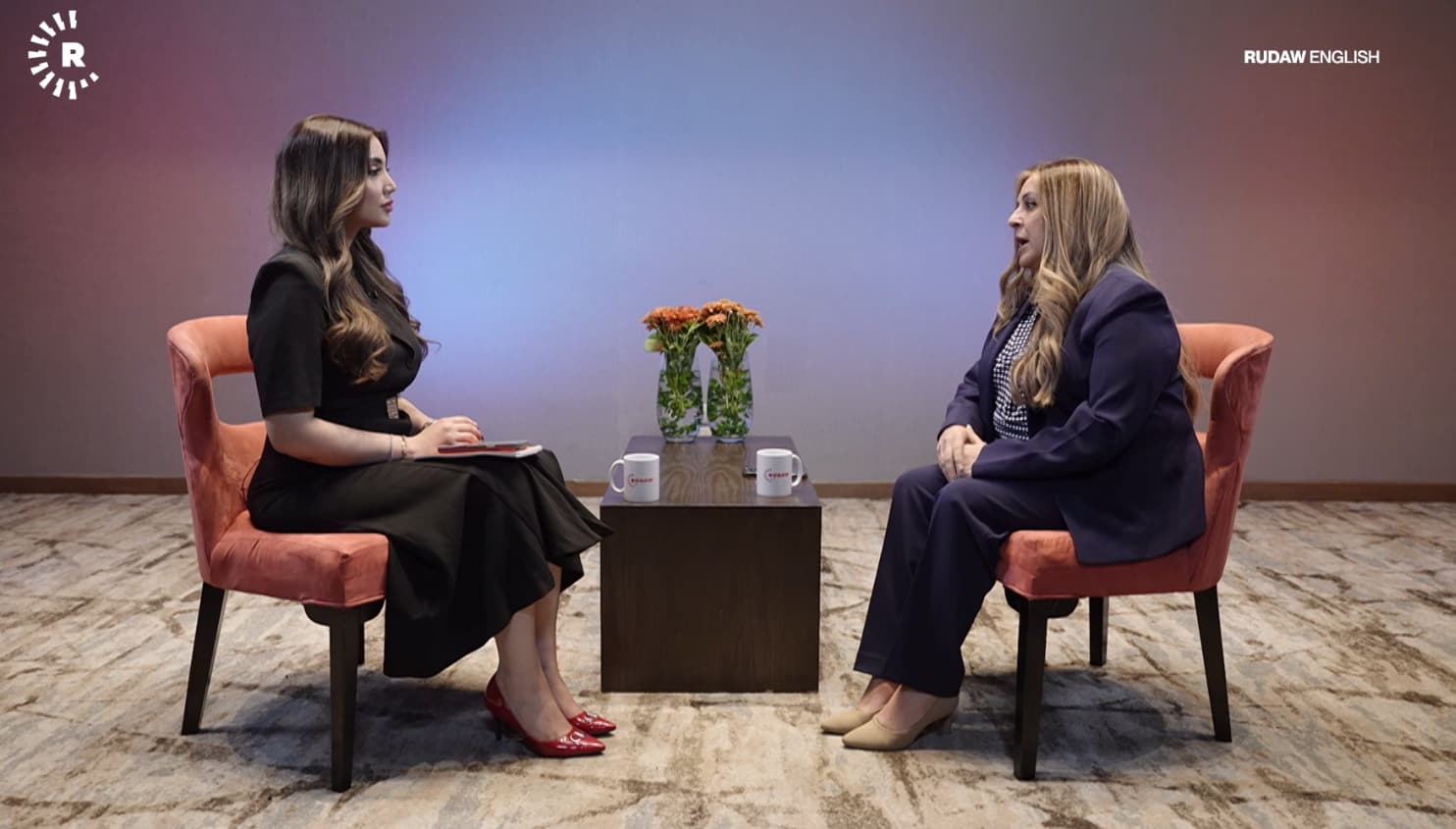
ERBIL, Kurdistan Region - A prominent European security expert has described the US-led war against Iran as a “strategic mistake,” warning that military action risks triggering long-term instability in the Middle East while offering no clear political outcome.
Professor Sven Biscop, a Belgian geopolitical analyst who advises European institutions on security policy, said Washington and its allies may achieve military gains but could struggle to translate them into meaningful political results.
“The Americans can create almost any military effect that they want, but to translate that military effect into the desired political effect, that’s something else,” Biscop said in an interview with Rudaw’s Hemin Abdullah on Friday. “That’s why I think it was a strategic mistake to launch another war at this point in time.”
Biscop argued that the current conflict still has the potential to be contained, despite recent escalation.
“I think we can still hope that it does not escalate,” he said, noting that so far full-scale hostilities have largely been limited to the United States and Israel. However, he also described Iran’s attacks on several Gulf states and Cyprus as “reckless.”
Following is the full transcription of the interview with professor Biscop:
Rudaw: Professor Biscop, thank you very much for this opportunity. We are only few days into the Iran conflict, let's say. What we are now seeing is a kind of escalation: Do you feel like what right now is happening in Iran and in the Middle East is already an escalated regional full-scale war or there is still a hope to prevent to escalate and be a regional war?
Sven Biscop: I think we can still hope that it does not escalate. Although it was very reckless, I think, from Iran to attack so many of the Gulf states and even Cyprus, which let's not forget is an EU member state. Of course, it was also reckless from the United States and Israel to start this war. We haven't seen really full-scale hostilities yet from other states than the US and Israel. So, it could still be managed, one must hope.
How could it be managed, do you think? There will be, for example, a role for European countries to manage this conflict?
For me, the key question is what is actually the purpose of the war? The US and Israel started it, but what do they want to achieve? And they send contradictory signals. Sometimes Trump says he wants to restart negotiations. Then he speaks of regime change and calls on the people of Iran to make the revolution. He even didn't exclude ground troops. So we don't know actually. I think it's important rather to resume the talks and if diplomacy starts again, Europe might possibly be a role, though one should be realistic, Europe should be honest with itself. It is for the moment largely a bystander in the region.
It's largely bystander, but we also see a kind of, they are not united, let's say, the European countries about the conflict in the Middle East. There are some countries who are supporting what is happening there and they might participate. There are also countries who are against that. There are countries who are between these two kind of thinking about the conflict. Does this conflict actually lead to more division between the European Union or you think there is not such a big risk?
I think Europeans, I think many European leaders are not quite sure how to react. Of course, nobody has any sympathy for the current regime in Iran, but that doesn't make it legal to start a war. It doesn't also make it necessarily smart to start a war because in the worst case scenario, this could lead to decades of chaos and civil war in Iran, just like happened after 2003 American invasion of Iraq. So we get European leaders saying, well, it's actually legal under international law, yet we also welcome a change of regime. So it's a bit of a wishy-washy reaction, one must say. Some European states lend indirect support, others really stubbornly refuse that. I would be surprised if any European state would get directly involved that I don't see, unless, of course, Cyprus would be severely hit intentionally and that would lead to a different situation. Then EU member states would be obliged by the EU treaty to lend assistance to Cyprus.
Some observers describe Friedrich Merz as hawkish about what is happening right now in the Middle East and in Iran. Even with his remarks, you will be surprised if a European country participates in the war?
I would be surprised if any European country directly participates in combat operations. Yes. Indirect support through sharing of intelligence, of maybe air defense for the Gulf countries, use of air bases that I could see happening by some and is indeed happening. But participating in combat operations, I don't expect any European state to go that far.
Why it is not in interest of European countries to participate? We have to remember Donald Trump is always saying you are always asking our support, our protection, but you are not doing enough to protect us.
If you look at it from the strategic perspective, from the point of view of interest, Europe's interest is stability. Negotiations were actually ongoing, so that seemed to be the best avenue to promote stability in the region. Launching another war is very risky and that's why I think European leaders will not participate. Whether Donald Trump would like them to participate or not, I think the time has gone that necessarily will sway our leaders' decision because there are too many direct disputes with Trump also. I think the main responsibility that we have to assume and which also the Americans want us to assume is to support Ukraine in the Russian war against Ukraine and also, of course, beef up our own collective defense.
So one argument can be that Europe cannot handle two wars at the same time, for example, Ukraine and Iran?
It is definitely difficult for the system to deal with more than one crisis at a time. And you see that now everybody's talking about the Gulf and the attention is distracted from Ukraine. That is true. In terms of military capacity, of course, we're not directly involved in the Ukraine war. We supply Ukraine with weapons and material. We don't have our own forces there. So in theory, if one wanted to, the capacity would be there to directly take part in operations against Iran. But I don't expect that we will, and I think it would also be unwise for Europe to get involved militarily. Our role should be to stabilize, to mediate if we can.
We are already seeing the consequences of this war even it's as I said we are talking about few days we already see it in European markets for example energy prices, fuel prices they are higher than four days ago five days ago. Even with that you think the European public opinion is not supporting to end this war quicker than should be. I mean by participating in the war?
I don't think Europe participating in the war will necessarily lead to a quicker end because of course you can then bomb more targets but an air campaign doesn't necessarily lead to a change of regime. Or doesn't necessarily stimulate a massive revolution by the people of Iran. It could also be that after serious bombing, yet, you know, nothing happens on the ground. And it's also not clear then what? What do the US and Israel do then? What is the exit strategy? I think the best way to come to a quick end is to say, and now we reopen the negotiations and here are the demands that must be met if you don't want us to resume the bombing. Given where we are now, that seems to me the quickest way to end the war. And of course that means that you negotiate with the current regime.
There's a book behind you already. You wrote it and it is translated two different languages. It is in Dutch what I see. How the superpowers determine the course of world politics. You wrote this book I think four or five years ago and right now we see America is deciding to start a war without talking to its partners in Europe and we are actually talking about one superpower, not superpowers, right? What would you change in your book if you write it right now, rewrite it, let's say?
The one thing that I actually thought would be useful, but it has now actually happened, is that the United States is not just Europe's ally, but also its rival because the US uses illegal tariffs against Europe, it claims European territory in Greenland, [and] t interferes in Europe's domestic politics to support the extreme right. I had always said in the past it's nice to other Europeans to be Atlanticist. That's not a question. The question is, will the Americans remain Atlanticist? And now we know this administration isn't. That is the big change. Of course, the Americans can decide to launch a war. Nobody can stop them. That is not new. Think of Iraq [in] 2003. But they should also know that the Americans can create any military effect that they want almost, but to translate that military effect into the desired political effect, that's something else. Do they even know what they want from this war, what is the desired political effect and how to achieve it? That's why I think it was a strategic mistake to launch another war at this point in time. You will see where it leads us.
Okay, one of the main concerning issues or points in Europe is regarding the migration, a new migration crisis. Do you think Europe is prepared for such kind of crisis because even if the war stops there will be people who don't want to continue their life there under pressure, economical crisis and a lot of problems in the region?
For sure, if it would lead to significantly increased migration towards Europe, that will put pressure on our political system. That goes without saying. We all know that migration remains a very sensitive topic and it's very difficult for the Europeans to agree on how to deal with it, even though it's obvious we also need migration, given the aging of the population. So if it leads to another big wave of refugees, that will put a lot of pressure on the system.
If you advise, and I know you, advising European leaders, European entities about geopolitical or strategical international policy of the European Union, what would be your advice to them? What should they do for these difficult times?
My advice would have been not to show such strong support for the military campaign, but to say more clearly that Europe does not support the illegal use of force even against a horrible regime if it doesn't pose an imminent threat. And I think we should rather now call for a resumption of diplomacy in the broad regional framework so that we can arrive hopefully at an agreement that involves not just Israel, Iran and the United States, but the broader region because ultimately what matters for Europe is regional stability. There is serious geopolitical competition between Saudi Arabia and Iran. In a way seen from Brussels, our job is not to choose sides in that. Our job is to create stability so that we can create, invest and so on and so forth.