


Interview

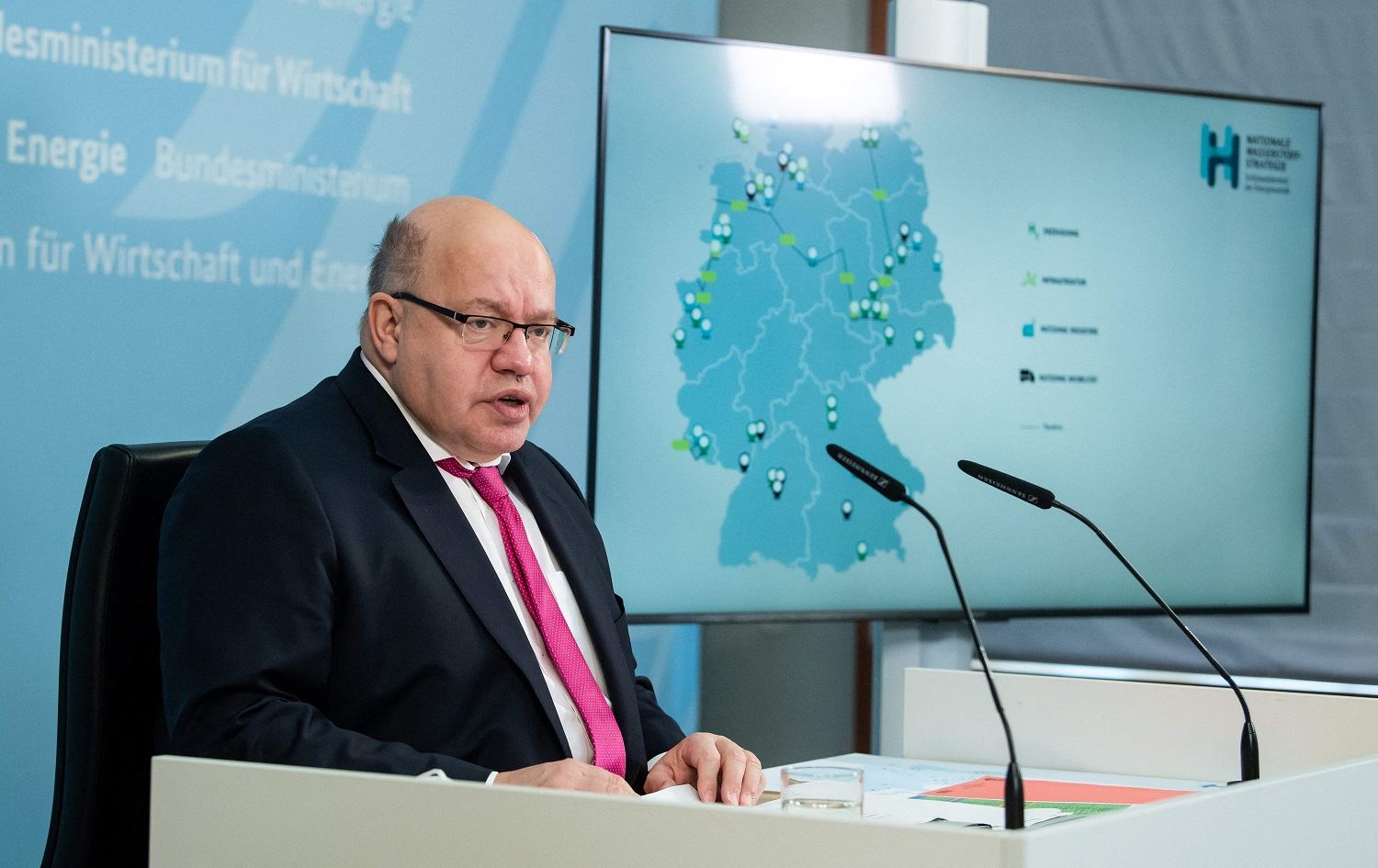
German Economy Minister Peter Altmaier gives a press conference in Berlin on May 28, 2021. Photo: Bernd von Jutrczenka/AFP/pool
Below is a translated transcript of Rudaw’s interview with Germany’s Federal Minister for Economic Affairs and Energy, Peter Altmaier.
Altmaier discussed the effects of migration in Germany and the country’s relations with Turkey.
Thank you for giving us this opportunity to speak with you about Germany’s current situation.
I am very happy that ahead of the parliamentary elections we are able to have a discussion today. Especially for a country like Germany, it is important that we continuously face questions coming from people from other states and countries because Germany, even more than other countries, is dependent on its international integration.
Migration is a serious political topic. Do you think in the future there will be any change in Germany’s policies when it comes to the question of receiving refugees?
During the refugee crisis we acted relying on various different reasons. On the one hand, we acted on geostrategic deliberations. It was unthinkable that the entire burden of the refugee crisis would be carried by three countries, namely Jordan, Lebanon and especially Turkey. It was impossible for these three countries. And it was also not possible to relocate the burden to Greece, the Balkans and Austria. They all consisted of almost exclusively small countries with limited capacities. This means that because of geostrategic reasons, we accommodated them (refugees). But we also took them in because of humanitarian reasons.
Back then, there were a lot of concerns where this would lead. There was especially the fear that Germany’s identity would change and that that it would lead to internal conflicts and fights. All of this did not happen. Most of the refugees fleeing civil war and persecution, almost one and a half million, are now very much integrated into society. Most of them speak German, are doing vocational training or work in unskilled fields. Of course there are still some who depend on social assistance, particularly older people, but Germany did not change and we did not end up in a permanent crisis.
The only thing that did happen, similar to many European countries, we now have a political party that is situated in the far right spectrum, the AFD. The AFD has not disappeared and is, according to polls, stable by receiving at least 10-12 percent. We have to assume that we have to live with the AFD for quite some time, however, their victory march has stopped and that is why I think we can master this challenge.
Minister, my last question is about Turkey. Most European countries still have problems with Turkey, but Germany currently maintains good relations with Turkey. How do you evaluate Germany-Turkey economic relations?
When I was young, around 13 or 14, Chancellor Willy Brandt from the SPD received the Nobel Peace Prize, amongst other things, for organizing good relations with the Soviet Union, which existed back then, and Poland. Back then the first gas deliveries were arranged. And I think it proved to be correct that even if there are major issues concerning human rights policy, when there are conflicts like the Cold War, we do not react with the termination of all economic relations.
As a matter of fact, we have always maintained dialog with Turkey, despite major differences in opinion concerning human rights questions. However, our economic relations the last two years have been regressive, which is due to the economic crisis in Turkey and the collapse of the Turkish lira. This week we have a dialog on energy with Turkey and its responsible minister, which we hold every two years. But the political dialog does not change that we are currently far away from our best performance concerning our trade relations.
By the way, I believe that the democratic forces in Turkey are much stronger than we initially considered them to be. We only concentrate on Erdogan and The AK party, but if we look at the result of their local elections and how the democratic opposition won most of the local elections in the big cities, including Istanbul, then we have to admit that the democratic tradition in Turkey is still alive. This makes me optimistic.


Comments
Rudaw moderates all comments submitted on our website. We welcome comments which are relevant to the article and encourage further discussion about the issues that matter to you. We also welcome constructive criticism about Rudaw.
To be approved for publication, however, your comments must meet our community guidelines.
We will not tolerate the following: profanity, threats, personal attacks, vulgarity, abuse (such as sexism, racism, homophobia or xenophobia), or commercial or personal promotion.
Comments that do not meet our guidelines will be rejected. Comments are not edited – they are either approved or rejected.
Post a comment