DUSSELDORF, Germany - Facing a surging far-right, the mayor of Dusseldorf is hoping his plans to tackle a housing crisis and the impacts of climate change will secure him another term in office when the German state of North Rhine-Westphalia holds municipal elections on Sunday.
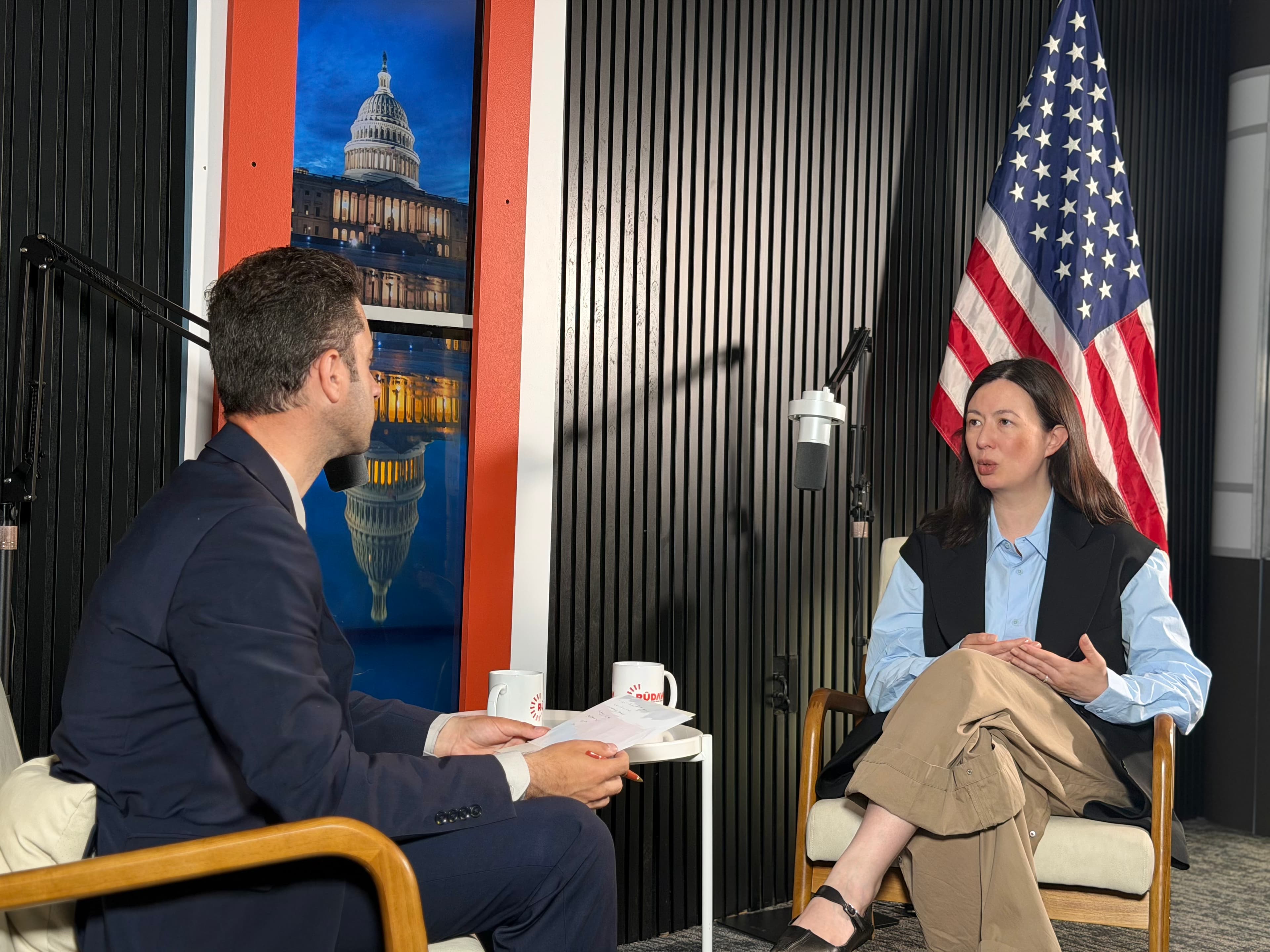
“I think because we have very good concepts for the next five years… I believe we can rely on several good projects we have implemented in the past five years, meaning we have done good work, and I think for this reason we have gained a large part of people's trust,” Mayor Stephan Keller said in an interview with Rudaw aired on Friday.
Keller represents the Christian Democratic Union (CDU) party that is also in government in Berlin after they won the election in February.
He argues that investing in renewable energy sources for government buildings, electric vehicles and bike lanes, as well as building affordable housing are strategies that will gain the trust of the voters.
“We have set a goal to install solar panels on all roofs of municipal buildings… We also want to convert our own fleet to electric vehicles… We have allocated 60 million euros annually for climate protection projects,” he explained. “We have a housing initiative through which we want to build 8,000 new homes in Dusseldorf by 2030.”
Germany has been suffering from a number of economic issues such as high energy costs and higher cost of living. Immigration is also a key electoral issue. North Rhine-Westphalia has a large immigrant population.
Municipal elections will be held this Sunday in the state where the far right is poised to make significant gains, according to polls.
The following is the full transcript of the interview with Stephan Keller:
Rudaw: Dear Dr. Keller, thank you for this opportunity. I know you are very busy and also want to be close to your voters. You use this slogan: "Uniting people and building the future." How do you want to achieve this?
Stephan Keller: We want to create good policies for Dusseldorf. Dusseldorf is a city where people from more than 180 countries live together, and one must be very careful to bind the city's community together. This city has enormous potential, and I want to utilize it and build this city together with the citizens. For example, I am here today talking with many people. This is important to me.
Building this city - what projects are you implementing now to make Dusseldorf climate-neutral by 2035?
In the areas of emissions and climate change impacts, we have several plans. For example, we have set a goal to install solar panels on all roofs of municipal buildings, meaning city properties. We are very advanced in expanding the infrastructure for electric vehicle charging. We also want to convert our own fleet to electric vehicles. In recent years, we have allocated 60 million euros annually for climate protection projects. We want to become a city with no climate impact by 2035. This is 10 years earlier than the goal the federal government has set for Germany. This is a major goal, and we are working in this area with the business sector as well. For example, we have signed a climate agreement in which more than 100 companies are now participating, and together we are seeking good solutions for climate protection.
How do you want to reduce traffic on one hand and make Dusseldorf a bicycle-friendly city on the other?
In transportation, we need to do three things. We need to strengthen public transportation (ÖPNV), meaning rail lines. We need to bring it to a level where it can transport a larger number of passengers. We need to expand bicycle lanes, which is important because bicycles are an environmentally friendly means of transportation. And we need to organize traffic on roads more efficiently. We can no longer build new roads, but we can use the latest technologies like artificial intelligence. We can improve the connection between traffic lights and cars, or rebuild them anew. This way, through digital traffic control, we can use our infrastructure optimally, which ultimately improves traffic flow and reduces congestion.
One of the important issues in most major cities is housing. How do you want to create housing units with reasonable rent despite the housing crisis?
I have a very good plan. We have a housing initiative through which we want to build 8,000 new homes in Dusseldorf by 2030. We will reach this number. We have concrete plans for how this will be done. Just in the past two days, I laid the foundation stone for 360 new homes in Dusseldorf. More than half of them are affordably priced, and we want to continue on this path. We need to build so that people can find more opportunities in our city.
How do you want to strengthen direct dialogue with Dusseldorf residents?
For this purpose, there are several different formats. Today I am here as part of the election campaign, walking the streets. I do such things outside of campaign time too, going to a public place for two to three hours so that everyone can come and ask me questions. Of course, we have digital communication formats through social media. For all our major projects, we organize participation formats like citizen meetings and discussion panels. This way, I am truly in constant contact with citizens. Additionally, in a city like Dusseldorf, one regularly meets people at events like protection festivals and carnivals and can talk with people.
My last question for you is: you have been mayor of Dusseldorf since 2020. Why do you believe you will be re-elected as mayor?
I think because we have very good concepts for the next five years. This is one reason. I believe we can rely on several good projects we have implemented in the past five years, meaning we have done good work, and I think for this reason we have gained a large part of people's trust. As I said, this, along with a good vision for the future, good ideas, and with the great ability and skills I have, will lead to my being elected again.