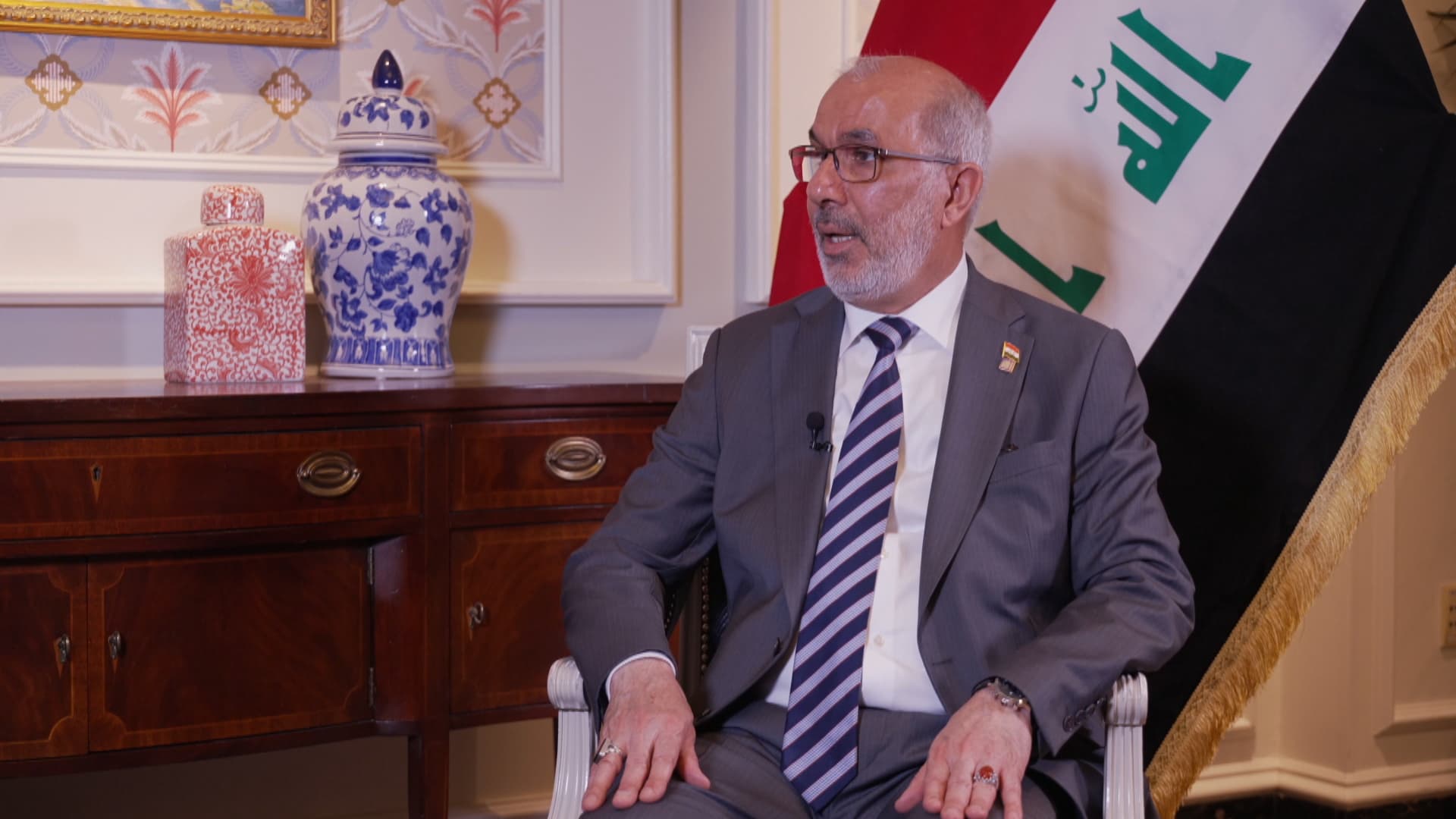
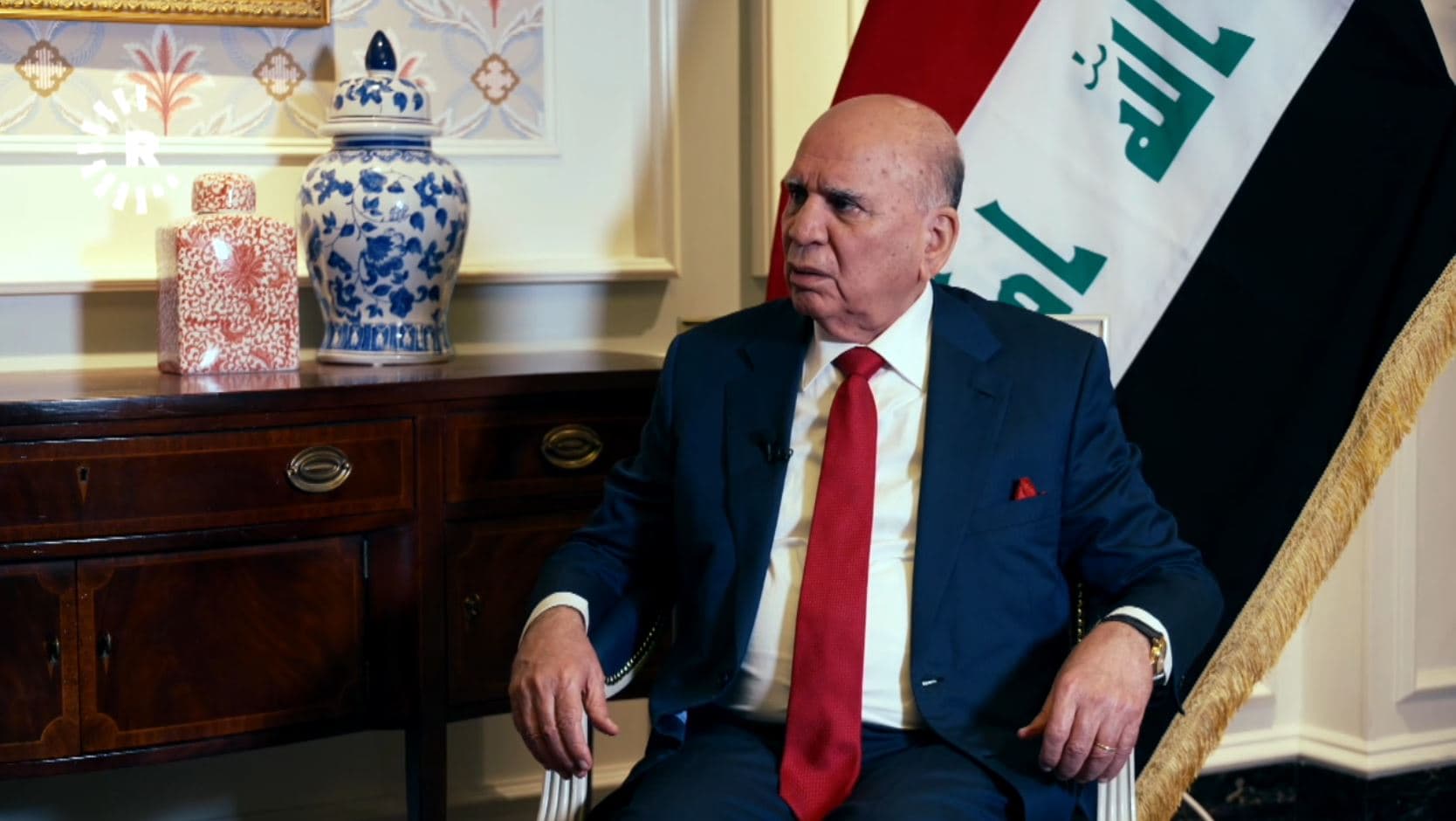
ERBIL, Kurdistan Region - Former Director of the US’s Central Intelligence Agency (CIA) told Rudaw on Monday that his recent meeting with Ahmed al-Sharaa was “a surreal moment,” noting the latter’s transformation from an al-Qaeda “cell leader” to Syrian interim President. David Petraeus further emphasized the significance of the regime change that unfolded in Syria, particularly in terms of eliminating Iran’s influence in the country and severing its logistical support to the Lebanese Hezbollah movement.
“It was a surreal moment for me because we were obviously on opposite sides, to put it mildly. And here we were, years later - after he spent five years in American detention for being an AQI (al-Qaeda in Iraq) cell leader - and he's now the President of a new Syria,” Petraeus said in an interview with Rudaw's Peshawa Bakhtyar.
He further noted Sharaa’s role as former head of the now-dissolved militant group Hay’at Tahrir al-Sham (HTS), which spearheaded the early December offensive that overthrew the regime of longtime Syrian dictator Bashar al-Assad.
“He was clear about what he’s seeking to do: to develop a government that is representative of all the people of Syria - a country through which so many of the ethnic, sectarian, tribal, and political fault lines of the Middle East run - and to ensure not just majority rule, but minority rights,” Petraeus added.
The former CIA director had met with Sharaa during the 2025 Concordia Annual Summit in New York in late September, on the sidelines of the Syrian interim president’s participation in the 80th session of the United Nations General Assembly (UNGA).
Petraeus further described to Rudaw what he called a “hugely significant change” in the region, pointing to Damascus’s break from Tehran. “Syria is no longer an ally of the regime in Iran and no longer allows Iran to replenish Hezbollah’s weapons systems,” he stated.
Addressing the broader regional security picture, Petraeus said that the threat from the Islamic State (ISIS) has been “dramatically reduced” in the Kurdistan Region and Iraq. However, he warned that isolated extremists remain active, particularly in Syria.
“There still are individual extremists, and there certainly are extremists still active in Syria - and that’s very worrisome,” he said, noting that the US-led Global Coalition to Defeat ISIS continues to pursue extremist leaders in Syria.
Petraeus also reaffirmed his long-standing support for Kurdish forces. He noted his personal history of working with the Kurdish Peshmerga for over two decades, beginning with their "significant role in northern Iraq in liberating the country from the murderous Saddam Hussein regime" in 2003.
“We often, not only partnered with the Peshmerga; we helped to build them into a more capable force,” Petraeus recalled.
Below is the full transcript of the interview with former CIA director David Petraeus.
What can you tell us about your meeting with Syrian interim President Ahmed al-Sharaa in New York?
David Petraeus: Well, it was a surreal moment for me because we were obviously on the opposite sides, to put it mildly. And here we were, years later, after he spent five years in American detention for being an AQI - an al-Qaeda Iraq - cell leader and he's the president of a new Syria; the individual who built the forces that overthrew the murderous regime of Bashar al-Assad.
I should say that I was very impressed by him. He was very knowledgeable of many aspects of the economy of Syria. He was clear in what it is that he's seeking to do, which is to develop government that is representative of all of the people of Syria, a country through which so many of the ethnic, sectarian, tribal and political fault lines of the Middle East run, and to ensure not just majority rule, but minority rights. That will be very challenging to develop. I have some experience with that, in the land of the two rivers [Iraq[, of course. But my hope, very much, is that he succeeds in achieving what he's setting out to achieve, because his success is our success.
What do you say about the future of Iraq’s Popular Mobilization Forces (PMF) - also known as the Hashed al-Shaabi - and the Iraq government?
I'll stay out of that, actually. I think that when their elections are less than a few weeks away, that an old soldier leaves that to other people.
Do you think Syria’s interim President Ahmad al-Sharaa is ready to accept decentralization in the north and east in Syria?
Well, again, he said that he wanted to achieve a very ambitious vision, which is to ensure the unity of the country, to ensure that all elements of the country are represented in governance, roughly proportional to their population, and to ensure that, again, minority rights, not just majority rule.
In your assessment, does the Islamic State (ISIS) still pose a threat in Iraq?
The Islamic State (ISIS) threat in Iraq is obviously dramatically reduced, but there still are individual extremists, and there certainly are extremists still active in Syria, and that's very worrisome. You will know that it's publicly released, that the [US-led] Coalition [to Defeat ISIS] still is pursuing some Islamist extremists in Syria and periodically brings some of these leaders to justice.
What do you say and what do you think of the role of Kurdish fighters in the Kurdistan Region and in northeast Syria (Rojava) and the continued American support for the Kurdish Peshmerga?
I can't speak for the United States policy on the Peshmerga. What I can say is that I have worked with the Peshmerga for far more than 20 years, starting in March and April of 2003 when the Peshmerga played a significant role in northern Iraq in liberating the country from the murderous Saddam Hussein regime, when my soldiers were fighting north to Baghdad and then, of course, came north to Mosul.
You remember ‘Ana Iraqi, Ana Moslawi,’ and in the four years that I spent in Iraq as a two-star, three-star and four-star general, we often not only partnered with the Peshmerga, we helped to build them into a more capable force and to bring them into the Iraqi Armed Forces as much as we could.
In your conversation with Syrian interim president, Sharaa, did you sense any willingness on his behalf to lead Syria as a liberal, democratic and moderate leader?
Well, all I can say is, again, that he said all the right things. He was very intelligent. He has a great presence. There's charisma. He's soft-spoken. He is thoughtful. He's well-considered. But now we have to see if he will turn vision into reality. And as I mentioned earlier, I very much hope that he is successful in doing that because, again, his success is our success.
We want to see Syria stay united. We don't want to see it fracture into ethnic and sectarian pieces, and we're very pleased that it is no longer an ally of the regime in Iran and no longer allows Iran to replenish [the Lebanese movement] Hezbollah's weapons systems, munitions, and other weapons by driving them across Syrian soil and by having bases within Syria. That's a hugely significant change, and it was brought about because Hezbollah is much reduced and because, of course, Iran could not help out and the Russians are more than preoccupied with Ukraine.
This is a strategically significant change in the region, one that many of us had hoped for for many decades. And now it has come, and we should be doing everything we can to support Ahmed al-Sharaa and the emerging Syrian government. I have advocated that the US Congress lift the remaining sanctions on it that prevent investment in the finance, construction, and energy sectors, which are very important for reconstruction. And I can also say that there are innumerable Syrian American businessmen and investors in the United States, many of whom met with Ahmed al-Sharaa before my interview, who have offered and want to invest in the new Syria and to help bring that country back to what we always hoped it would be before the murderous al-Assad regime.