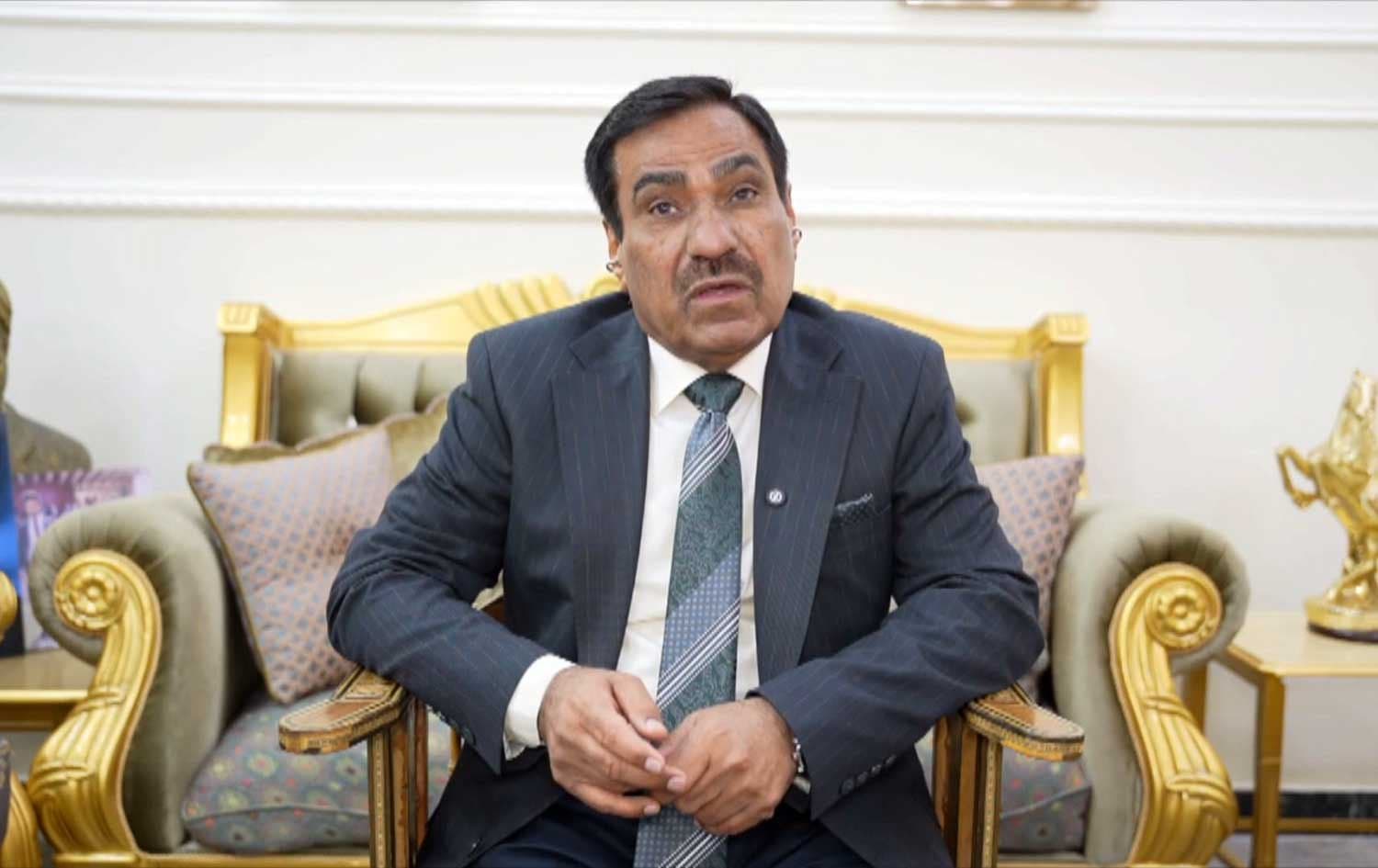

ERBIL, Kurdistan Region - Iraq’s oil exports have decreased to unprecedented levels amid the closure of the Strait of Hormuz due to regional conflict between the US and Israel on the one side and Iran on the other, Nabil al-Marsoumi, an economic expert, told Rudaw in an interview on Tuesday.
“Currently, following the suspension of Iraqi oil exports through the Strait of Hormuz - which used to reach nearly 3.2 million barrels per day - and after foreign companies left the Kurdistan Region’s oil fields due to the war, causing production to halt, Iraq is only exporting 10,000 barrels of oil daily via tankers to Jordan,” Marsoumi said.
Iraq heavily relied on the Strait of Hormuz for its oil exports, but the ongoing Iran war has effectively closed the strait. Marsoumi noted that the country loses nearly $300 million daily due to halted exports.
The expert highlighted Iraq’s lack of a national fleet as a key challenge. “Iraq, thank God, has no transport ships to use for moving its oil. Iraqi oil is sold at Basra port, and foreign companies bear the costs of transport and insurance," he said, adding that Iraq "owns only six small ships with a total capacity of about 52,000 tons of fuel oil."
He also noted that while Iraq has signed contracts to export 100,000 to 200,000 barrels per day via tankers to Mersin, Turkey, Jordan, and Syria, the process remains costly and logistically complex.
“Each tanker carries only about 216 barrels, which is a small amount; therefore, we would need thousands of tankers to be able to export 400,000 to 500,000 barrels daily,” he said.
On Iraq’s financial situation, Marsoumi warned that the federal government could face a liquidity crisis by May if oil exports are not restored. “It will certainly face problems in how to provide for governing expenditures, which are about nine trillion dinars (over $6.8 billion) monthly, eight trillion of which is for salaries and social welfare.”
Marsoumi's remarks came hours before Erbil and Baghdad reached a key agreement on Tuesday to resume Iraqi oil exports via the Kurdistan Region's pipeline to Turkey.
Iraq on Wednesday resumed exporting its oil through the Kurdistan Region’s pipeline with Turkey after a three-year halt, in a significant development for the country’s energy sector as Iran's war has completely suspended its exports through the Strait of Hormuz.
Oil prices fell by at least two dollars after the resumption, reported Reuters.
The Kurdistan Region's Ministry of Natural Resources confirmed the start of the process, linking it to a decision by Prime Minister Masrour Barzani.
“As per the decision of Masrour Barzani… and in consideration of the extraordinary circumstances facing the country, this morning, March 18, at 6:30 am, the Ministry of Natural Resources, in coordination with the federal Ministry of Oil, began operating the Sarlo oil station,” the ministry said.
The statement added that the move aims “to transport 250,000 barrels of oil daily to the Fishkhabur station, to then be sent through the Kurdistan Region's pipeline to the Turkish port of Ceyhan on the Mediterranean coast.”
Iraq’s exports through the Kurdistan Region were suspended in March 2023 when a ruling by a Paris-based arbitration court completely suspended the Kurdistan Region’s oil exports to Turkey.