DUSSELDORF, Germany - It started at a red light on a quiet Sunday. Inside a car in Stuttgart, Germany, Baris Korkmaz, a producer, and Luwam Mesfin, an artist, were listening to a new track they had just finalized. Mesfin pulled out her phone, recorded a casual video of them nodding to the rhythm, and uploaded it to TikTok.
Within hours, the numbers began to climb: first 50,000 views, then 100,000. Before long, the track had erupted into a global phenomenon.
The song, “Kurmancî Her e Gulê,” is not a standard pop anthem. It is sung in Kurmanji, a widely spoken yet historically marginalized Kurdish dialect that has faced severe suppression and forced assimilation over the past century. Today, its infectious rhythm has transcended borders, echoing from cars in London to the smartphones of Turkish actors and youth across the globe. Millions of people - many of whom have never spoken a word of Kurdish - are suddenly singing along to the word “Kurmanji.”
But the most compelling part of this viral sensation is not just its massive reach; it is its origin. The singer of the track, “Hîva,” does not exist. She is an artificial intelligence persona, born from weeks of meticulous digital crafting. Yet the story behind her creation proves that technology, rather than replacing the human soul, can sometimes become the ultimate vessel to amplify it.
The masterminds behind the track are Korkmaz, the musical architect who composed the beat, and Mesfin, the creative visionary who conceived the idea. Korkmaz, an acclaimed Kurdish-German musician and producer who goes by the stage name “Paix” (French for “peace”), crafted the song’s entire instrumentation. Mesfin envisioned bringing a Kurdish AI artist to life, launching “Project 144” as a collaborative initiative designed to give a powerful voice to suppressed cultures around the world.
“We worked for many weeks just to find that authentic, raw voice,” Mesfin explains, recalling the arduous process of realizing her concept. “When we heard Hiva’s voice, we knew this was the soul we wanted. Everything started from an idea to create a Kurdish artist and breathe life into this kind of project.” They named the persona Hîva, which translates to “hope” in Kurdish.
In an era where AI-generated art frequently faces backlash for being soulless or unoriginal, the creators of “Gulê” push back against the narrative that their work is merely the result of a simple computer prompt. The magic of the track lies in its hybrid nature - a digital voice singing over deeply human, meticulously crafted instrumentation produced entirely by Paix.
“Some people want to say this isn’t artistic work, but in reality, it is a lot of work,” Mesfin says. “You sit there reviewing and making changes many times, constantly making decisions. We use our own music and instruments so that the human soul remains within it.”
That human soul is distinctly embodied by Paix. A professional musician since the age of 14, he plays five different instruments and has produced tracks for major international hip-hop artists, including American star Rick Ross and Kurdish-German heavyweight Xatar. Yet despite his industry success, Paix chooses to remain hidden. In interviews and public appearances, he wears a mask, his shoulders draped in the flags of Kurdistan and Germany.
For Paix, the anonymity is not a marketing gimmick; it is a profound political and personal statement.
“I do not want to show my face until I reach my goals in life,” he says with quiet conviction. “One of those goals is to live in peace and no longer see my people or other nations being oppressed. Until that time, I will not show my face.”
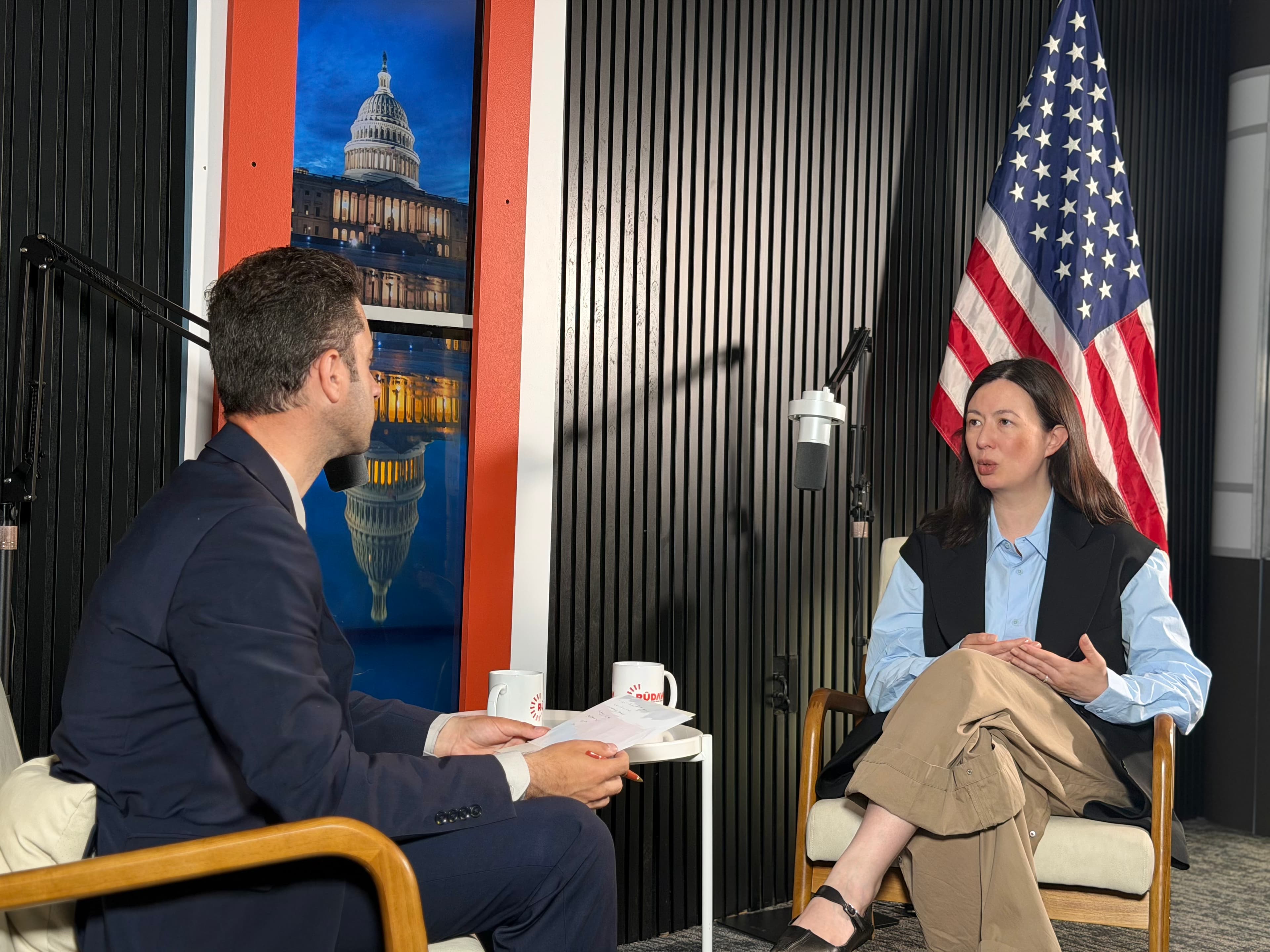
Born Baris - which also means “peace” in Turkish - his connection to his roots is visceral. During his first exclusive appearance on Rudaw’s Diaspora program following the success of “Gulê,” the masked producer picked up a wooden tembûr (a traditional Kurdish string instrument) to demonstrate the raw human talent behind the digital sensation. The instrument, more than forty years old, belonged to his late father.
“That was my father’s tembûr; he has passed away. He was my teacher in music and life,” Paix says, his fingers effortlessly navigating the ancient strings. For him, the global success of “Gulê” is a vindication of his heritage. “I want to live in Kurdish and protect my language and culture.”
As the world dances to a digital voice singing in an ancient tongue, the duo is already looking ahead. Their upcoming release, “Zindan û Jiyan” (Prison and Life), promises to carry their mission further, blending Paix’s masterful beats with Mesfin’s innovative direction.
Ultimately, “Gulê” is more than a viral trend. It is a testament to the resilience of a culture refusing to be silenced, using the tools of tomorrow to ensure the melodies of the past are never forgotten. Through the wires and algorithms of AI - and the steady hands of a masked musician - the Kurdish spirit has found a new, unstoppable resonance.
The following is the full transcript of the interview with Luwam Mesfin and Baris Korkmaz:
Hemen Abdulla: As you know, we are here to talk about your hugely popular song, “Gulê.” We’re very interested in hearing the story behind its creation.
Luwam Mesfin: First of all, I didn’t see any of this coming. One day, we were sitting in front of a laptop, and Baris and I were thinking, “Okay, we need a Kurdish artist. Let’s bring something like this to life.” At the time, he was working with a Kurdish female artist - I won’t mention her name - and he was really focused on that project. So I said, “You know what? Let’s just try out the program Suno.”
We started creating prompts and experimenting. It was very hard to find a good voice because we wanted something truly authentic and raw. That took weeks of refinement. I think “Roj bash” was the first song we made. When I heard the voice that came out - Hiva’s voice - I thought, “This is the one.” We tried many prompts, maybe five versions, until we both agreed. At that point, we weren’t thinking globally; we just liked it and assumed others might too.
When it comes to “Gulê,” I remembered a Kurdish female singer who had a song with “Gulê” in it. I said, “We need something like that, with saz playing.” We generated different versions again, and suddenly we heard this incredible track, “Kurmanji Here Gulê.” I was shocked by how good it sounded, but we still didn’t expect it to go viral.
A couple of days later, we downloaded the song and all the stems. We were on our way to church on Sunday, stopped at a traffic light. Baris was playing the track, and I just started recording in the car. That’s the video that went viral. A few hours later, I checked and saw 50,000 views out of nowhere. Then it hit 100,000, and it just kept rising. That’s when I realized something big was happening.
We also needed to give the character a name. It wasn’t just an AI project to us - we wanted to personalize the voice and build something around it. I suggested “Hiva.” It sounded beautiful and means “hope.” That’s how it all began.
Was Baris wearing the mask and sunglasses in the car?
No! It was very relaxed. We had just had breakfast together, no masks - just regular clothes. We simply enjoy being creative together.
How does it feel to create a global hit in just four weeks?
Honestly, I still can’t fully process it. Every week it becomes more viral. Just when we think it’s peaked, another artist or actor shares it and it takes off again. I keep asking myself, “Have we reached the whole world yet?” It’s everywhere. Some people even joke, “I’m being haunted - my parents keep playing it in the car!” Others say “Cancel the song!” but still use it in their videos, which only makes it spread more. It can’t be stopped.
There’s even a Turkish woman trying to sing it with an accent, saying she doesn’t know the song - but she keeps singing it.
Exactly. Many Turkish singers and actors are engaging with it, and that makes me really happy because the Kurmanji language is gaining global visibility. That’s exactly what Project 144 aims to do - combine modern AI sounds with cultural storytelling and open new paths for creative visibility.
Tell me more about Project 144.
The number 144 represents a healing frequency linked to Christ consciousness. Our goal is to give a voice to suppressed cultures. Hiva will definitely not be our last AI project.
You were the first to post the video. What kind of messages have you received?
I’d say 80% are positive - messages like “I love you, sister,” full of hearts. That really makes me happy. But there are also critics - the “AI haters” or “professors” - who dismiss it as not real art. But it is real work. You spend hours refining, adjusting, making decisions. And we always use our own beats and samples. Baris even plays the saz himself, so it’s not purely AI-generated. The voice is AI, yes - but that’s not a problem.
So this isn’t just a one-song project. What’s next?
We’ve already announced the next release on TikTok and Instagram: “Zindan û Jiyan.”
“Zindan û Jiyan.”
Yes. Baris created the entire beat. Interestingly, he had it sitting unused in his cloud for a long time. He offered it to several artists, but no one wanted to take it on - it was too challenging. But for Hiva, it wasn’t.
Baris, tell me about her role in the project.
Baris Korkmaz: Project 144 and Hiva were entirely Luwam’s ideas. She told me, “We need a Kurdish female voice - something raspy like mine.” In fact, her voice and Hiva’s are quite similar.
Luwam Mesfin: He says that all the time!
Baris Korkmaz: Maybe it’s her voice - maybe not. She once told me that if we have a child, she wants to name her Hiva. When I asked what it meant, she said “hope.” That’s how Hiva was born. I chose to wear a mask, but the creation and selection of the voice were entirely her work. I trust her taste.
People see Baris with a mask and sunglasses and don’t know who he is. Can you describe him?
Luwam Mesfin: He’s one of the happiest people I know, with a big heart. He’s always helpful.
Does he smile?
All the time. He’s funny and always joking. This is just part of his image. He’s a rapper, producer, and artist - it’s who he’s always been. Maybe one day he’ll reveal himself, but I doubt it.
I wish you both success. Hopefully next time, we’ll do this interview without masks—and in Kurdish.
Luwam Mesfin: Promise!
Baris Korkmaz: Promise.