


Interview

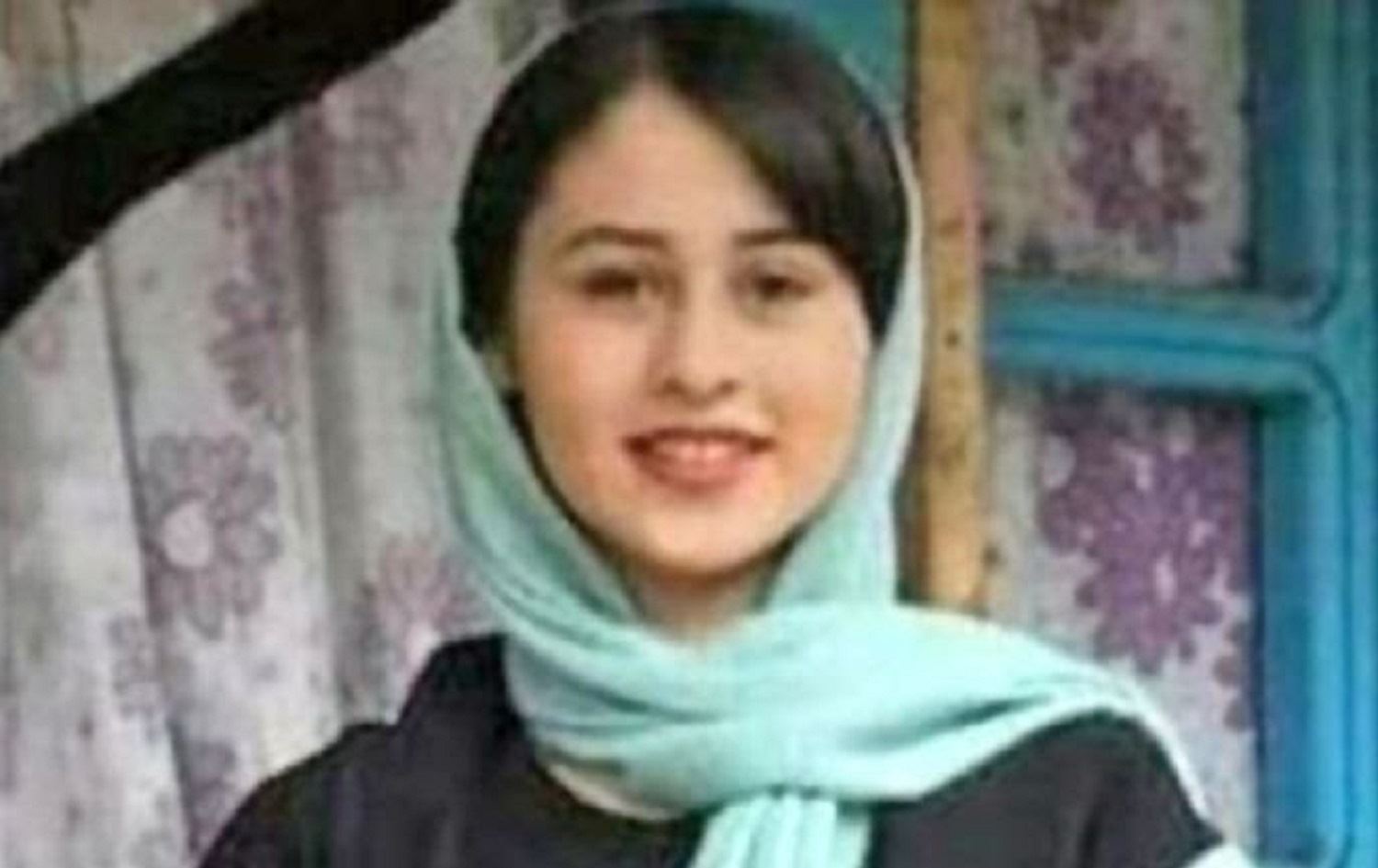
Romina Ashrafi is one of hundreds of women and girls killed in Iran each year. Photo: social media
The honour killing of 14-year-old Romina Ashrafi this week has shone new light on the issue of gender-based violence in Iran.
Ashrafi was killed by her father after running away with a 35-year-old man she intended to marry. The teenager is said to have told police her life was at risk before being returned to her home in Talesh where she was murdered earlier this week.
Politicians and international organisations alike have voiced their horror at the death of the teenager and the failure of Iranian authorities to protect her before she was killed.
Iranian leaders and politicians have called on parliament to expedite legislation against honour killings, with a presidential aide calling for the notion of home as a safe place for women and children to “be revised.”
Dr. Leila Alikarami is a widely recognized Iranian lawyer, human rights advocate, and women's rights expert. A long-time advocate against marital rape in Iran, Leila, alongside other Iranian women’s rights activists, launched the One Million Signatures Campaign in 2006 in an attempt to pressure the Iranian government into ending legal discrimination against women.
Speaking to Rudaw English on Wednesday, Alikarami told Rudaw that “social control” has led to the prevalence of honour killings in the country. Although there is no accurate data on the true scale of honour killings in Iran, with many deaths filed under other causes, Alikarami says the limited data available shows up to 450 people are being killed each year. In many cases, a woman’s refusal to enter into a forced marriage can end in death.
“Fanatical and erroneous perceptions” are killing hundreds of women and girls each year, the lawyer says, highlighting the failures of Iranian law to hold perpetrators accountable.
Although politicians are now calling for renewed efforts to tackle violence against women, Iranian women have been fighting for years to change discriminatory legislation. It is unclear whether the proposed reforms will include measures to counter honour killings, Alikarami warns.
Many victims are murdered by their own relatives, complicating the matter of justice and deterrence. Under the Iranian legal system, male relatives are often not punished for honour killings, under the concept of “qesas” – or retaliation. According to Alikarami, the murder of women and girls to “protect honour” should add gravity to the prosecution of such crimes – not lessen it.
This interview has been lightly edited for clarity.
Rudaw: How common are honour killings and honour-related violence in Iran? Would you say it’s a social/cultural issue?
Dr. Leila Alikarami: Based on some research available, 375 to 450 honour killings happen in Iran each year. Iran is a male-dominated country in which the family structure is based on the patriarchal system.
There are many factors involved in honour killings. However, social control, and people meddling in the personal lives of others are among the most important factors in that connection. This is because the sense of fear and worry about “what people might say”, and the will to protect one’s “honour” and reputation are the main motives for the murder of innocent girls by their fathers.
For instance, in the case of the murder of Atefeh Navidi in Kangavar, her mother told Iranian journalist Masih Alinejad in an interview: “My daughter was pious, innocent and chaste. However, people had been telling a lot of lies about her to her father.”
Atefeh’s mother was quite emphatic in wanting to describe as “innocent” (within the framework of her own traditional lexicon) the relationship that her daughter had had with a boy who was arrested by the Guidance Patrols [Gasht-e Ershad: the state’s moral and cultural watchdogs], simply because she was still worried about “people talking”.
A study of honour-related crimes in Khuzestan [Province] indicates that forced marriage is one of the main causes of honour killings in the region. If a girl does not agree to an arranged marriage, she will be either killed or will be denied marriage to any other man for the rest of her life.
President [Hassan] Rouhani on Wednesday reportedly called on the cabinet to adopt harsher legislation to tackle honour killings. Do you think the government is serious in trying to combat the issue?
I would very much like to be positive about President Rouhani’s call. He called for the speedy ratification of laws addressing violence – still pending in parliament – against women and the law on protecting the rights of the child. We are not sure whether those laws will address honour killing.
We should not forget about the guarding council, the body responsible for vetting parliament’s enactments. The members of the guardian council adopted a restrictive and narrow interpretation of Islam and they could veto certain Majles [parliamentary] bills, citing incompatibility with Sharia [Islamic Law].
How does Iranian law address the problem? Is there sufficient deterrence for would-be perpetrators under the current legal system?
The punishment for intentional murder is qesas (retaliation) which by law is the right of the family of the victim; they can either ask for qesas or forgive the killer. In most cases of honour killings, the perpetrator escapes punishment as he himself is among those who hold the right of qesas. Marjan, a twenty-one-year-old girl, was killed by her brother because she wanted to marry a man who had yet to obtain the approval of her family. The family of the victim (who include the parents of the killer) did not file any formal complaint. Therefore, the killer was not classified as a murderer and may face a limited prison sentence of three to ten years.
Based on Iran’s criminal code, if a father or [paternal] grandfather kills his child or grandchild, he will not be convicted or punished for murder. This provision is one of the reasons for the increasing number of so-called honour killings in Iran.
“Honour killings” take different shapes, which can find their victims among the wives, sisters, and mothers of a family – contributing to the phenomenon of “filicide” [the killing of one’s children].
In addition to the need for cultural and social programmes to put an end to fanatical and erroneous perceptions, some serious steps should also be taken towards reforming the law.
The motive of “protection of honour” for these murders must be considered as a factor that should in fact add to the seriousness of that particular kind of homicide. Or perhaps the law should even go further and come up with a separate criminal label and description for the phenomenon of filicide, rather than continuing with the current practice where the law treats with relative leniency a father who kills his child in order to protect his honour and, in this way, makes it possible for the criminal to escape punishment.
Is Iranian civil society active in trying to end honour killing?
Civil society has been active in trying to end honour killing. There were several campaigns to address the issue. Although Iranian women have lobbied actively to address the issue in the 2013 penal code, relevant articles in the code remain unchanged.
Since there is no discussion of honour killings in the Quran, in the absence of a Sharia-based justification for this inhumane treatment, the reason for giving such authority to the man and presuming him above the law is unacceptable.


Comments
Rudaw moderates all comments submitted on our website. We welcome comments which are relevant to the article and encourage further discussion about the issues that matter to you. We also welcome constructive criticism about Rudaw.
To be approved for publication, however, your comments must meet our community guidelines.
We will not tolerate the following: profanity, threats, personal attacks, vulgarity, abuse (such as sexism, racism, homophobia or xenophobia), or commercial or personal promotion.
Comments that do not meet our guidelines will be rejected. Comments are not edited – they are either approved or rejected.
Post a comment